Color recognition Easy Math Worksheets for Ages 5-9
6 filtered results
-
From - To
Enhance your child's learning journey with our Color Recognition Easy Math Worksheets, designed specifically for ages 5-9. These engaging worksheets combine colorful visuals with fundamental math concepts, making learning fun and effective. Children will develop essential skills in color recognition while practicing simple addition and subtraction operations. Our worksheets are perfect for classroom settings or at-home learning, encouraging creativity and critical thinking. Each worksheet is designed to captivate young learners, ensuring they enjoy their educational experience. Download our printable resources today and watch your child's confidence in both math and color skills soar! Get started with your child's colorful learning adventure now!
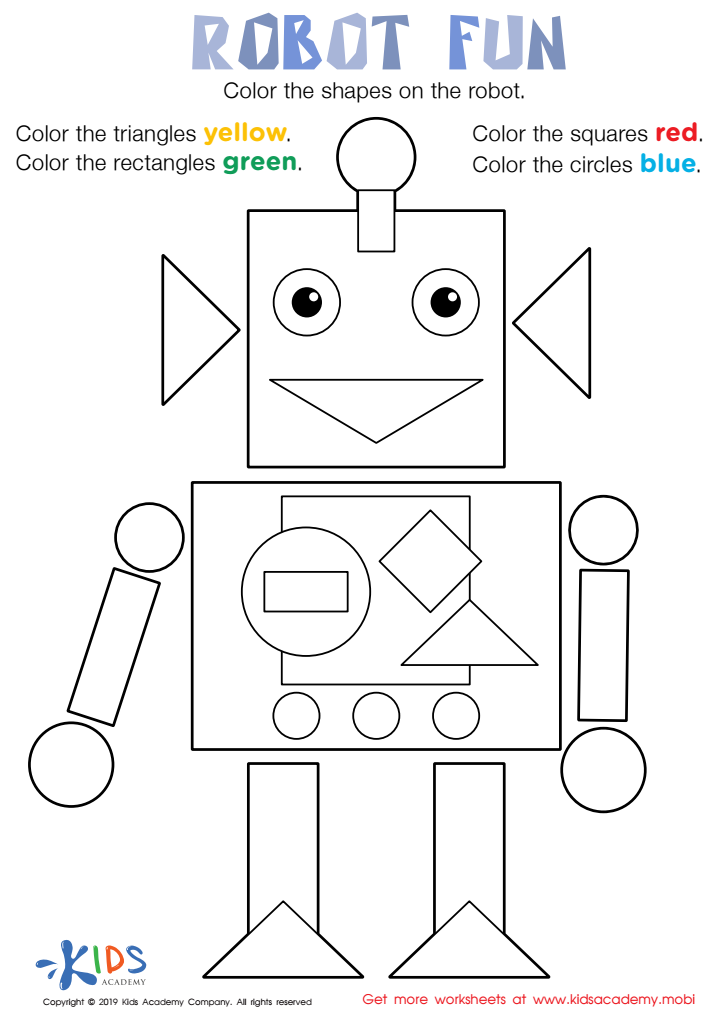
Robot Fun Worksheet
 Assign to My Students
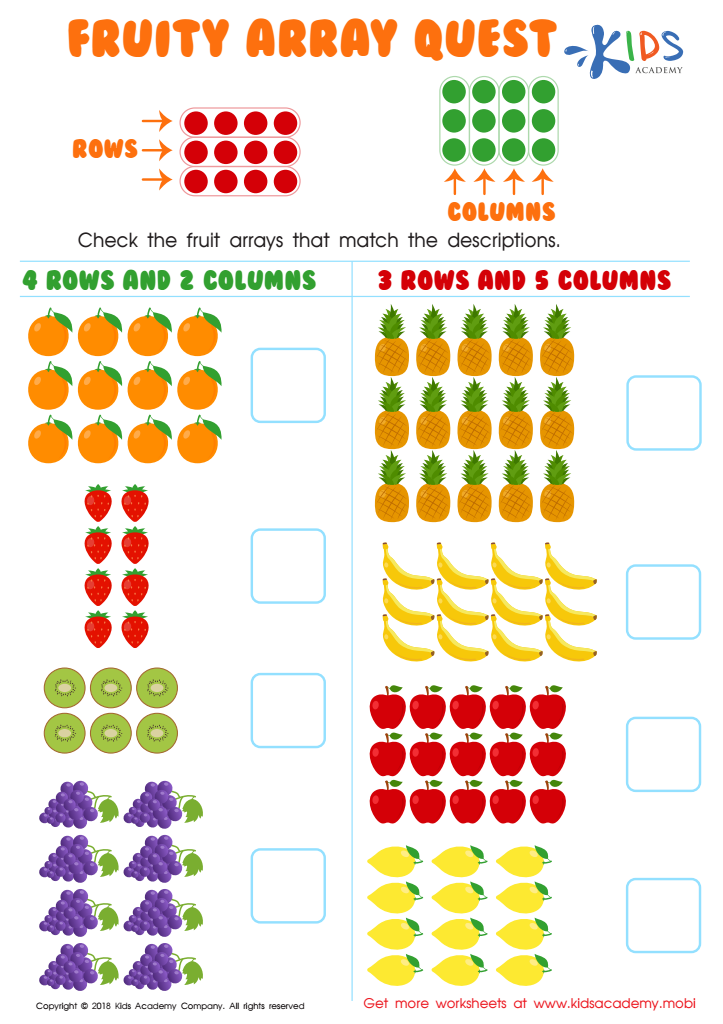
Fruity Array Quest Worksheet
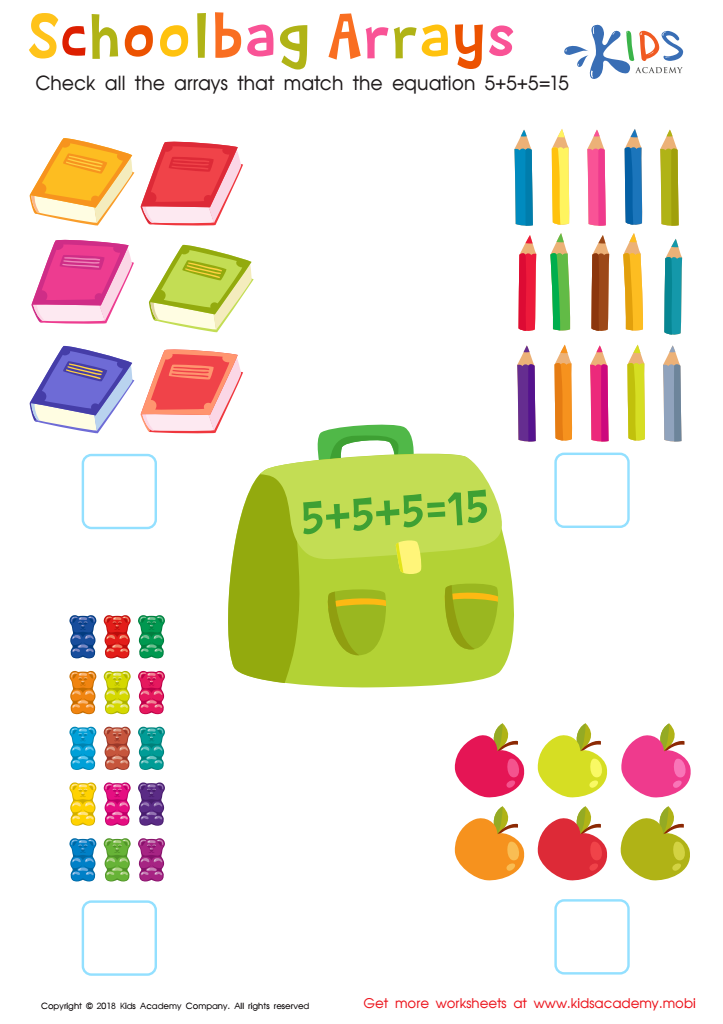
Schoolbag Arrays Worksheet
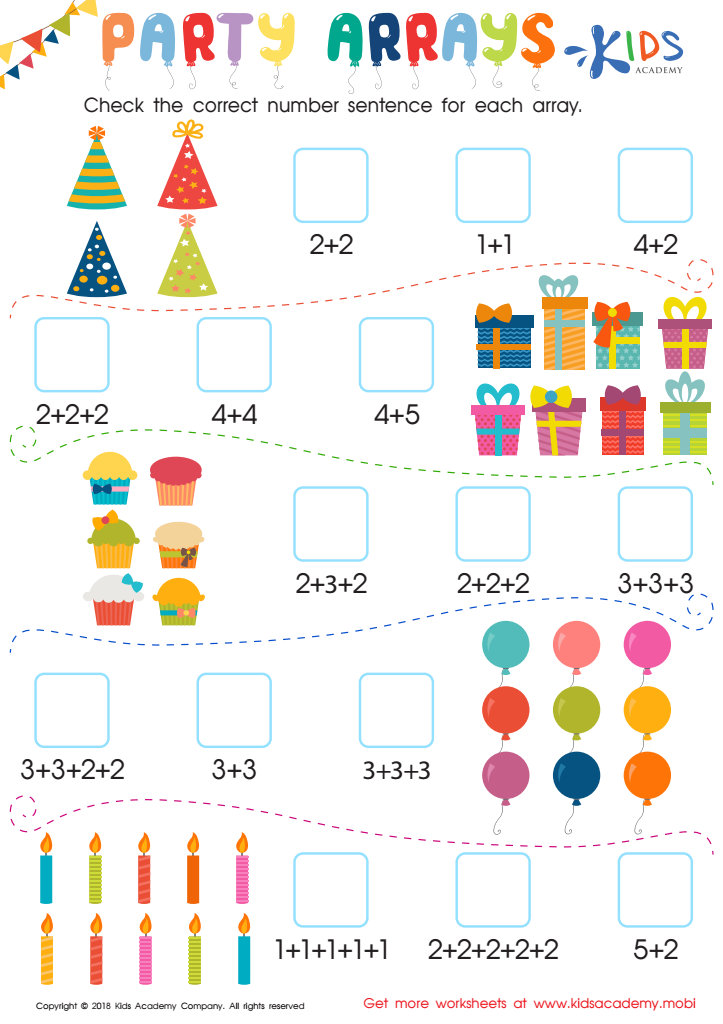
Party Arrays Worksheet
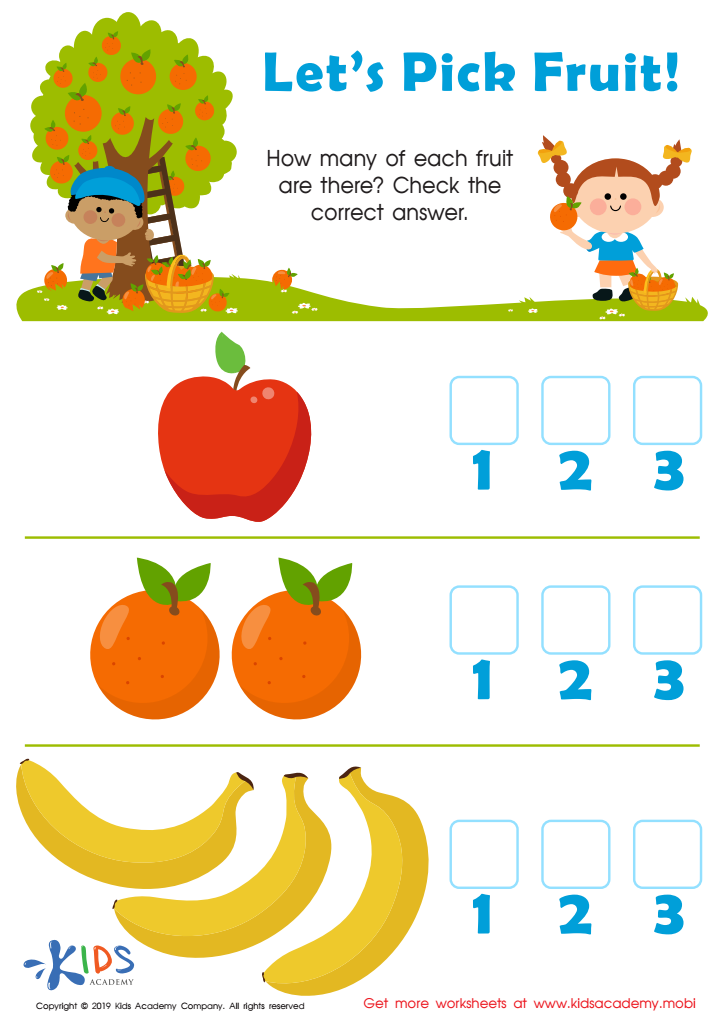
Let's Pick Fruit Worksheet
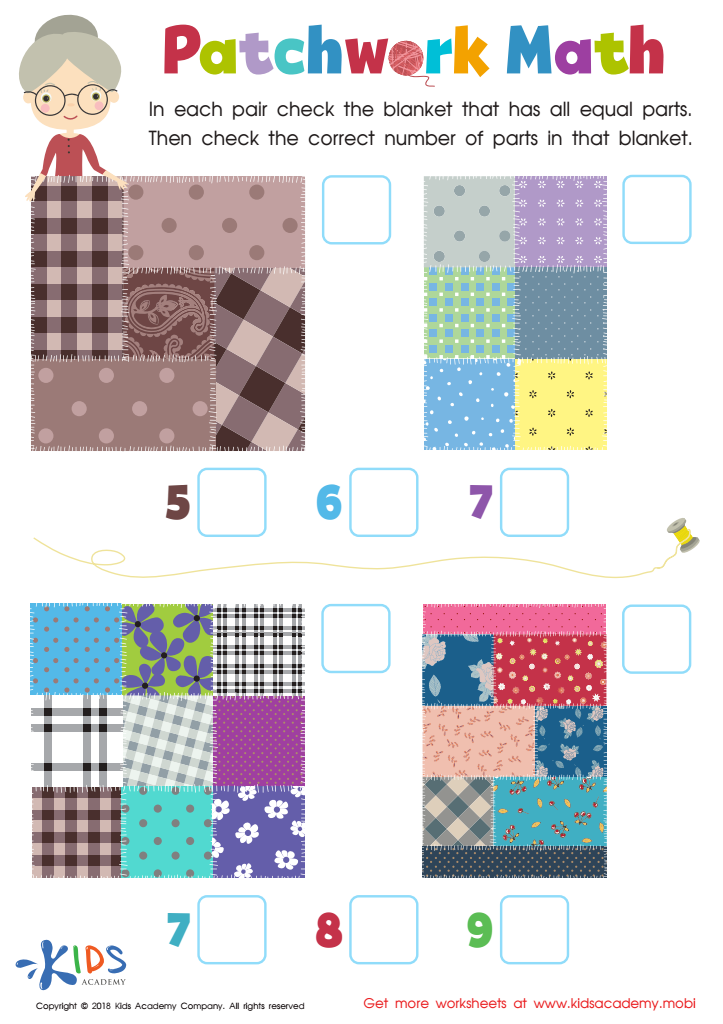
Patchwork Math Worksheet







Parents and teachers should prioritize color recognition and easy math for children aged 5-9 because these foundational skills are critical for early cognitive development. First, color recognition is essential for fostering observational skills, enhancing memory, and promoting creativity. It helps children categorize objects, which is vital for problem-solving and analytical thinking.
Incorporating easy math activities provides children with the opportunity to build confidence in their numerical understanding, enhances their ability to recognize patterns, and lays the groundwork for future mathematical concepts. Early exposure to basic math through engaging activities can ignite a lifelong love for learning and arithmetic, making more complex subjects less daunting as they grow.
Moreover, combining color recognition with math can lead to interactive and stimulating learning experiences that promote collaboration, language development, and social skills. For example, counting colored objects or using color-coded math games makes learning enjoyable and relatable.
Ultimately, developing these skills in young learners not only enhances academic success but also prepares them for real-world situations where color and quantitative reasoning are intertwined. By fostering both areas, parents and teachers can nurture well-rounded individuals ready to tackle life's challenges with confidence and enthusiasm.








