
Visual Perception Skills Easy Math Worksheets for Ages 5-9
3 filtered results
Difficulty Level
Grade
Age
-
From - To
Subject
Activity
Standards
Boost your child's math journey with our Visual Perception Skills Easy Math Worksheets tailored for ages 5-9. These engaging sheets seamlessly integrate visual perceptual development with foundational math skills, ensuring children build a solid groundwork for future learning. Our worksheets feature enjoyable, age-appropriate activities that enhance visual memory, spatial awareness, and pattern recognition. Perfect for homeschooling or supplemental practice, these resources help young learners improve their attention to detail and accuracy. Equip your child with the tools for success in math and beyond, while making learning fun and interactive. Start enhancing your child's visual perception and math skills today!
Favorites
With answer key
Interactive
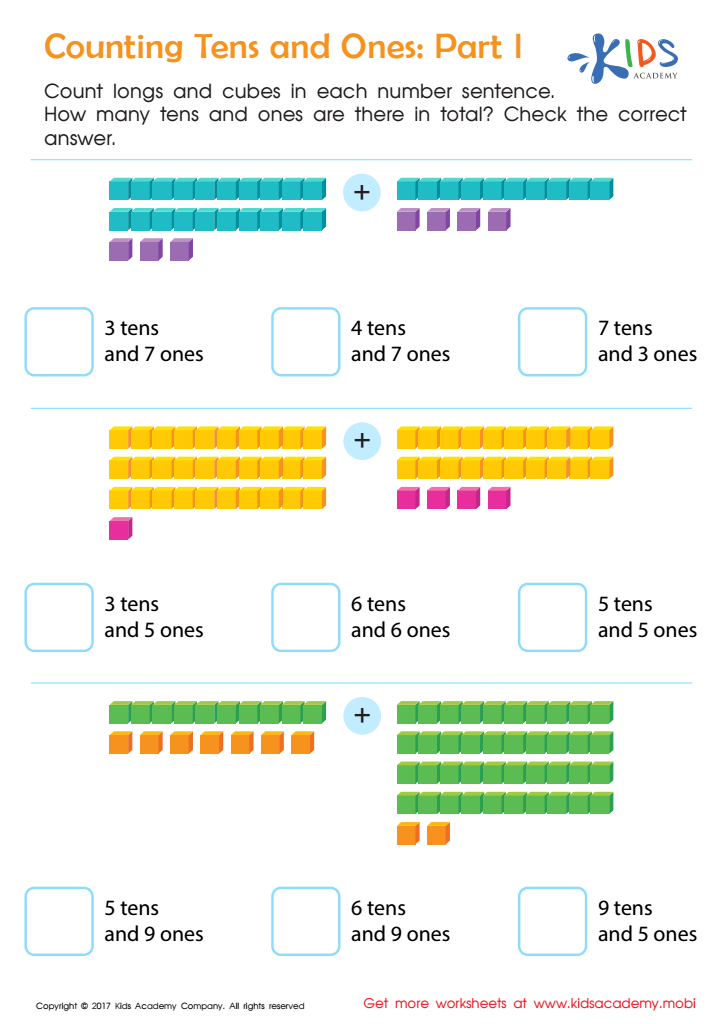
Counting Tens and Ones: Part 1 Worksheet
Kids Academy has a great place value worksheet to help kids learn when they don't have manipulatives at home! It includes longs and cubes that kids can count and add to find the sum. Colorful and downloadable, this page will help kids understand addition and place value better. Give it a try!
 Assign to My Students
Counting Tens and Ones: Part 1 Worksheet
Worksheet
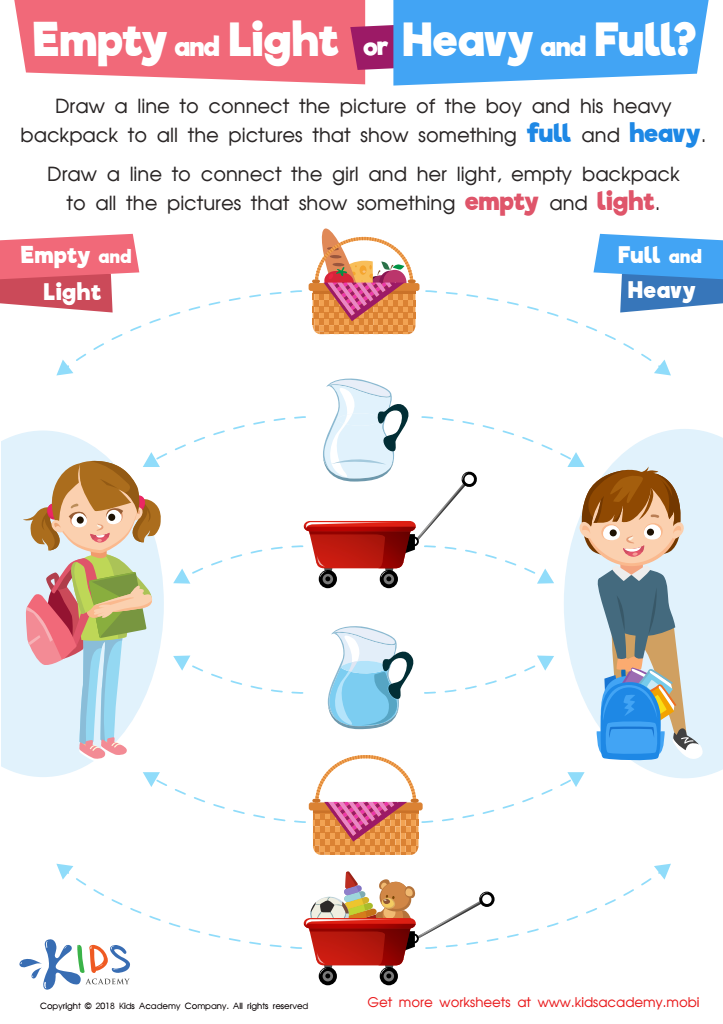
Empty and Light or Heavy and Full? Worksheet
Kids can have trouble understanding measurement, like the differences between heavy and light. This worksheet helps them associate full with heavy and empty with light, using familiar images. Plus, it's a fun way to practice fine motor skills, tracing the lines to connect the pictures.
Empty and Light or Heavy and Full? Worksheet
Worksheet
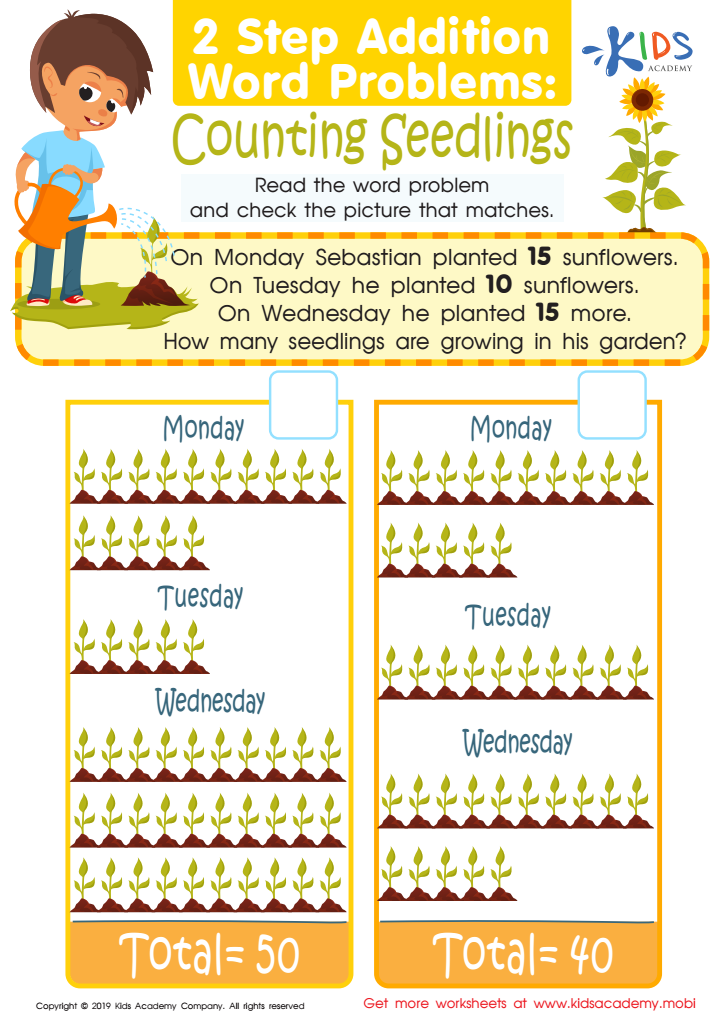
Counting Seedlings Worksheet
Understanding math word problems is key. Multiple steps can prove challenging - this free worksheet provides one-to-one picture representation to help kids solve multi-step addition word problems. Strengthen addition skills by choosing the matching picture to the answer.
Counting Seedlings Worksheet
Worksheet
Join Kids Academy for Free
Who is primarily going to use this learning content?







Visual perception skills are essential for young children, particularly those aged 5-9, as they form a foundational cornerstone in learning and cognitive development. These skills involve the brain's ability to interpret and process visual information from the surrounding environment.
Developing visual perception skills significantly enhances a child's ability to perform everyday tasks and academic activities, especially in subjects like math. Easy Math exercises tailored for this age group incorporate color, shape, pattern recognition, spatial relationships, and visual memory. These are not just arithmetic hurdles; they encourage children to make sense of symbols and numbers, understand their positions, and remember sequences—all crucial for grasping basic math concepts.
For parents and teachers, investing in the development of these skills means fostering a well-rounded learning environment. Effective visual perception influences reading readiness and handwriting, too—skills interlinked with overall academic success. Activities like puzzles, drawing, and using manipulatives can boost coordination, concentration, and problem-solving abilities. Supporting visual perception prepares children for more advanced mathematical concepts and nurtures vital cognitive skills such as memory, attention, and logic.
By prioritizing visual perception, parents and teachers are not only addressing immediate educational milestones but also equipping children with tools for future academic and everyday life challenges, empowering them with confidence and competence.








