Comparing numbers Easy Measurement Worksheets for Ages 5-9
3 filtered results
-
From - To
Explore our "Comparing Numbers Easy Measurement Worksheets" designed for children ages 5 to 9! These engaging worksheets provide a fun and interactive way for young learners to grasp fundamental math concepts. Your child will enhance their skills in comparing numbers, understanding more or less, and discovering the relationships between quantities through vibrant illustrations and hands-on activities. Perfect for both classroom settings and at-home practice, our worksheets build confidence and encourage critical thinking. Watch as your child masters these essential early math skills while enjoying their learning journey! Join us in making math easy and enjoyable with our thoughtfully crafted resources.
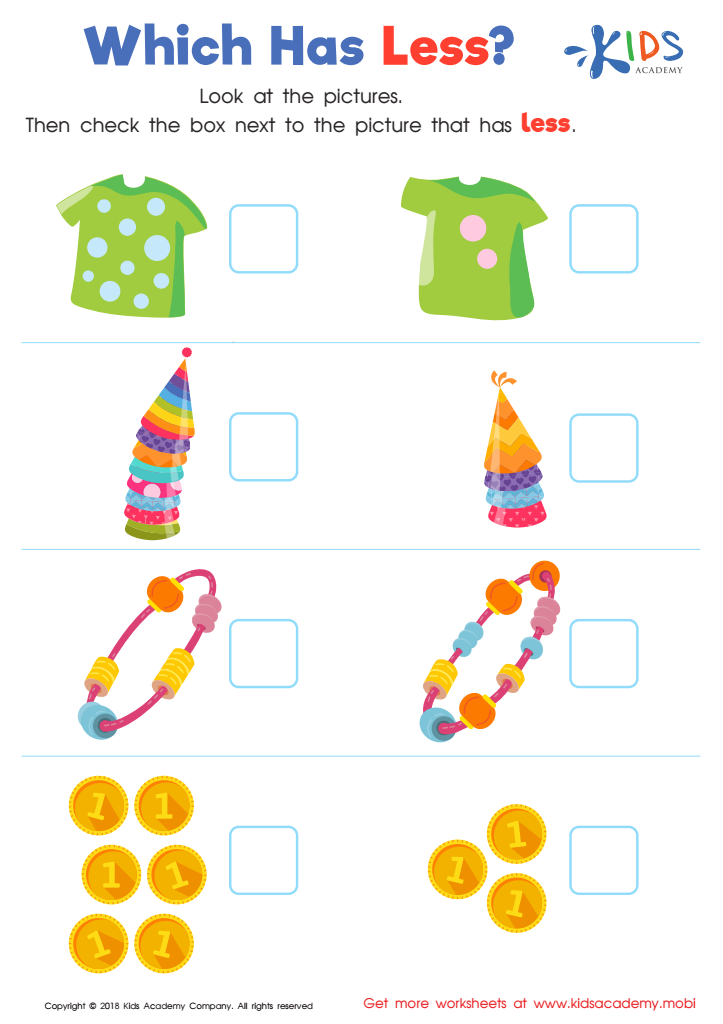
Which Has Less? Worksheet
 Assign to My Students
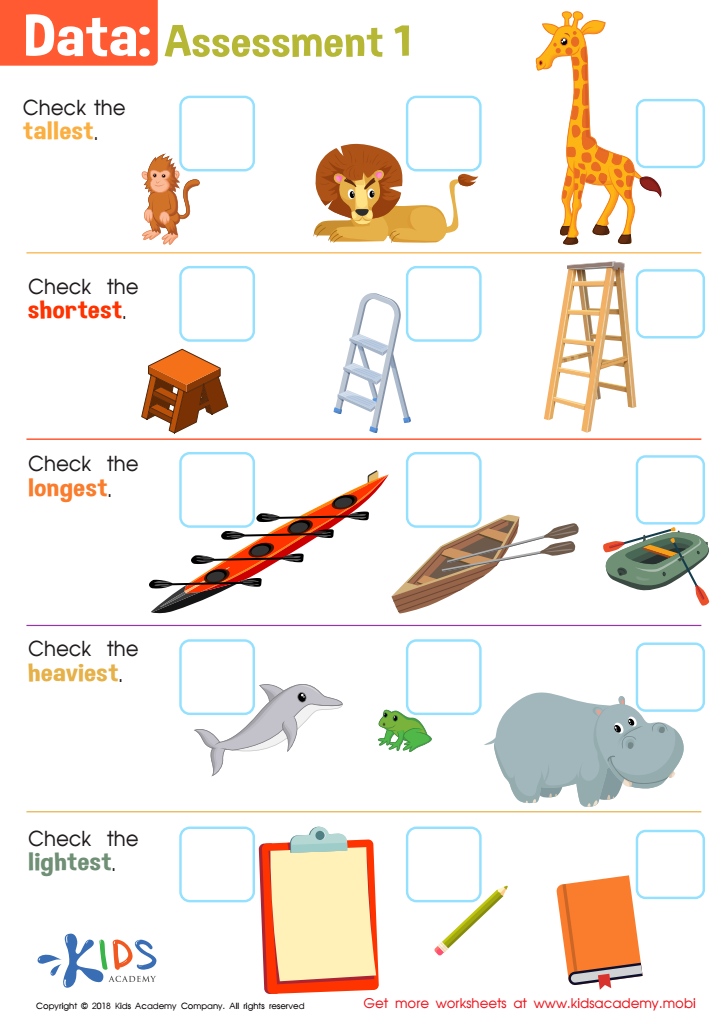
Data: Assessment 1 Worksheet
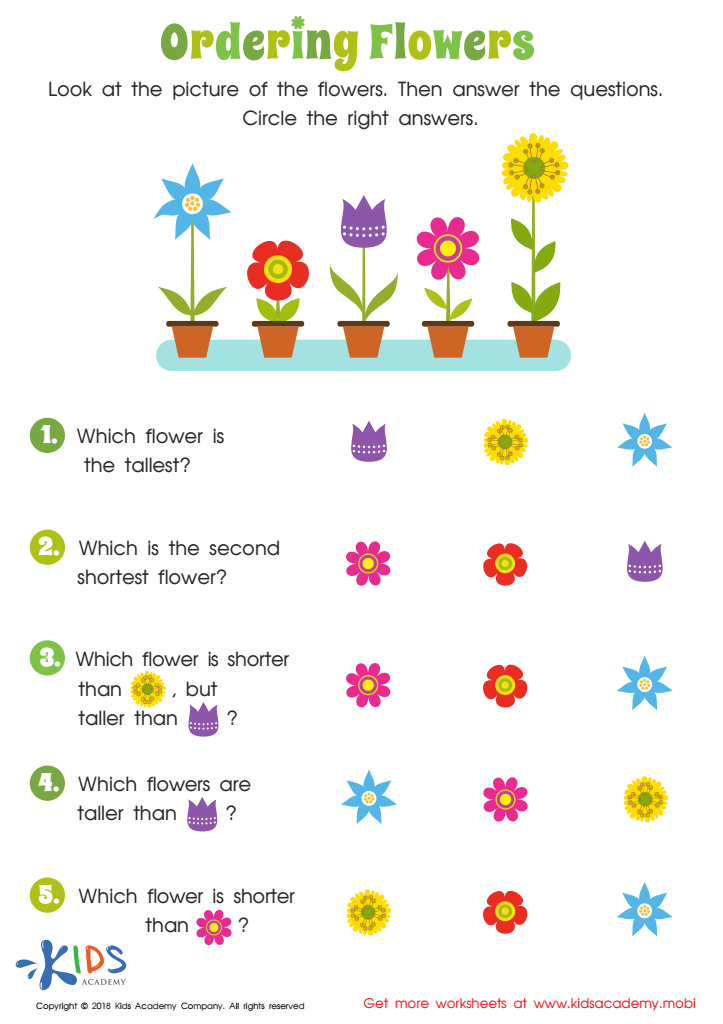
Ordering Flowers Worksheet








Comparing numbers and understanding measurement are crucial foundational skills for children aged 5-9, which is why parents and teachers should prioritize these concepts. Mastering these skills fosters critical thinking, problem-solving, and mathematical reasoning, empowering young learners to make informed decisions.
By engaging with numbers, children enhance their ability to quantify and assess their world, leading to greater confidence in their mathematical abilities. These skills also lay the groundwork for more advanced mathematical concepts, such as addition, subtraction, and understanding place value.
In addition, measuring links math to everyday life. It helps children grasp real-world applications, whether they're cooking, building, or playing games. This not only makes learning meaningful but also fuels a child’s interest in math through hands-on experiences.
Furthermore, measuring and comparing numbers teach children about relationships and differences—essential skills for developing emotional intelligence and analytical reasoning. For parents and teachers, nurturing these abilities means better preparing children for academic success, improved cognitive skills, and a lifelong appreciation for learning. Ultimately, emphasizing comparing numbers and easy measurement can help shape well-rounded, confident individuals equipped for future challenges.








