Number comparison Easy Numbers 0–10 Worksheets for Ages 5-9
3 filtered results
Difficulty Level
Grade
Age
-
From - To
Subject
Activity
Standards
Discover our engaging "Number Comparison Worksheets" designed for children aged 5-9. Perfect for early learners, these resources focus on comparing numbers from 0 to 10, fostering essential math skills. Through fun and interactive exercises, kids will learn to identify greater than, less than, and equal to relationships. Our worksheets support children in developing confidence in their counting and comparison abilities while enjoying colorful illustrations and entertaining activities. Whether in the classroom or at home, these worksheets are an excellent tool for reinforcing foundational number concepts. Help your child master number comparison and build a strong math foundation today!
Favorites
With answer key
Interactive
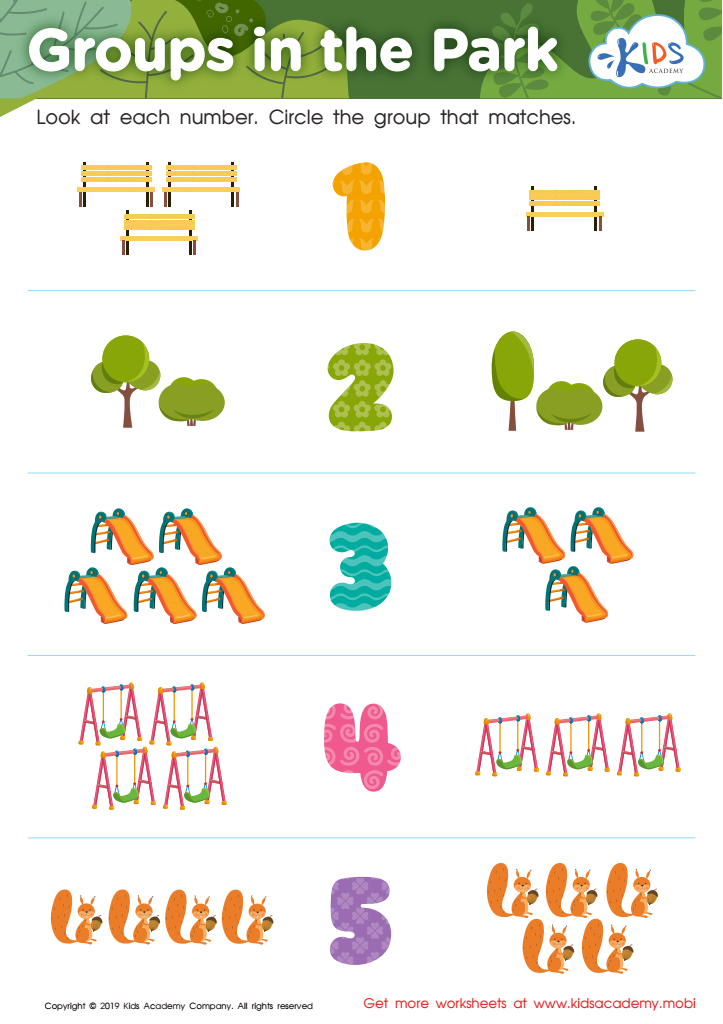
Groups in the Park Worksheet
Take your kids to the park and let them enjoy the freedom to play! Ask them what they love doing most and study a picture together - name items and count objects in the sets, then circle the correct one. It's a fun way for your kids to learn.
 Assign to My Students
Groups in the Park Worksheet
Worksheet
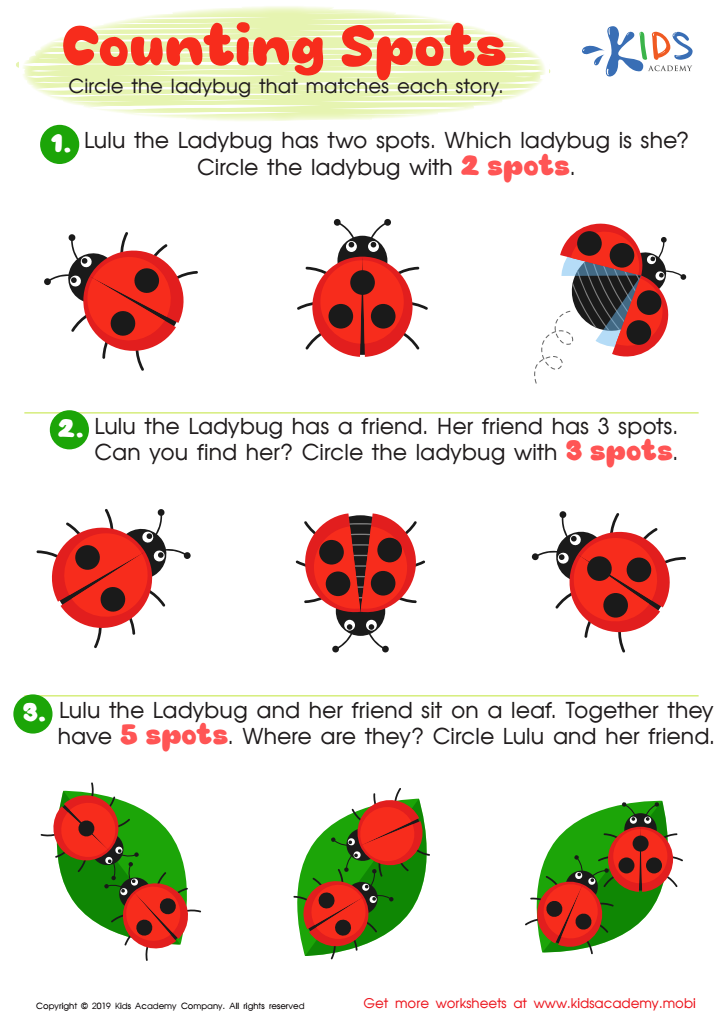
Counting Spots Worksheet
This worksheet is full of cute, colorful ladybugs. Help your kids identify Lulu, who has two spots on her body. Count the spots on each ladybug and circle the one with two spots. Then read the instructions on the other sections and help them find the ladybugs there, too!
Counting Spots Worksheet
Worksheet
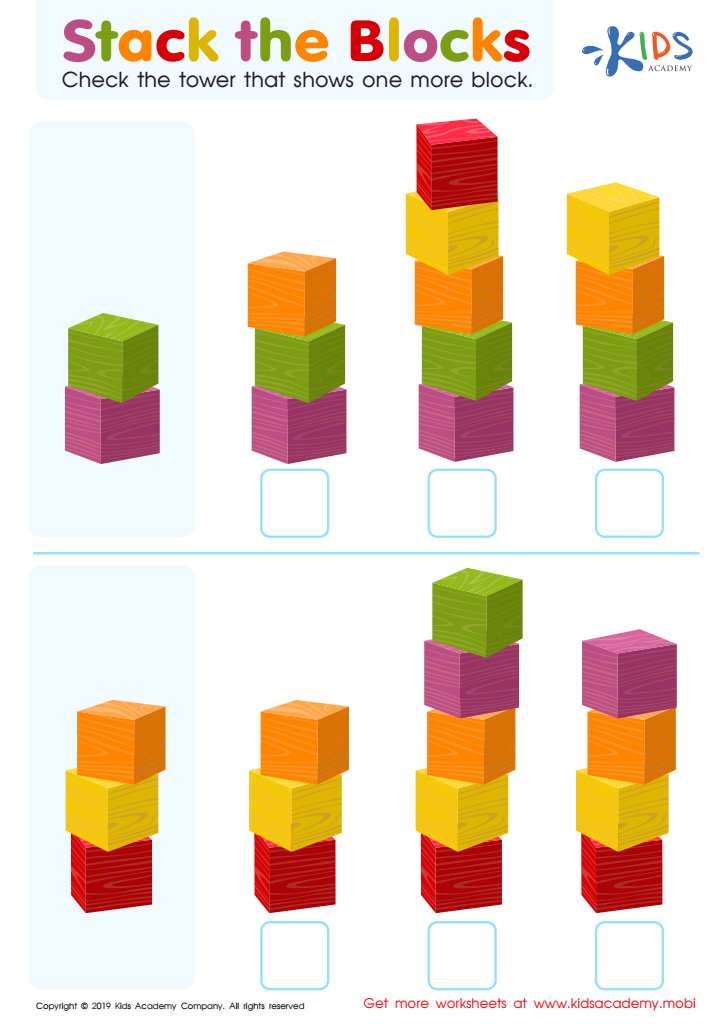
Stack the Blocks Worksheet
Playing with blocks is a great way for kids to learn! They can create patterns, shapes, and even count. In this worksheet, ask them to identify the colors and count each stack of blocks. If they can spot one extra block in the tower, even better! Encourage learning through play with these fun blocks.
Stack the Blocks Worksheet
Worksheet
Join Kids Academy for Free
Who is primarily going to use this learning content?








Number comparison for easy numbers from 0 to 10 is a fundamental skill that plays a critical role in early childhood education for children aged 5-9. For parents and teachers, understanding and promoting this skill is essential for several reasons.
Firstly, number comparison lays the groundwork for more complex mathematical concepts. When children learn to compare numbers, they develop a strong numerical sense, recognizing that some numbers signify greater quantities than others. This foundational understanding is crucial as they progress to addition, subtraction, and eventually higher-level mathematics.
Additionally, comparing numbers enhances cognitive development. It encourages critical thinking and problem-solving skills as children learn to evaluate and make decisions based on quantitative information. It also fosters a sense of security and confidence in their mathematical abilities.
Moreover, early mastery of number comparison helps in nurturing a lifelong positive attitude toward math. By engaging children in fun activities that involve comparing small sets of numbers, parents and teachers can boost children's interest in mathematics, making learning enjoyable.
In conclusion, focusing on number comparison for easy numbers from 0 to 10 is vital for building a solid mathematical foundation, enhancing cognitive skills, and fostering a positive attitude towards math learning in young children.