
Time reading skills Easy Time Worksheets for Ages 5-9
3 filtered results
Difficulty Level
Grade
Age
-
From - To
Subject
Activity
Standards
Enhance your child’s time reading abilities with our "Easy Time Worksheets for Ages 5-9." Designed specifically for young learners, these engaging and educational worksheets help children confidently tell time on both analog and digital clocks. From recognizing hours and minutes to understanding concepts such as half past and quarter hour, our printable worksheets make learning enjoyable and effective. Created by educational experts, these activities are perfect for at-home practice or classroom reinforcement. Equip your 5-9-year-olds with essential time-telling skills they need for daily routines and academic success. Visit our site to download these valuable resources today!
Favorites
With answer key
Interactive
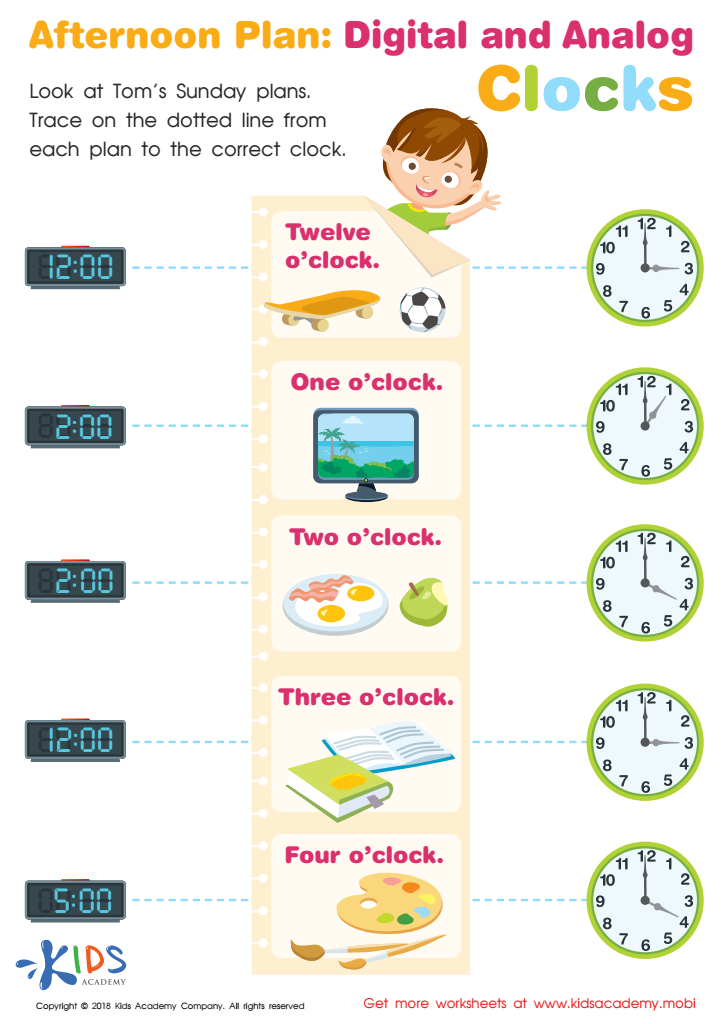
Afternoon Plan: Digital and Analog Clocks Worksheet
Tom's got Sunday plans and your kids can use this worksheet to help them learn how to tell the time. With tracing dotted lines from plans to the correct clock, they'll gain the skills to accurately convert digital time to analog. It'll be a great way to get them better at telling the time.
 Assign to My Students
Afternoon Plan: Digital and Analog Clocks Worksheet
Worksheet
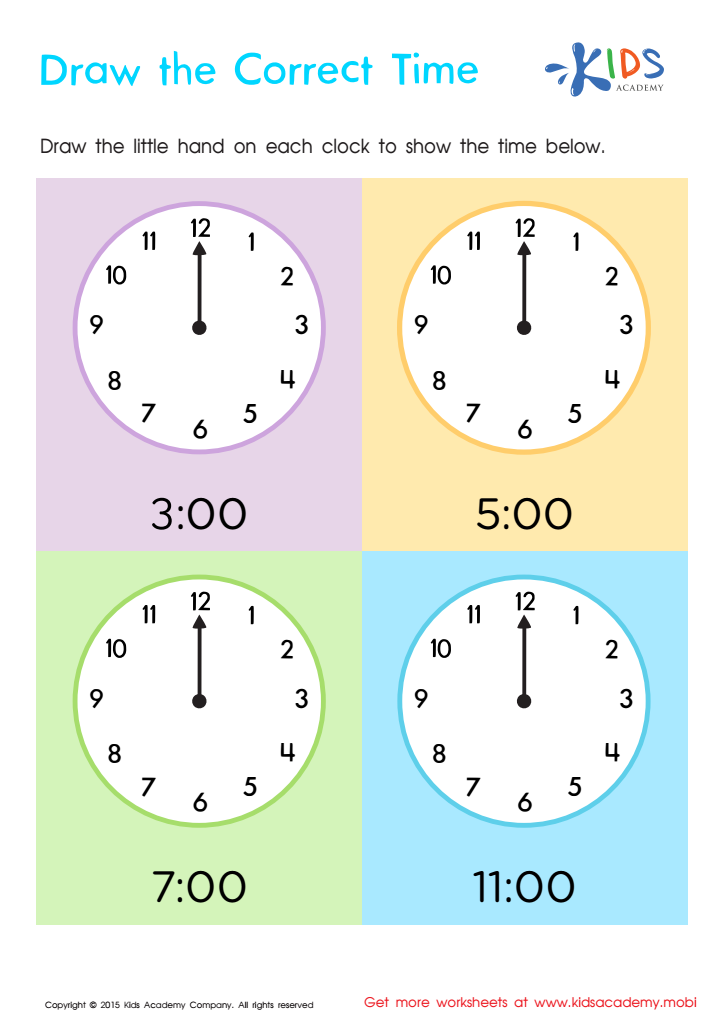
Telling The Time Worksheet: Part 1
Practice telling the time with Kids Academy. Our worksheets make it fun for kindergarteners to learn about clocks and reading the time. Find our free math worksheets on telling the time and draw the little hand on the clock faces to show the time. Let's learn together!
Telling The Time Worksheet: Part 1
Worksheet
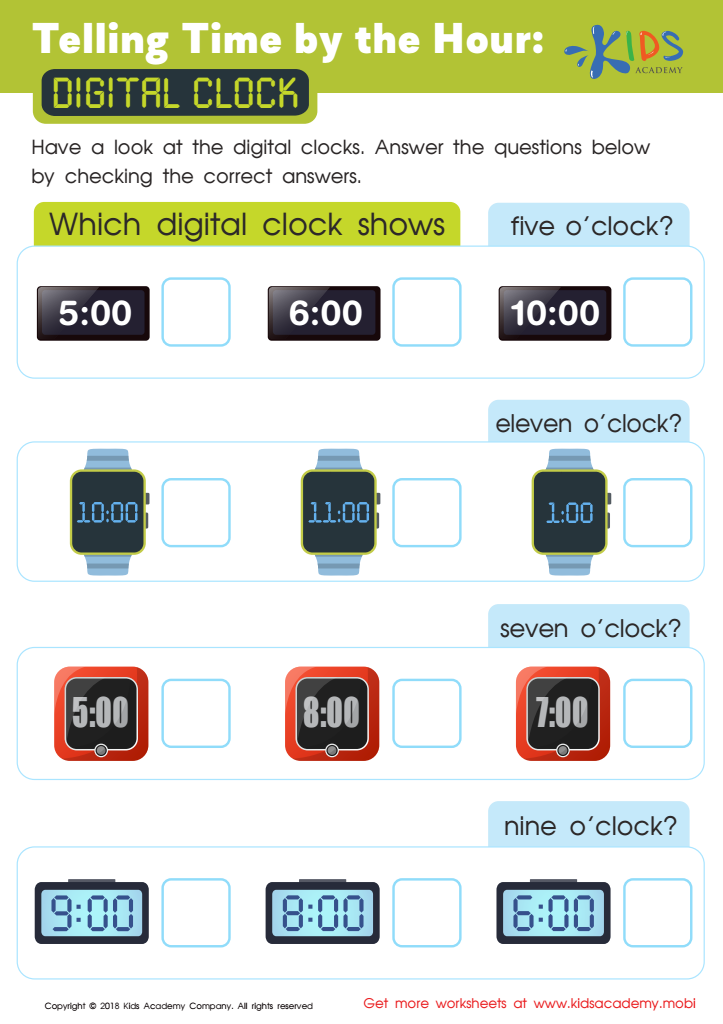
Telling Time by the Hour: Digital Clock Worksheet
Introduce your students to digital clocks. This worksheet will help them become familiar with them. Guide them through answering the questions - they're simple and stimulating. Encourage their young minds to explore the digital clocks in the exercise.
Telling Time by the Hour: Digital Clock Worksheet
Worksheet
Join Kids Academy for Free
Who is primarily going to use this learning content?








Understanding the importance of time-reading skills for children ages 5-9 is essential for both parents and teachers. At this developmental stage, children are rapidly developing cognitive abilities, and learning to read time integrates mathematics, comprehension, and life skills.
Time-reading helps children grasp the concept of time management and daily schedules, fostering a sense of routine and responsibility. They gain an awareness of punctuality and the ability to plan and allocate time effectively for various activities like homework, play, and chores. Moreover, mastering these skills provides children with confidence and independence, empowering them to take ownership of their daily lives.
For parents and teachers, imparting time-related skills is not solely about ensuring academic success but also about nurturing well-rounded individuals. Keeping a child engaged in reading time-related activities refines their fine motor skills through clock-hand manipulation and enhances their critical thinking ability by solving real-life situational problems.
An integrated approach to teaching time—linking it with stories, games, and hands-on practices—boosts children's retention and application of knowledge. For example, "What time is it?" games or routine charts can make learning feel like an adventure rather than a mere academic chore.
In conclusion, prioritizing time-reading skills sets the foundation for future success, ensuring children are well-prepared for the structured environments of school and beyond.








