Comparing quantities Easy Worksheets for 5-Year-Olds
3 filtered results
-
From - To
Explore our "Comparing Quantities Easy Worksheets for 5-Year-Olds" designed to help young learners grasp the fundamental concept of comparing numbers. These engaging worksheets offer colorful illustrations and interactive activities that make learning fun and effective. Children will practice identifying larger and smaller quantities, honing their counting skills while developing an understanding of more and less. Perfect for home or classroom use, these resources encourage logical thinking and boost early math skills. Download our worksheets today to inspire mathematical curiosity and build confidence in your child’s early learning journey! Ideal for kids aged 5 and perfect for parents and educators.
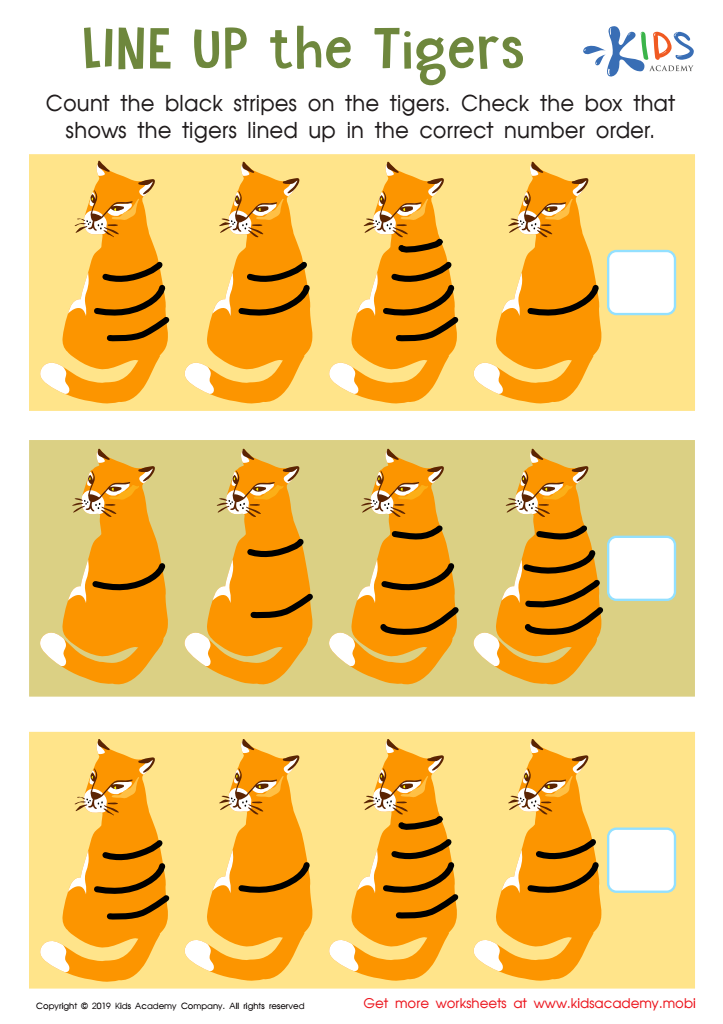
Line up the Tigers Worksheet
 Assign to My Students
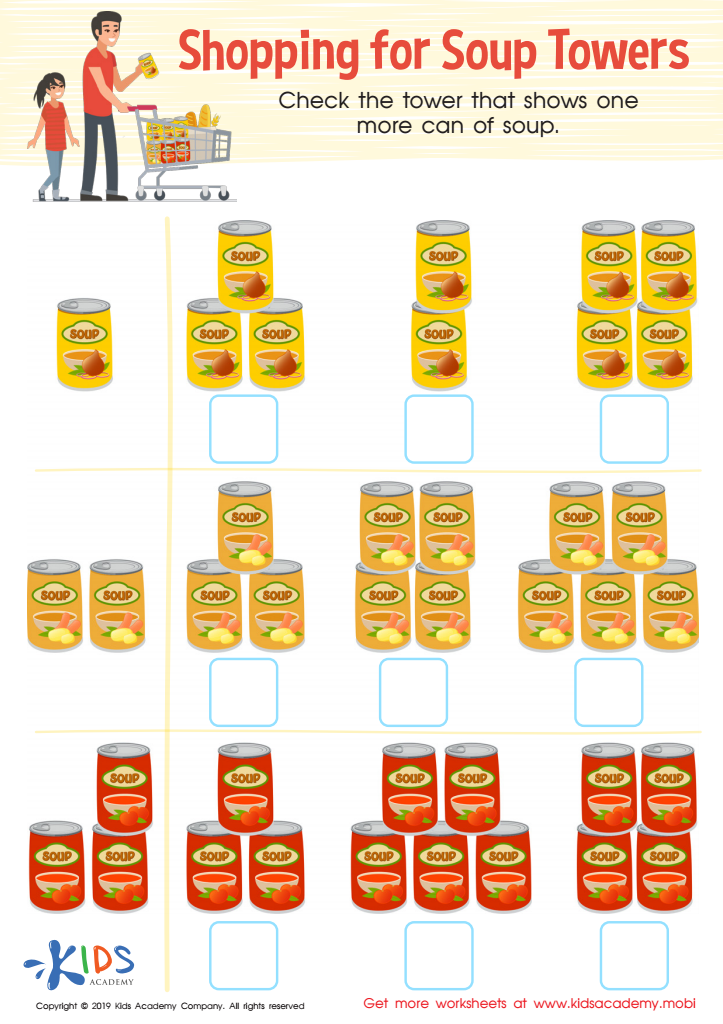
Soup Towers Worksheet
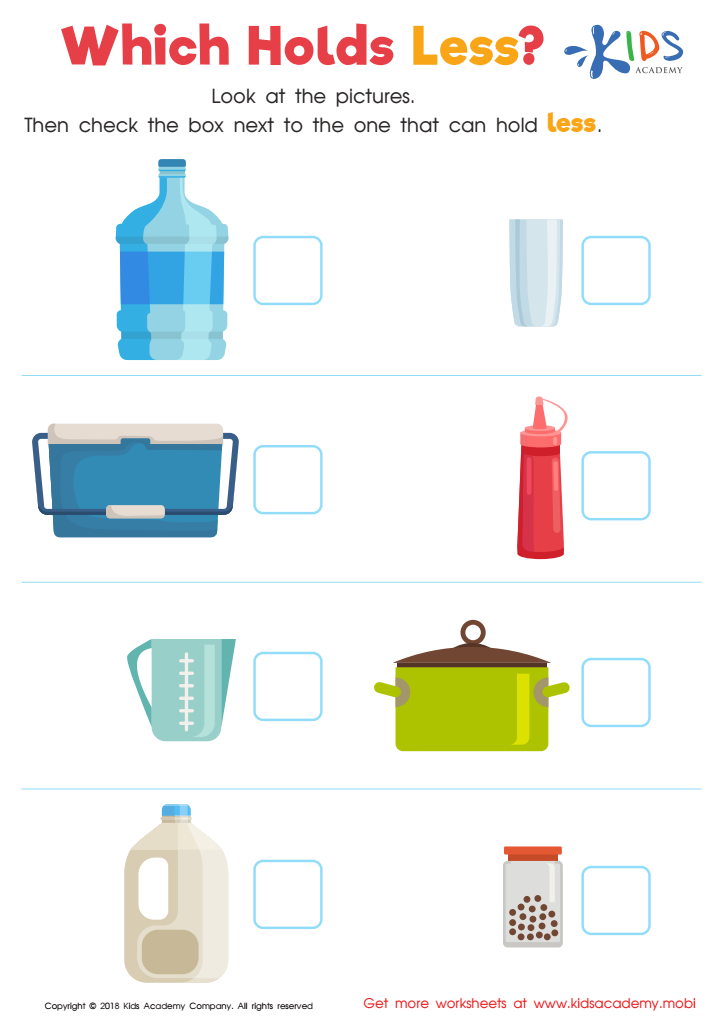
Which Holds Less? Worksheet







Teaching 5-year-olds to compare quantities is essential for their early mathematical development and overall cognitive skills. Understanding how to compare amounts helps children develop critical thinking and problem-solving abilities. When children learn to compare quantities, they start recognizing patterns, developing spatial awareness, and fostering logical reasoning. This foundational skill aids in understanding concepts like more, less, equal, and even sizes, which are vital in daily life.
Moreover, comparing quantities supports numeracy skills. As children engage with these concepts, they become more comfortable with numbers, leading to a smoother transition into more complex mathematical ideas. This skill also encourages language development, as children learn to articulate their thoughts, express comparisons, and engage in discussions about sizes and amounts.
For parents and teachers, nurturing comparison skills in early learners creates a sense of curiosity and builds confidence in their numerical understanding. Engaging children in everyday situations—like counting fruits, comparing toy sizes, or sharing snacks—can make learning fun. In essence, embedding comparison activities into play enriches children's learning experience, setting the stage for lifelong analytical skills and a love for mathematics. Investing time in these activities ensures that children are well-prepared for future academic challenges.








