Understanding sequencing Easy Numbers Worksheets for 5-Year-Olds
3 filtered results
-
From - To
Welcome to our "Understanding Sequencing Easy Numbers Worksheets" specially designed for 5-year-olds! These worksheets help young learners grasp the essential concept of number sequences through engaging activities. With bright illustrations and interactive exercises, children can practice arranging numbers in the correct order, honing their cognitive skills and mathematical understanding. Our user-friendly format makes it simple for teachers and parents to reinforce learning at home or in the classroom. By exploring number patterns and sequences, kids will enhance their problem-solving abilities while having fun! Start your child's journey to mastering numbers today with our exciting and educational worksheets!

One More Jumps In Worksheet
 Assign to My Students
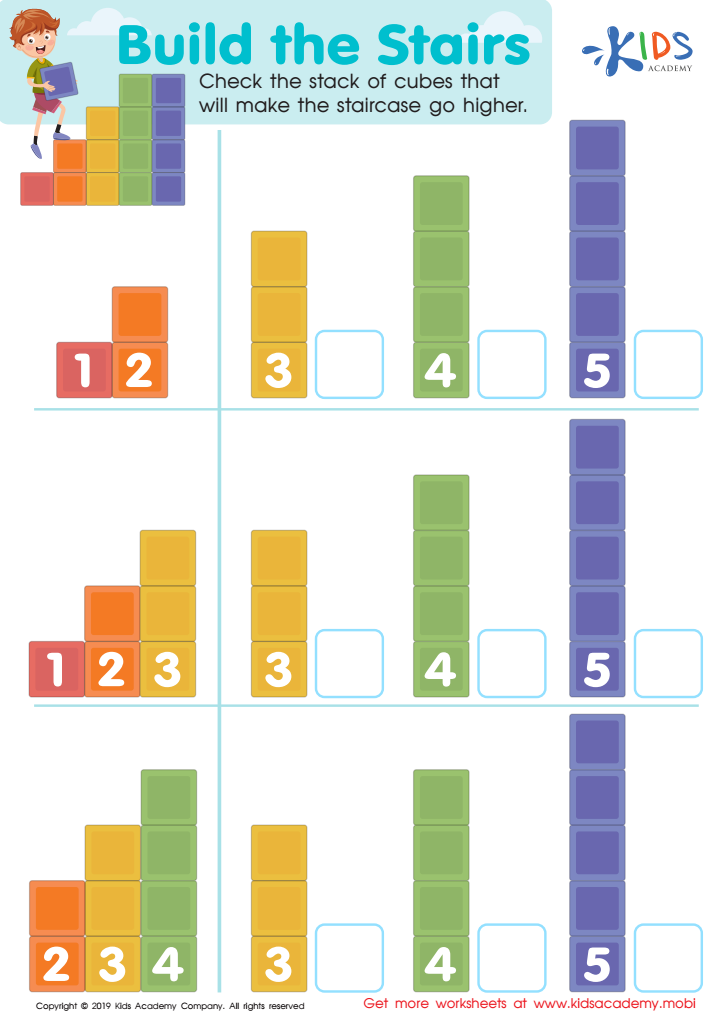
Build the Stairs Worksheet
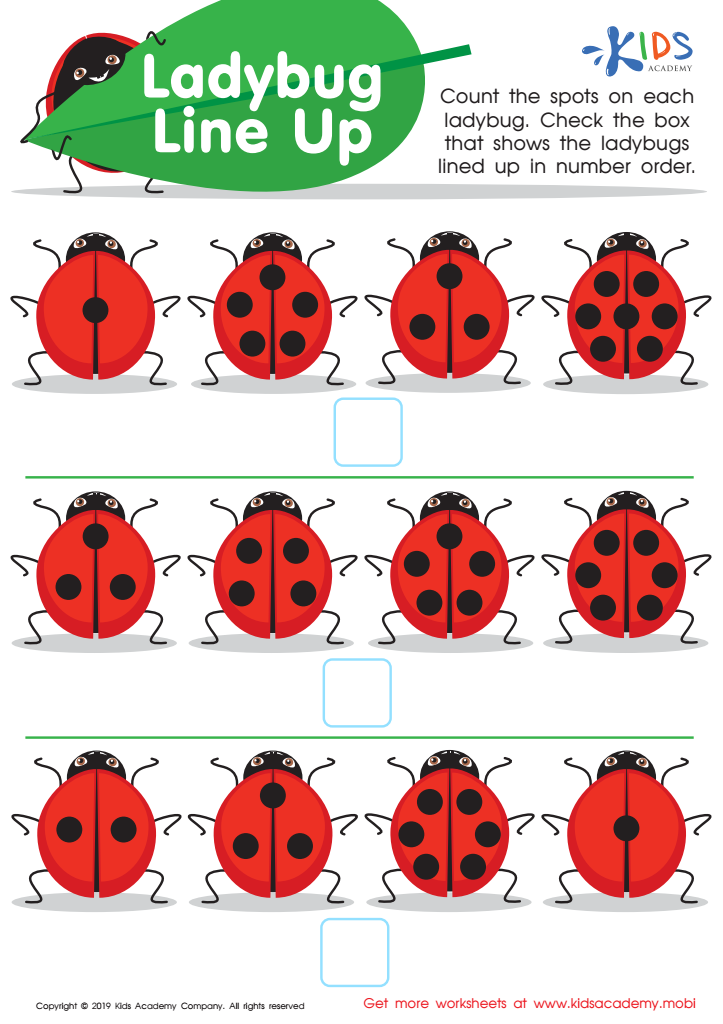
Ladybug Line Up Worksheet








Parents and teachers should prioritize understanding sequencing and easy numbers for 5-year-olds because these foundational skills are crucial for early cognitive development. Sequencing, the ability to recognize and arrange information in order, fosters critical thinking and problem-solving abilities. It helps children make sense of everyday events, improving their comprehension of routines, stories, and instructions. For example, understanding the sequence of actions in a daily schedule teaches kids about time management and consistency.
Moreover, mastering easy numbers benefits early mathematics understanding, allowing children to grasp concepts like counting, addition, and subtraction. Engaging with numbers cultivates essential numeracy skills that underpin future learning in math, which is vital as they progress through school. Early mathematical competence is linked to greater academic success later on.
In a broader sense, sequencing and numeracy are interrelated with language development, as children often sequence stories or numbers verbally, strengthening their communication skills. By concentrating on these skills, parents and teachers lay the groundwork for a child's lifelong learning journey, empowerment, and intellectual growth. Encouraging such skills fosters confidence and enthusiasm for learning, making a significant difference in how children interact with the world around them.








