Matching skills Easy Worksheets for Ages 6-7
5 filtered results
-
From - To
Unlock your child’s learning potential with our "Matching Skills Easy Worksheets" designed specifically for ages 6-7! These engaging and colorful worksheets provide fun activities to help young learners develop essential matching skills crucial for cognitive growth. Each worksheet features a variety of exercises, including picture matching, word association, and object identification, ensuring a well-rounded and enjoyable experience. Perfect for reinforcing classroom learning or as enjoyable homework, these easy worksheets keep kids motivated while enhancing their focus and critical thinking abilities. Access printable materials and watch your child's matching skills flourish! Start their learning adventure today with Kids Academy!
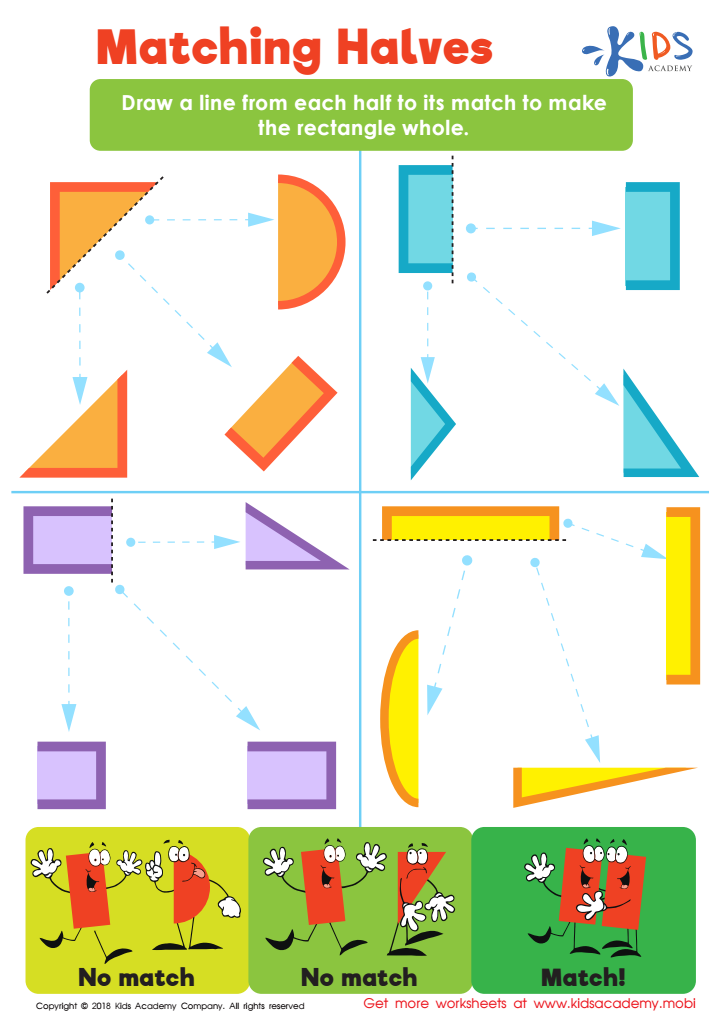
Matching Halves Worksheet
 Assign to My Students
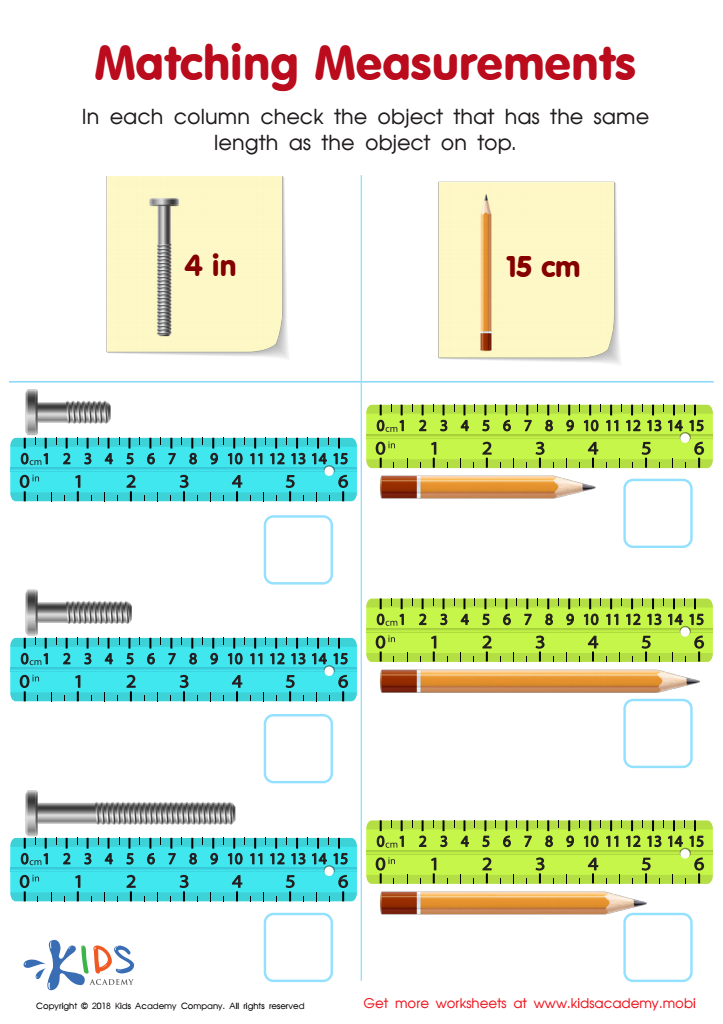
Matching Measurements Worksheet
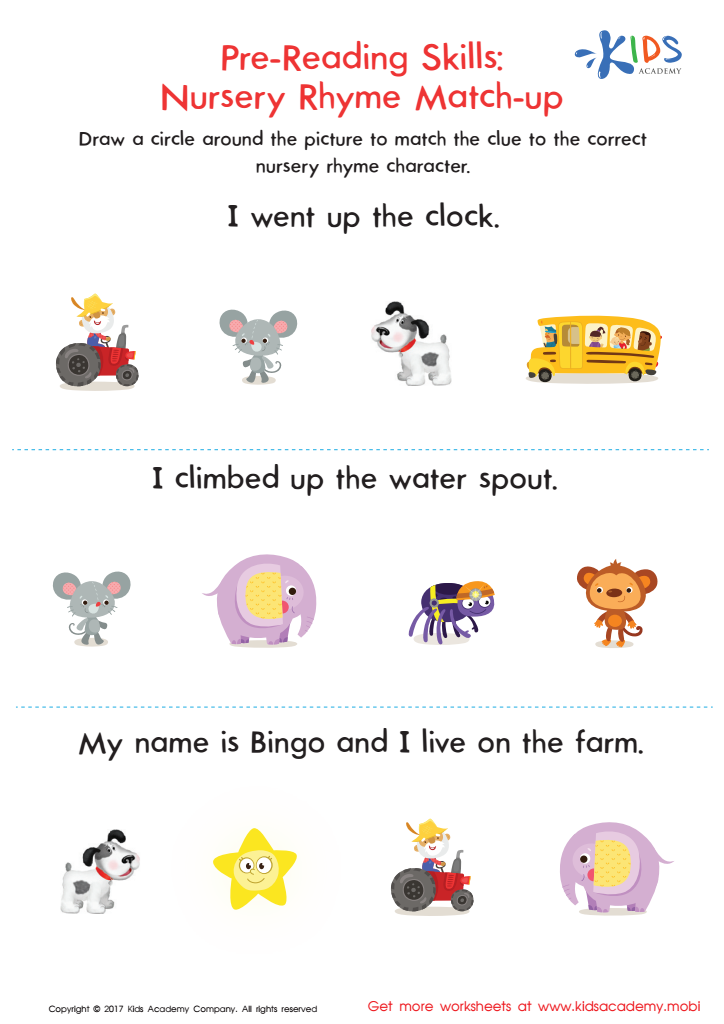
Nursery Rhyme Match–Up Worksheet
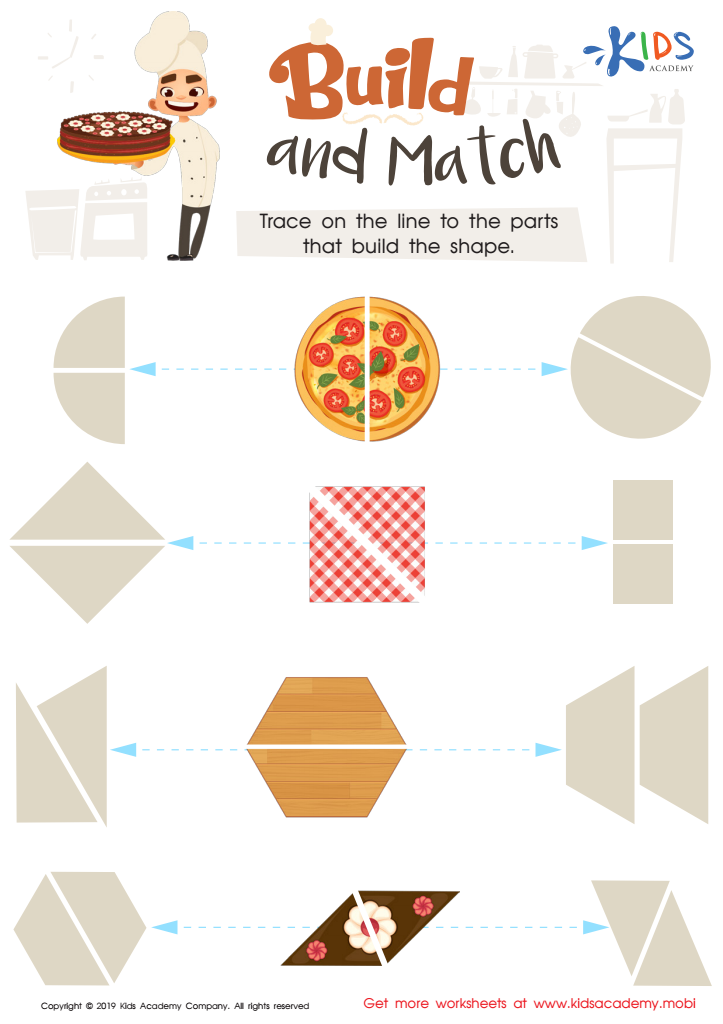
Build and Match Worksheet
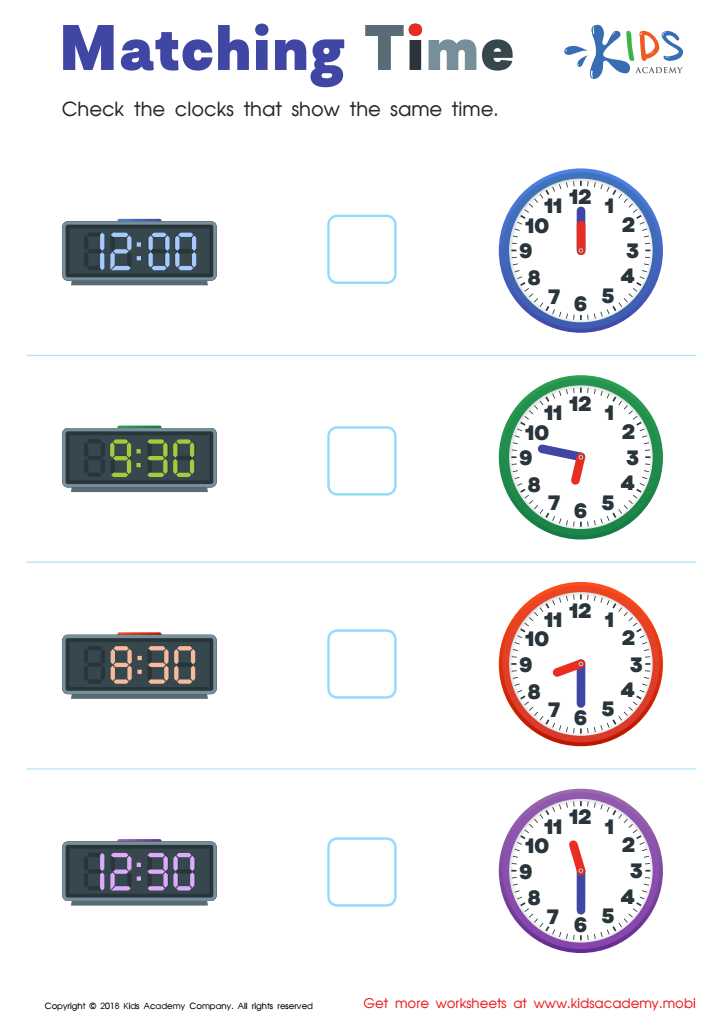
Matching Time Worksheet


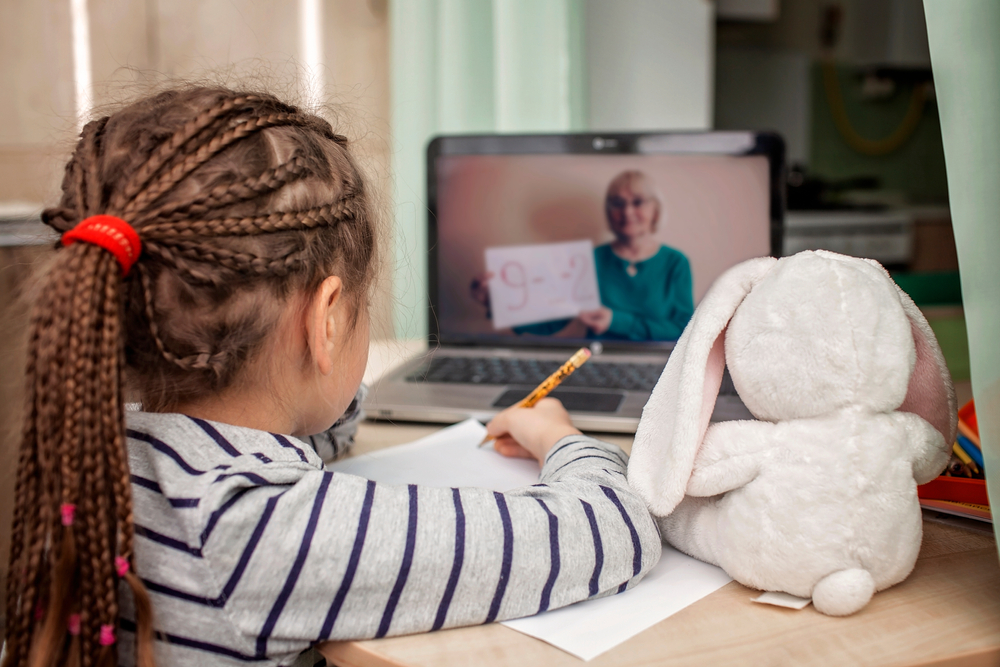


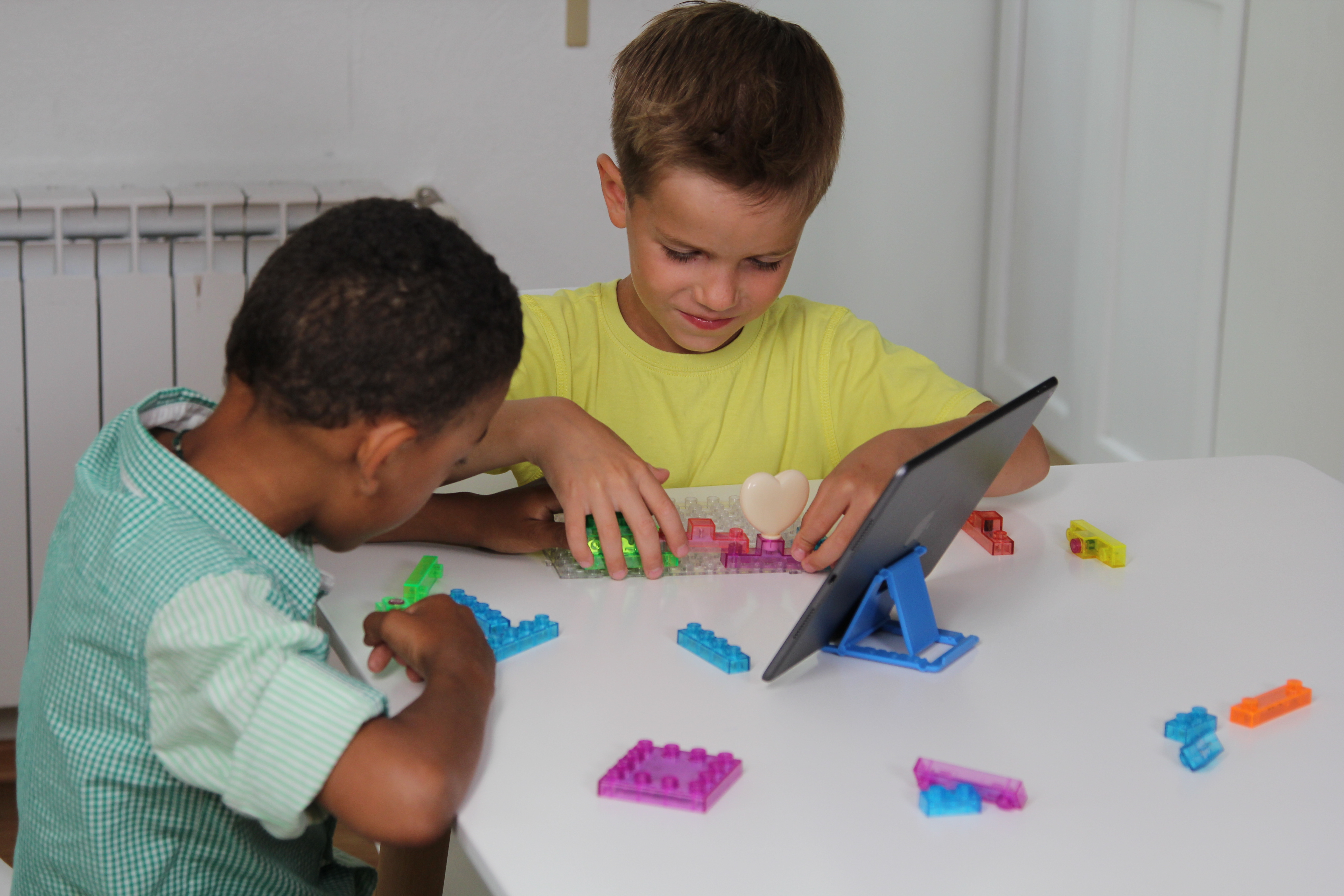
Matching skills are crucial for children aged 6-7 as they form the foundation for various cognitive and social abilities. At this age, children are developing critical thinking and problem-solving skills, and matching activities encourage them to make connections between different concepts. For example, through games that involve matching words to pictures or similar objects, children enhance their memory, attention to detail, and recognition abilities.
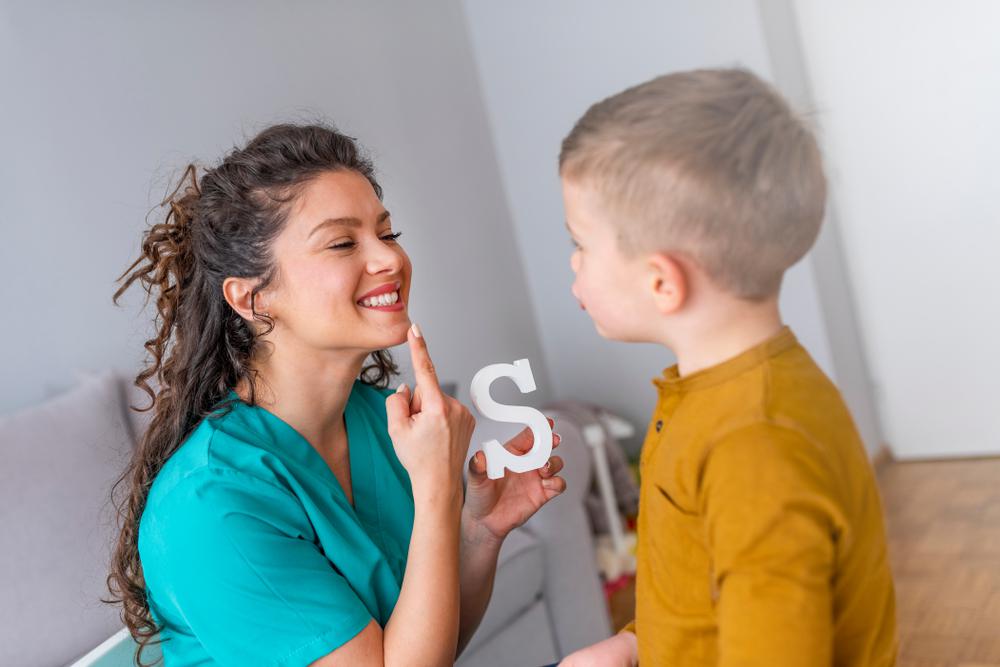
Furthermore, matching skills play a significant role in language development. By matching words to their meanings or sounds, children improve their vocabulary and comprehension, essential aspects of reading and communication.
Parents and teachers should also emphasize these skills because they boost children’s confidence and self-esteem; mastery of matching tasks empowers young learners and fosters a love for learning. Moreover, these activities can promote social skills as children often work in pairs or groups, encouraging teamwork and communication.
Incorporating matching games into daily routines not only engages kids in a fun, interactive manner but also lays crucial groundwork for higher-level cognitive skills, paving the way for academic success in the future. The development of matching skills is, therefore, an integral part of early education that deserves attention from both parents and educators.








