Understanding sequencing Easy Numbers Worksheets for Ages 6-7
3 filtered results
-
From - To
"Understanding Sequencing Easy Numbers Worksheets for Ages 6-7" are designed to help young learners grasp the basics of number order and sequence. These printable worksheets offer engaging and fun exercises that promote essential mathematical skills. Perfect for classroom use or at-home practice, the activities encourage children to recognize numerical patterns, fill in missing numbers, and build a strong foundation for future arithmetic learning. Ideal for ages 6-7, these worksheets inspire confidence in counting and order through well-structured, age-appropriate tasks that make learning numbers enjoyable and straightforward. Download now to support your child's numeracy development!
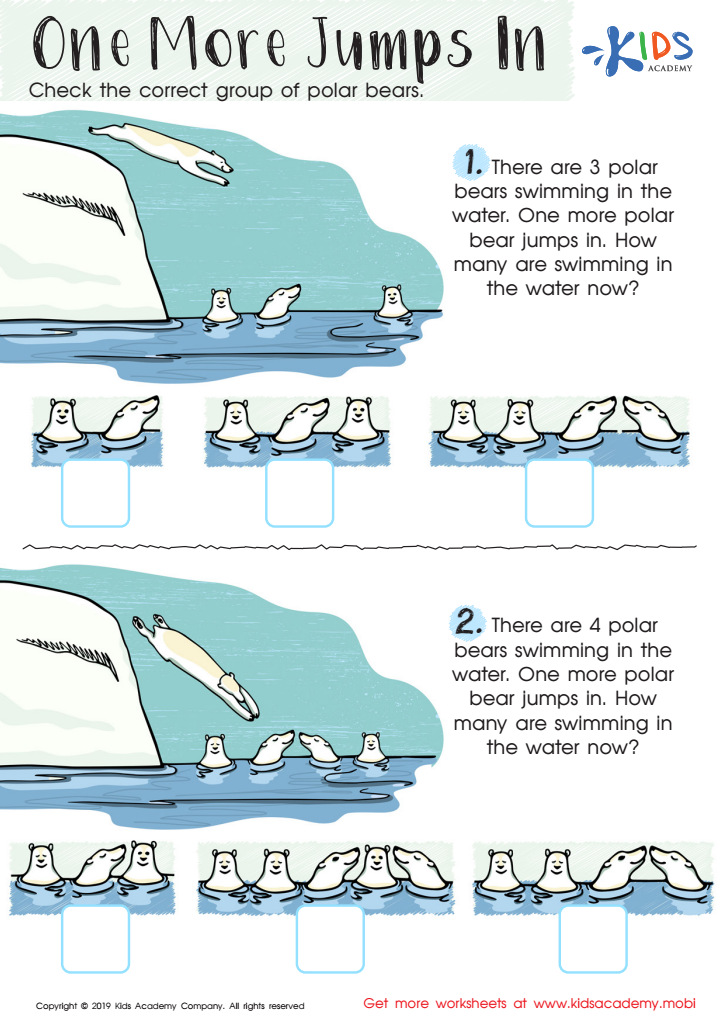
One More Jumps In Worksheet
 Assign to My Students
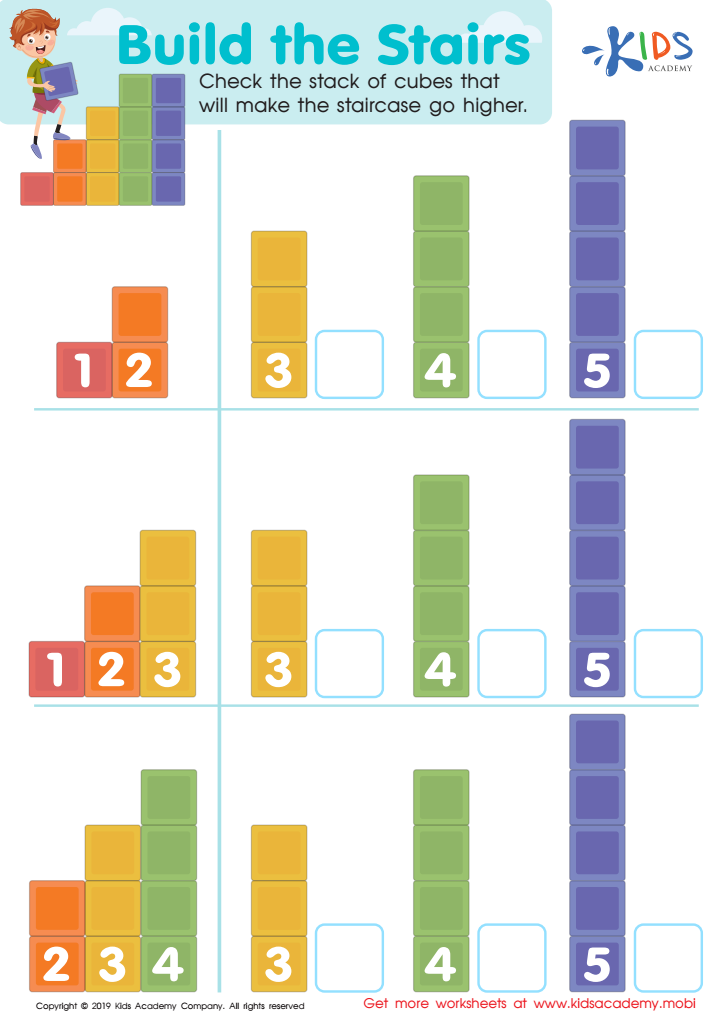
Build the Stairs Worksheet
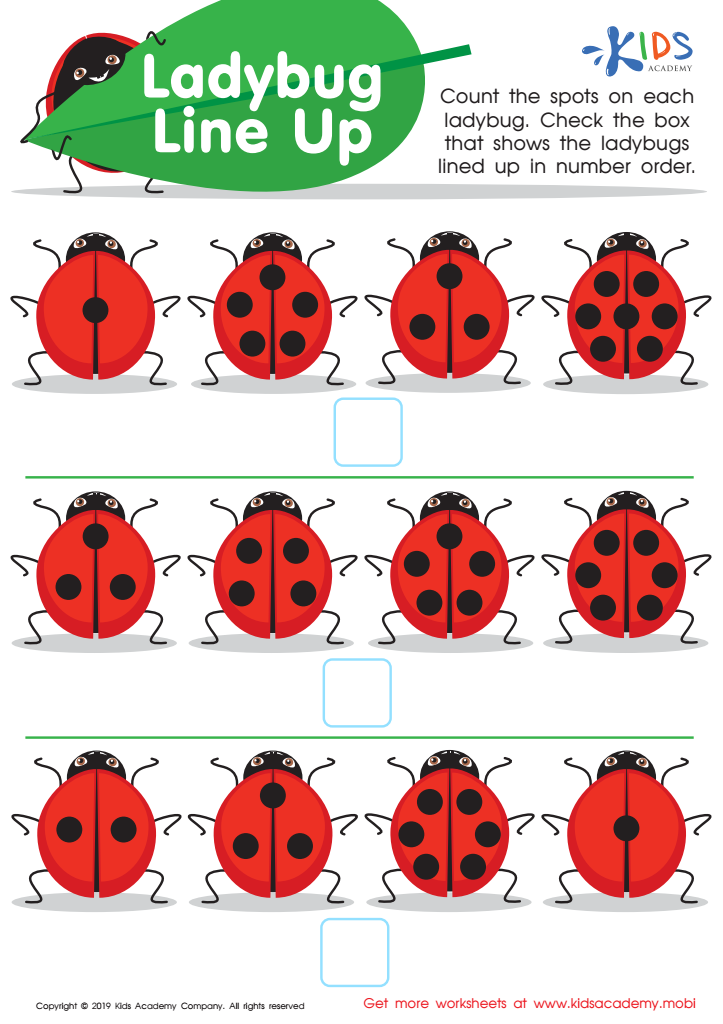
Ladybug Line Up Worksheet








Understanding sequencing and numbers is crucial for children aged 6-7 because it lays the foundation for their future mathematical learning and overall cognitive development. Sequencing, the ability to arrange objects, events, or numbers in a logical order, is a fundamental skill that integrates with counting, addition, and subtraction.
Firstly, sequencing skills nurture logical thinking and problem-solving. When children comprehend basic sequences—such as before and after or smallest to largest—they develop critical thinking abilities that will aid them in more complex math problems, as well as in other subjects like reading, where understanding the sequence of events is key.
Secondly, mastering number sequences boosts numeracy skills. It helps children recognize patterns, understand number relationships, and develop arithmetic skills. Without a firm grasp of numbers in order, simple tasks like telling time or understanding the calendar can become challenging.
Moreover, sequencing is linked to daily activities. It helps children follow instructions, organize their thoughts, and plan their actions, which are essential skills for independence and academic success.
Thus, by focusing on teaching easy number sequences at this pivotal age, parents and teachers set the stage for not only academic proficiency but also for robust cognitive development and practical life skills, empowering children for their future educational journey.








