
Basic counting skills Easy Math Worksheets for Ages 6-7
5 filtered results
Difficulty Level
Grade
Age
-
From - To
Subject
Activity
Standards
Discover our "Basic Counting Skills Easy Math Worksheets" designed for children ages 6-7! These engaging and interactive worksheets are perfect for early learners embarking on their math journey. Our age-appropriate activities make counting fun and accessible, helping kids develop crucial skills like number recognition, sequencing, and addition. With colorful illustrations and playful exercises, these worksheets captivate young minds, laying a strong foundation for future math success. Ideal for both classroom and home practice, our resources support parents and educators in guiding children through their early math adventures. Start exploring today and watch your child’s confidence soar!
Favorites
With answer key
Interactive
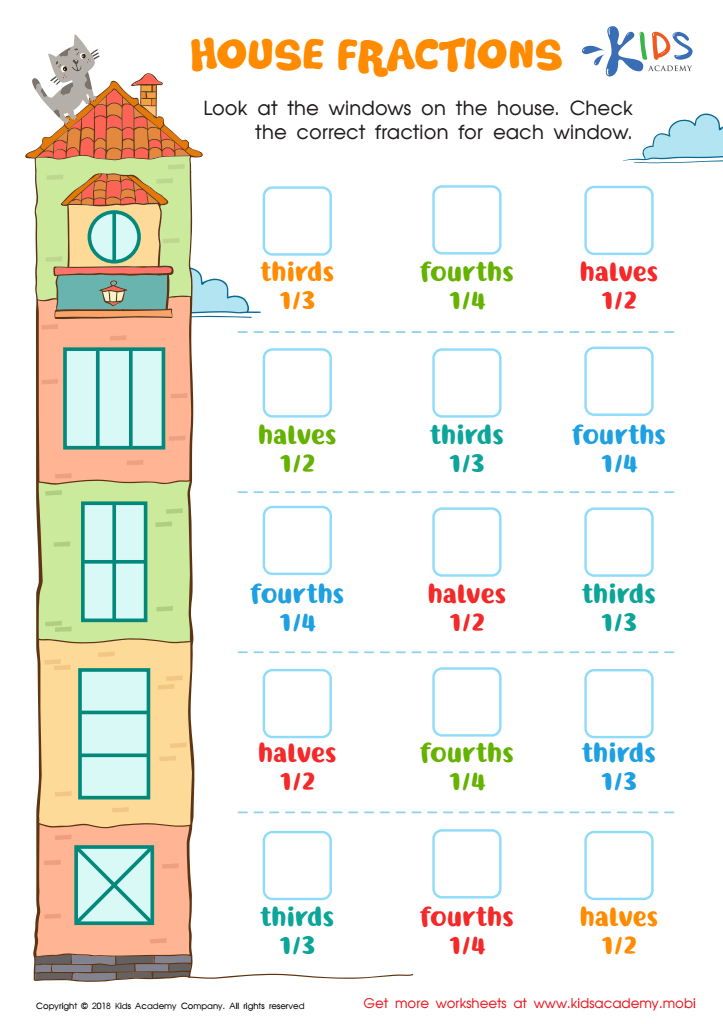
House Fractions Worksheet
Test your child's knowledge of fractions with this worksheet! Have them examine the windows of a house and select the correct fraction from the options given. This is a great way to see how much they understand about wholes, fractions, halves, one thirds, and one fourths.
 Assign to My Students
House Fractions Worksheet
Worksheet
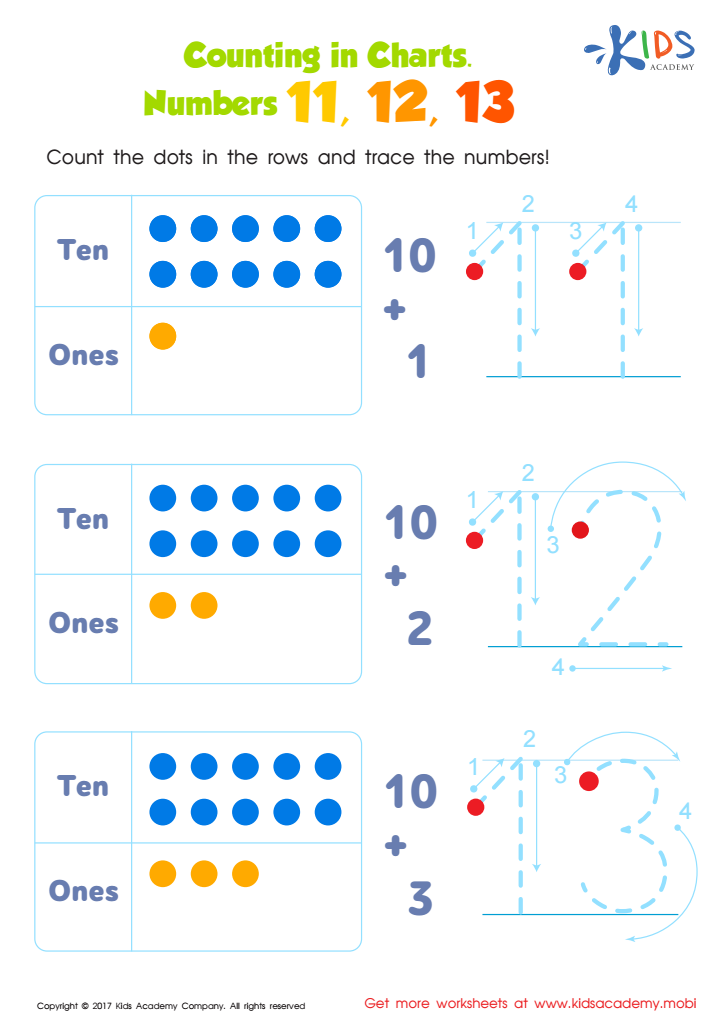
Number Tracing Worksheet For Kindergarten
Help your child develop addition skills and improve number recognition with this easy-to-use worksheet. Have them count the dots and add to solve each problem. Then, trace over the number to complete each row! It's a fun and simple way for kindergarteners to practice their math skills.
Number Tracing Worksheet For Kindergarten
Worksheet
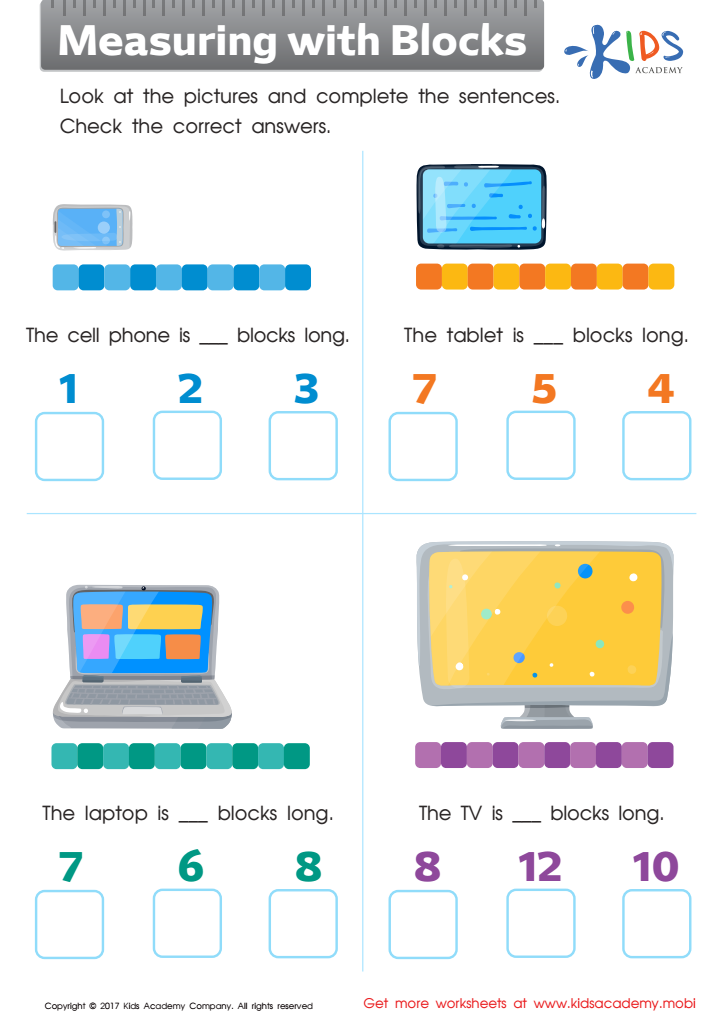
Measuring with Blocks Worksheet
Help your child get ready for math success with this Kids Academy worksheet. It provides colorful blocks to practice measuring objects. Coach them to count the boxes under each picture, then check the box with the right answer. It's a fun way to get acquainted with rulers!
Measuring with Blocks Worksheet
Worksheet
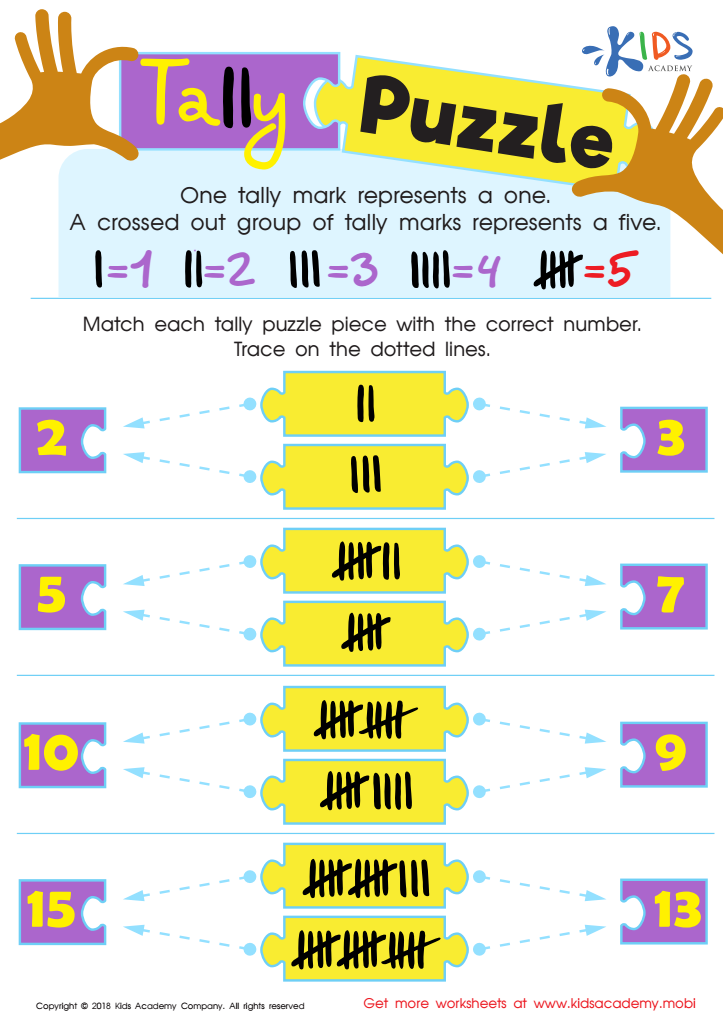
Tally Puzzle Worksheet
Kids love puzzles, and this bright worksheet will let them practice tallies and matching numbers. It teaches them to count and assign values, critical for doing math problems quickly and accurately later. It also leads to strategies like counting by 5s.
Tally Puzzle Worksheet
Worksheet
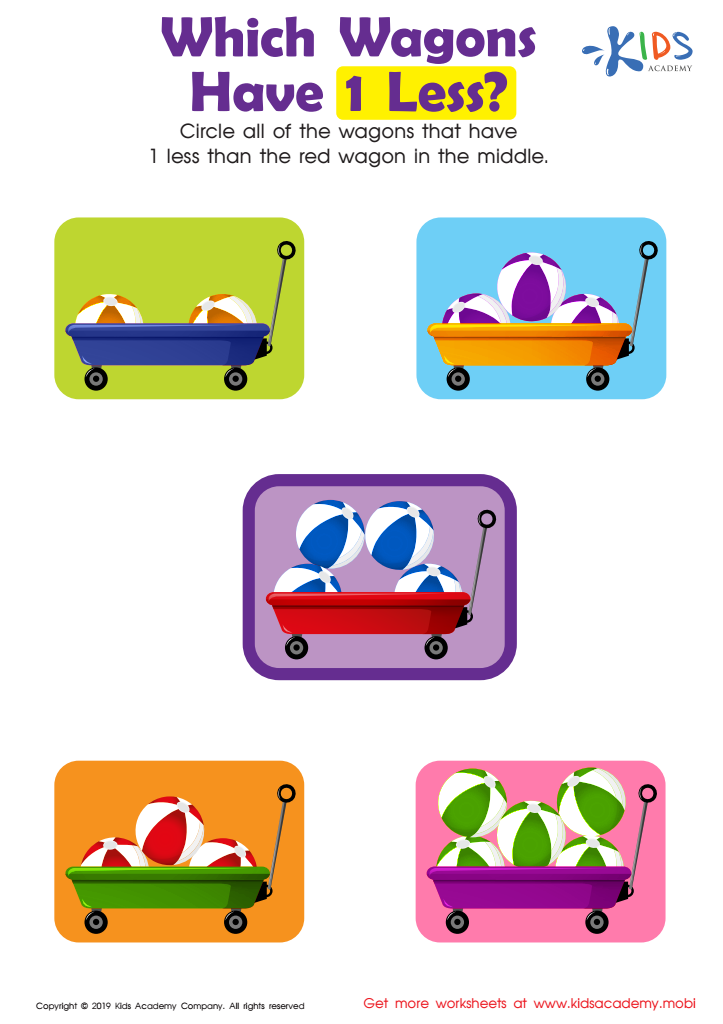
Which Wagons Have 1 Less? Worksheet
Test your kid's counting skills with a simple exercise. Ask them to count the balls in the five wagons shown and to circle the wagons with one less than the red wagon in the middle. This will give their brains a simple task that tests their knowledge of numbers.
Which Wagons Have 1 Less? Worksheet
Worksheet
Join Kids Academy for Free
Who is primarily going to use this learning content?






Parents and teachers should place a strong emphasis on basic counting skills for children aged 6-7 because these skills form the foundation for all future mathematics learning. At this age, children are typically in the first or second grade, a crucial period for cognitive development related to numerical understanding. Mastering basic counting helps young learners grasp key math concepts such as addition, subtraction, and the idea of quantity, which are essential for more complex operations they will encounter later in their education.
Basic counting skills also enhance a child’s ability to recognize patterns and sequences, an important cognitive skill that extends beyond math into daily problem-solving and decision-making. For instance, understanding that numbers follow a specific order aids in recognizing patterns, which is beneficial across various subjects, including reading and science.
Furthermore, developing counting proficiency boosts a child’s confidence in their ability to understand and manage numbers, fostering a positive attitude towards math. It also prepares them for real-world tasks like handling money and telling time, thereby increasing their independence.
Therefore, ensuring that children aged 6-7 develop strong counting skills equips them with the essential tools they need for academic success and everyday life, making it imperative for parents and teachers to focus on this foundational aspect of early education.








