Comparing numbers Easy Measurement Worksheets for Ages 6-7
3 filtered results
-
From - To
Introducing our engaging "Comparing Numbers: Easy Measurement Worksheets" designed specifically for children ages 6-7! Developed by Kids Academy, these worksheets make mastering measurement concepts fun and accessible. Through interactive activities, kids will learn to compare and order numbers, enhancing their understanding of essential math skills. These worksheets are perfect for classroom use, homeschooling, or extra practice at home. Support your child's educational journey with activities tailored to their age and learning level, ensuring a solid foundation in measurement and number comparison. Spark a love for math and help your child excel with our expertly-crafted resources!
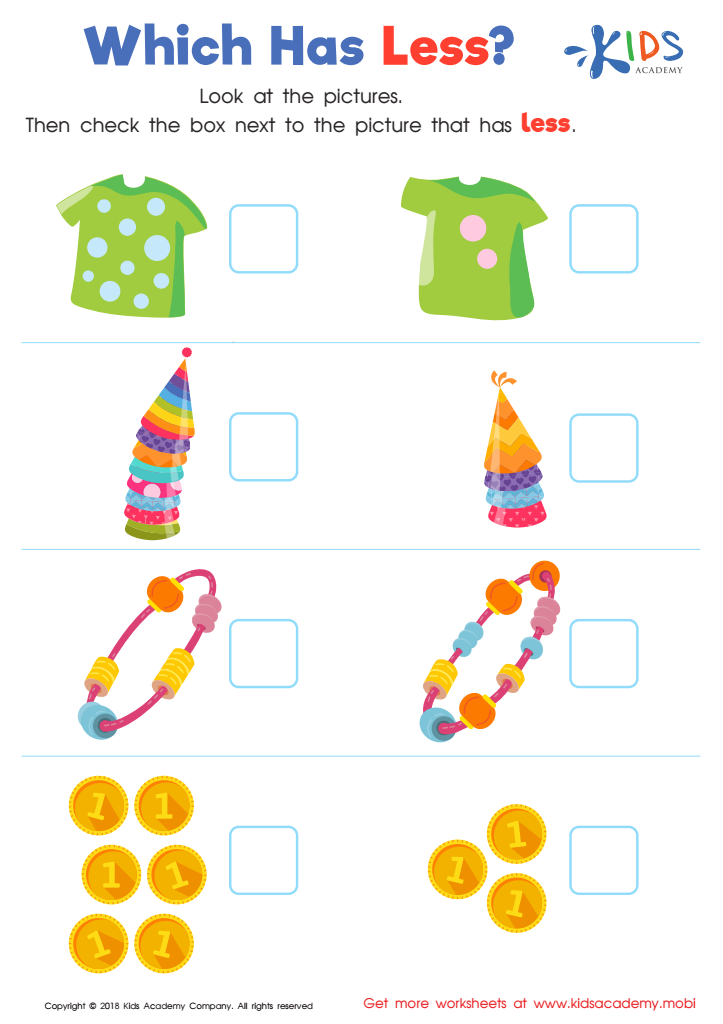
Which Has Less? Worksheet
 Assign to My Students
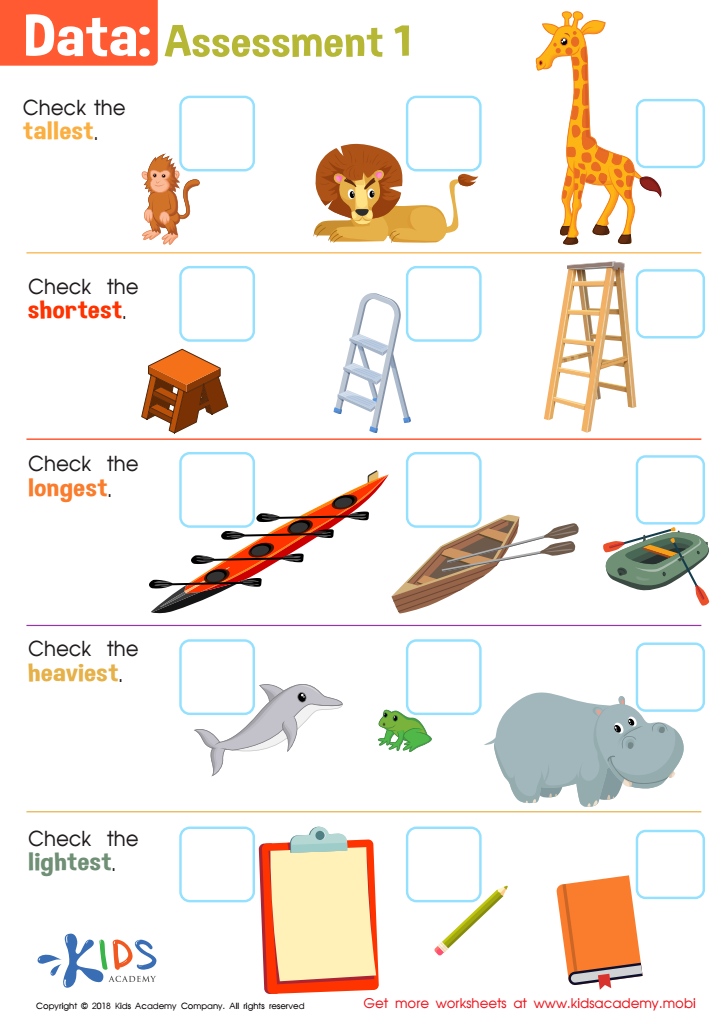
Data: Assessment 1 Worksheet
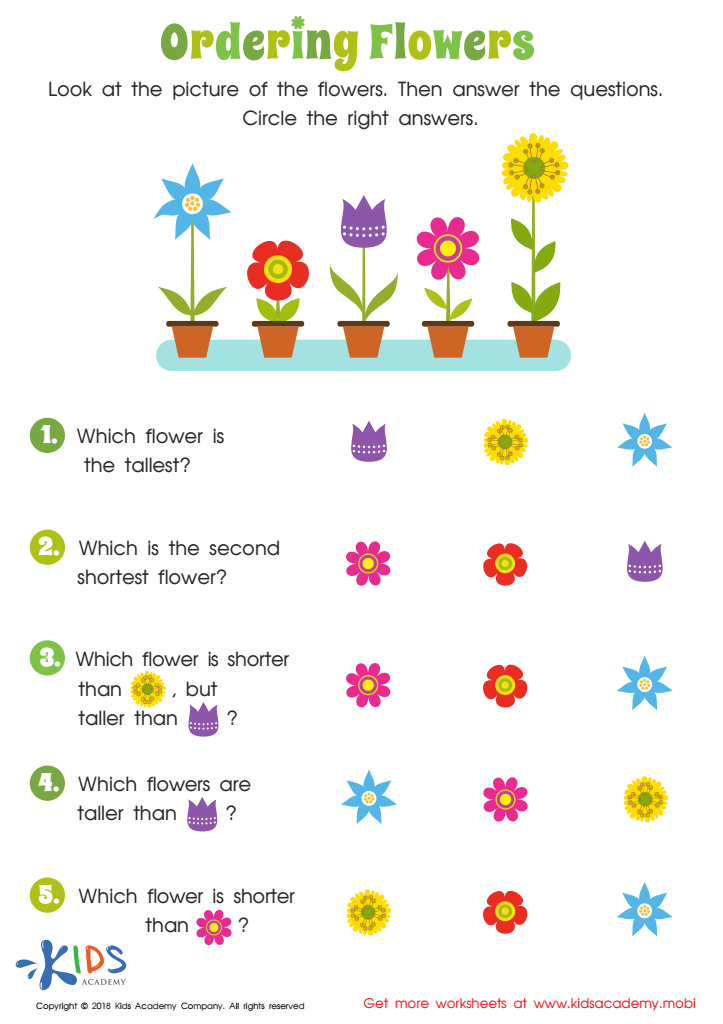
Ordering Flowers Worksheet








Comparing numbers and easy measurements are fundamental skills for children aged 6-7, helping to lay the groundwork for more complex mathematical concepts. For parents and teachers, fostering these skills is crucial for several reasons:
-
Foundational Learning: Comparing numbers helps children grasp the basic principles of mathematics, such as greater than, less than, and equal to. This understanding is essential for solving more complex equations in the future.
-
Logical Thinking: Engaging in activities that involve comparing numbers and measurements enhances logical reasoning. Children learn to observe, analyze differences, and make decisions based on quantitative data.
-
Real-World Application: Measurement is a practical skill used in everyday life. Whether measuring ingredients for a recipe, determining the length of an object, or comparing prices, these skills are vital for daily tasks.
-
Boosts Confidence: Early success in math-related activities can significantly boost a child's confidence. When children feel competent in comparing numbers and making measurements, they're more likely to engage positively with math throughout their education.
-
Tracking Progress: For educators and parents, comparing numbers is an effective way to monitor a child’s understanding of number sense and their ability to use mathematical language. This can inform more targeted instruction or support where needed.
Investing time in these skills equips children with necessary tools for future academic success and everyday problem-solving, setting a strong educational foundation.








