Vocabulary expansion Easy Animals Worksheets for Ages 6-7
3 filtered results
-
From - To
Enhance your child’s language skills with our engaging "Vocabulary Expansion Easy Animals Worksheets" designed for kids aged 6-7. These user-friendly worksheets introduce young learners to a variety of animal-related vocabulary through fun, interactive activities. As children explore delightful illustrations and simple prompts, they'll boost their word bank while gaining confidence in reading and comprehension. Perfect for classroom use or at-home learning, these worksheets promote critical thinking and creativity as children describe animals, match words with images, and complete sentences. Foster a love for language and the natural world with our imaginative resources, aimed at making vocabulary building an enjoyable experience!
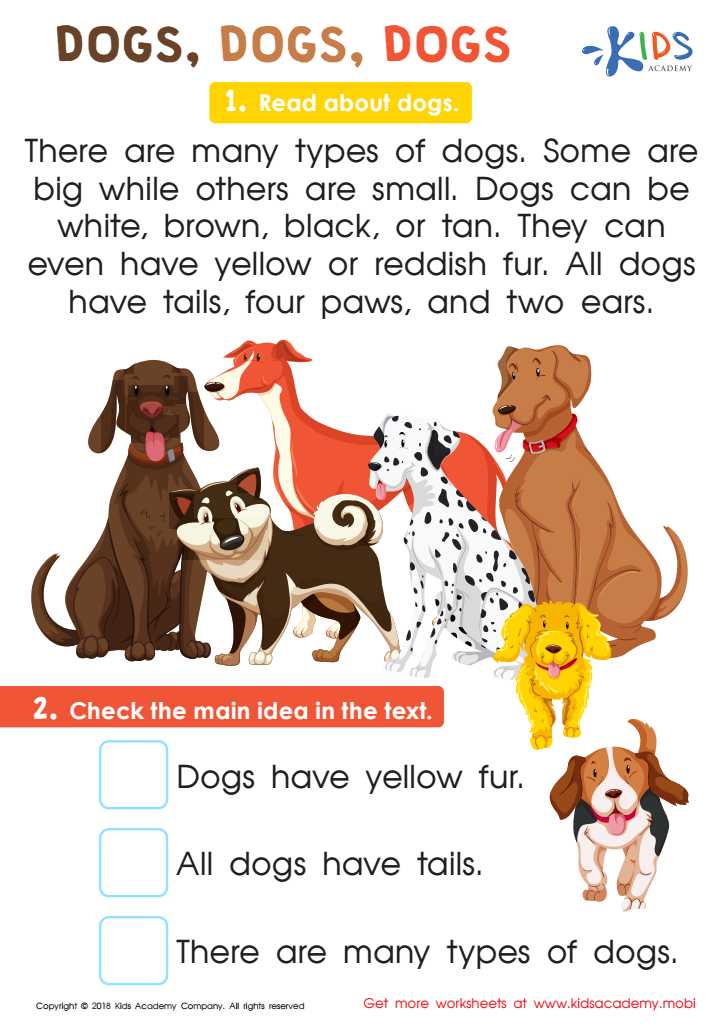
Dogs, Dogs Worksheet
 Assign to My Students
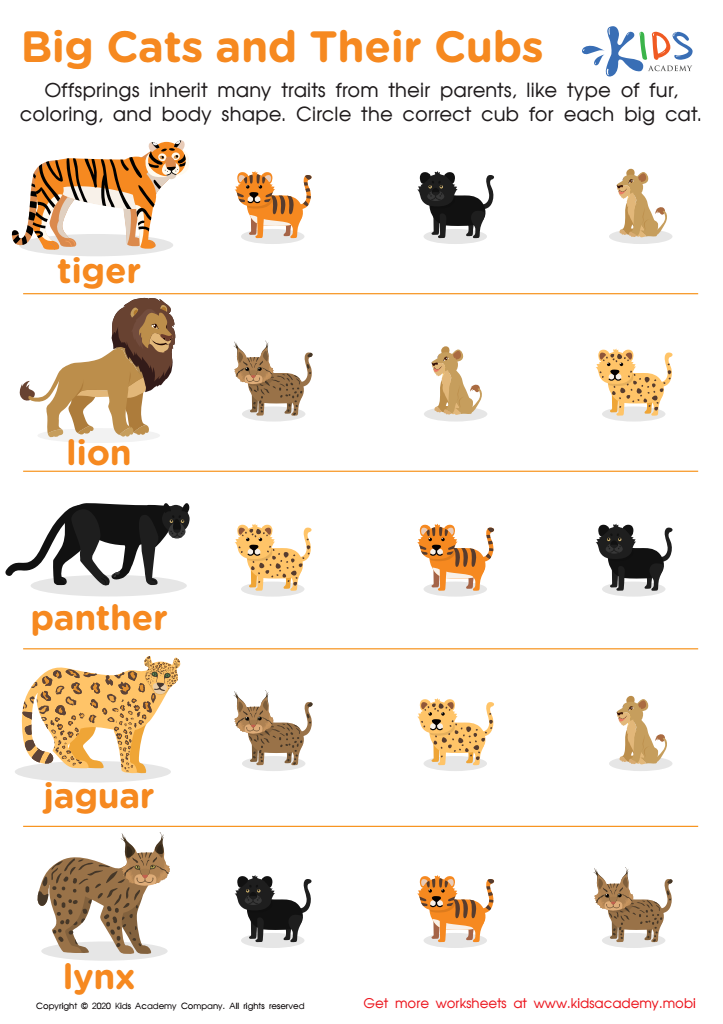
Big Cats and Their Cubs Worksheet
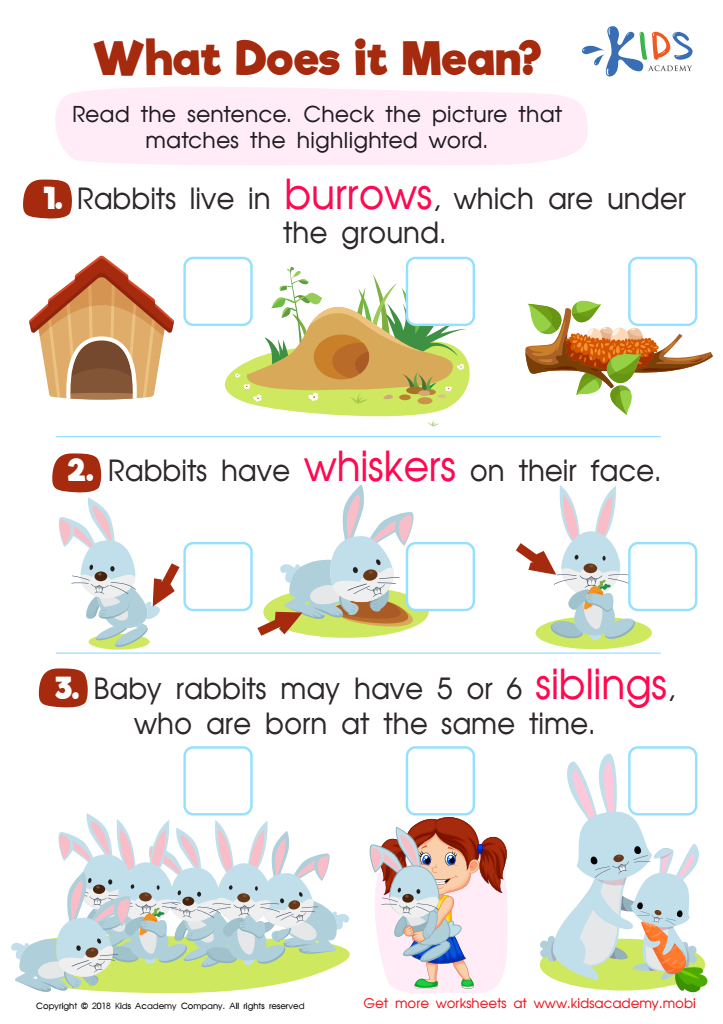
What Does It Mean? Worksheet








Vocabulary expansion is crucial for children aged 6-7, particularly when it comes to themes like Easy Animals. During these formative years, children are developing essential language skills that lay the groundwork for effective communication, reading comprehension, and overall academic success. By focusing on animal-related vocabulary, parents and teachers can ignite a child’s curiosity, making learning engaging and relatable.
Familiarizing children with animal names, habitats, and behaviors not only enhances their vocabulary but also encourages observational skills and critical thinking. When children engage with topics that interest them—like animals—they are more likely to participate actively in discussions, ask questions, and develop a love for learning. Incorporating playful activities, such as flashcards, games, or storytelling, makes these learning experiences enjoyable and memorable.
Furthermore, expanding vocabulary in these early years aids cognitive development, improves literacy skills, and enhances social interactions as children learn to express thoughts and feelings clearly. Consequently, prioritizing vocabulary expansion around topics like Easy Animals equips children with tools that are essential not only for academic growth but also for effective day-to-day communication, fostering connections with peers and caregivers alike. In essence, this practice is instrumental in shaping proficient and confident young learners.