Understanding sequencing Easy Numbers Worksheets for Ages 6-8
3 filtered results
-
From - To
Discover our "Understanding Sequencing Easy Numbers Worksheets" designed for children aged 6-8. These engaging worksheets help young learners develop essential sequencing skills through fun and interactive activities. With a variety of exercises, kids will practice putting numbers in order, reinforcing their math foundation while enhancing critical thinking and problem-solving abilities. Our materials cater to different learning styles, ensuring every child stays motivated and excited about learning. Ideal for classroom or home study, these easy-to-follow worksheets encourage independent learning and boost confidence in young mathematicians. Explore the joy of numbers and make sequencing a fun adventure for your child!

One More Jumps In Worksheet
 Assign to My Students
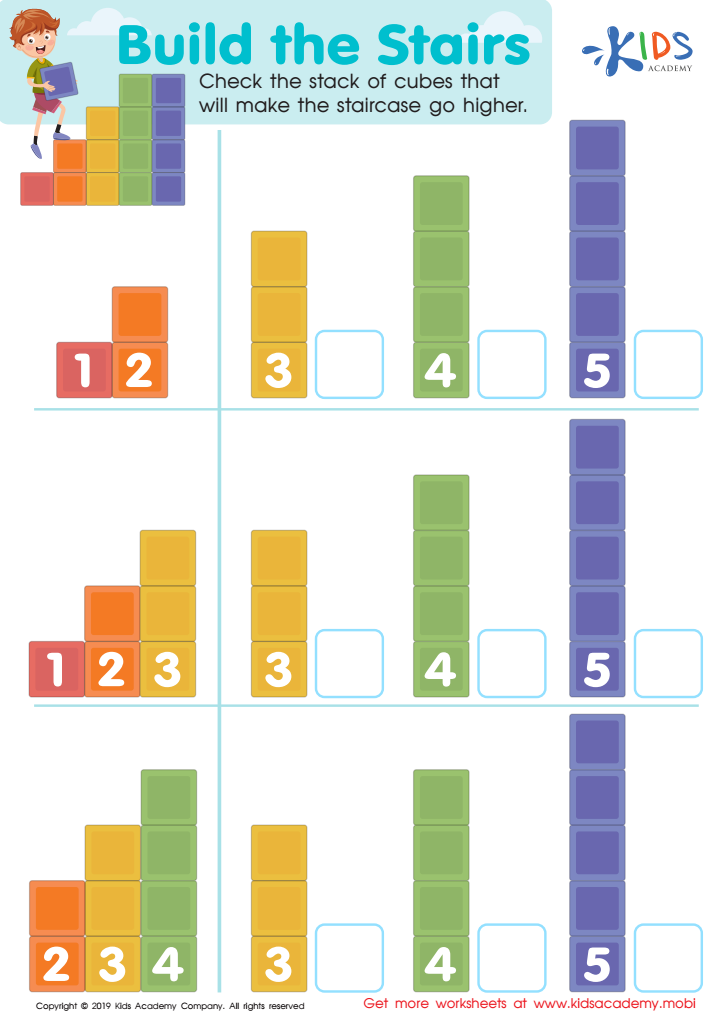
Build the Stairs Worksheet
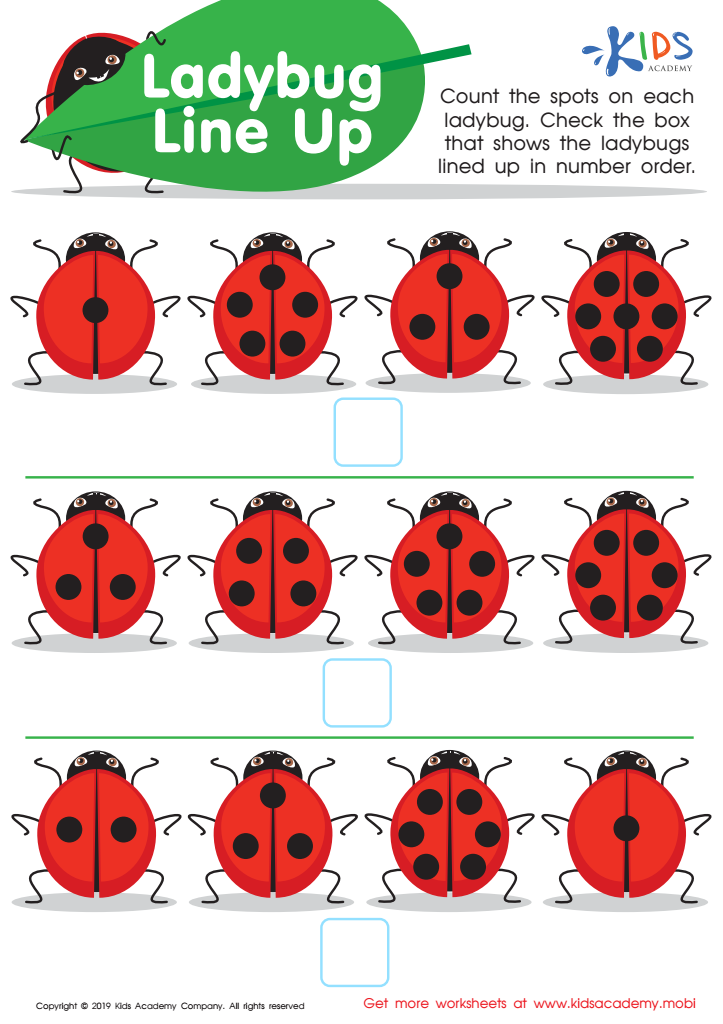
Ladybug Line Up Worksheet








Understanding sequencing easy numbers is crucial for children aged 6-8, as it serves as a foundational skill for both mathematics and daily life problem-solving. At this age, children are beginning to grasp essential math concepts, and sequencing teaches them how to recognize patterns, follow steps, and understand the order of operations, which is vital when tackling addition, subtraction, and more complex arithmetic in the future.
For teachers and parents, caring about this skill means ensuring that children not only learn to count but also comprehend how numbers relate to each other. Sequencing allows children to develop critical thinking by encouraging them to make predictions and logical connections. Engaging in activities that promote sequencing helps with reading comprehension as well, as understanding the order of events in stories is equally important.
Moreover, strong sequencing skills foster children's independence, guiding them in making decisions and managing activities in both academic settings and everyday scenarios. By focusing on sequencing in early education, parents and teachers lay the groundwork for a child's future learning success and cognitive development, ultimately preparing them for more complex challenges ahead. Therefore, nurturing sequencing skills is essential in early education settings.








