Comparing quantities Easy Math Worksheets for Ages 6-8
3 filtered results
-
From - To
Discover our engaging "Comparing Quantities Easy Math Worksheets” designed for children ages 6-8! These worksheets help young learners grasp the essential skill of comparing quantities in a fun and interactive way. Featuring colorful illustrations and straightforward exercises, students will enjoy practicing concepts such as greater than, less than, and equal to. Ideal for classroom use or at-home learning, our worksheets promote critical thinking and mathematical reasoning. Tailored to various learning styles, they are perfect for reinforcing foundational math skills in an enjoyable environment. Join us in empowering your child’s math journey today! Dive into our resources that make learning easier and exciting!
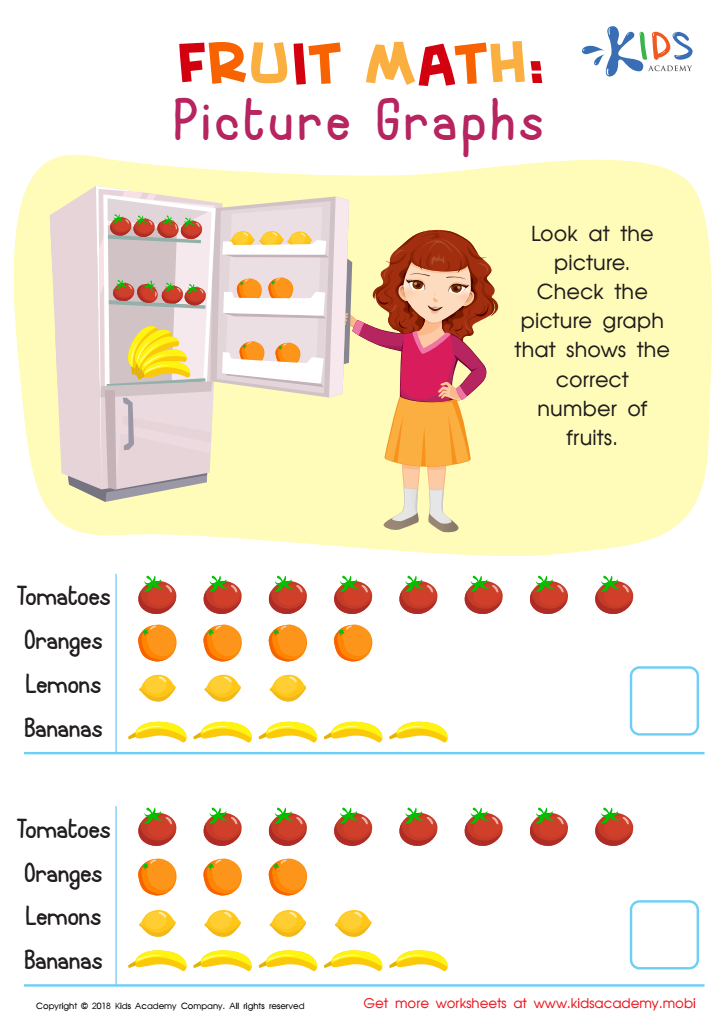
Fruit Math: Picture Graphs Worksheet
 Assign to My Students
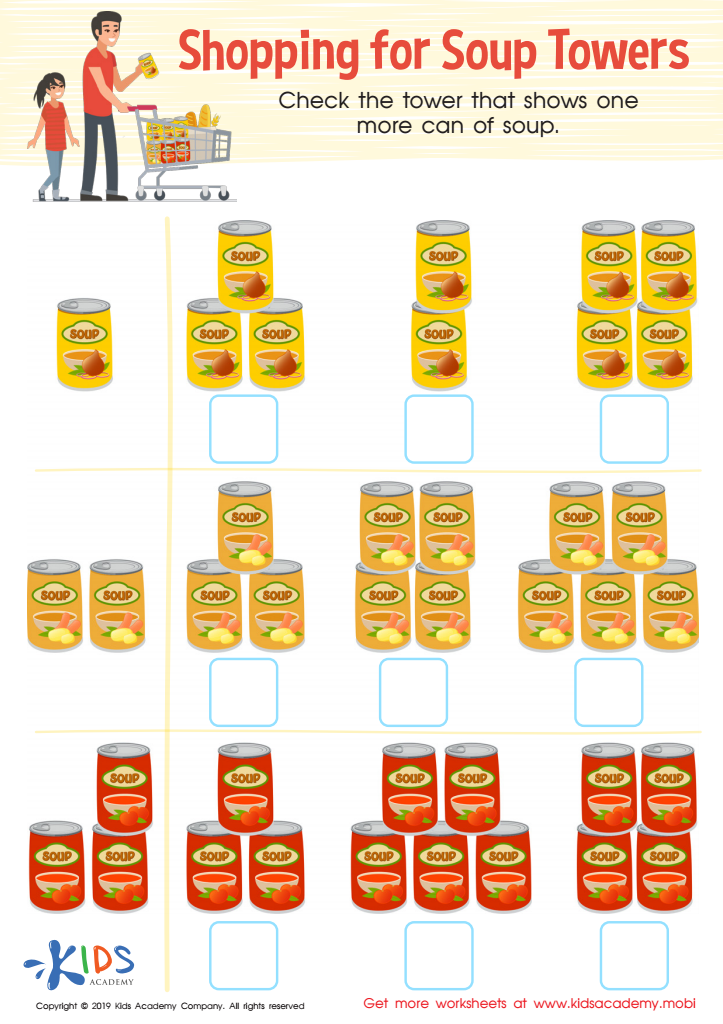
Soup Towers Worksheet
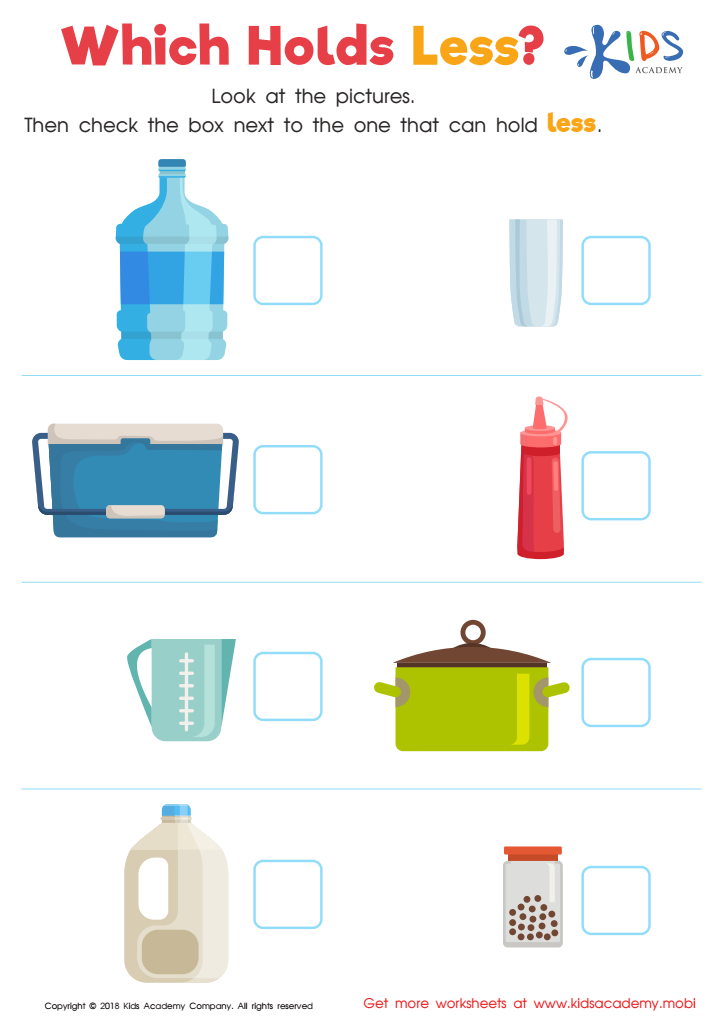
Which Holds Less? Worksheet








Parents and teachers should care about teaching children to compare quantities in math for several essential reasons. First, understanding how to compare quantities lays the foundation for more complex mathematical concepts, such as addition, subtraction, multiplication, and division. By mastering this skill early on, children develop strong numerical reasoning that fosters their confidence in the subject moving forward.
Moreover, comparing quantities enhances critical thinking and problem-solving skills. As children assess different groups or amounts—whether it's determining which is greater, lesser, or the same—they actively engage in analysis and reasoning processes that are valuable beyond math class. This kind of thinking aids in everyday decision-making, from evaluating quantities during shopping trips to managing time or resources in various activities.
Additionally, incorporating engaging activities and visual aids makes learning enjoyable and relatable. It encourages children to develop a genuine interest in mathematics, reducing anxiety often associated with the subject. When parents and teachers promote skills like comparing quantities, they not only contribute to a child's mathematical proficiency but also support overall cognitive development, nurturing well-rounded learners who can handle various academic and real-world challenges proficiently. Thus, it’s an investment that pays off in numerous aspects of a child’s growth.








