Identifying shapes Easy Math Worksheets for Ages 6-8
3 filtered results
-
From - To
Enhance your child’s geometry understanding with our “Identifying Shapes” Easy Math Worksheets tailored for ages 6-8. These engaging activities from Kids Academy help young learners recognize and differentiate between various shapes, improving their spatial awareness and critical thinking. With a range of colorful exercises, from identifying triangles and circles to distinguishing between 2D and 3D shapes, these worksheets make learning fun and interactive. Perfect for classroom use or at-home practice, our printables align with Common Core standards, ensuring your child gains essential math skills through hands-on, playful learning experiences. Boost your child's confidence in math today!
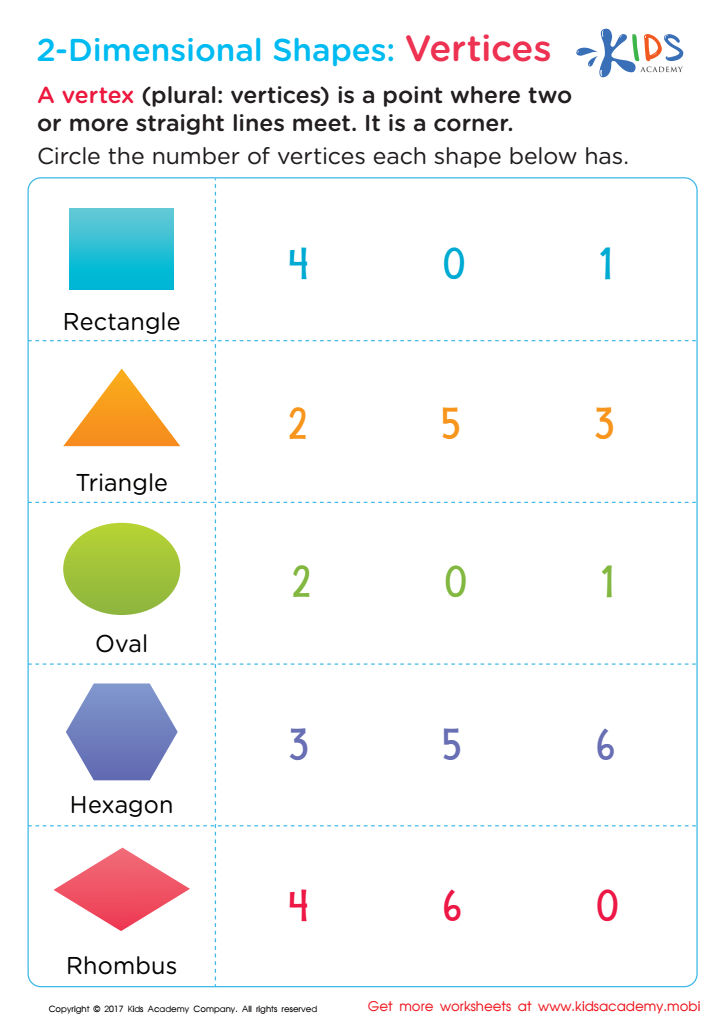
Two–Dimensional Shapes: Vertices Printable
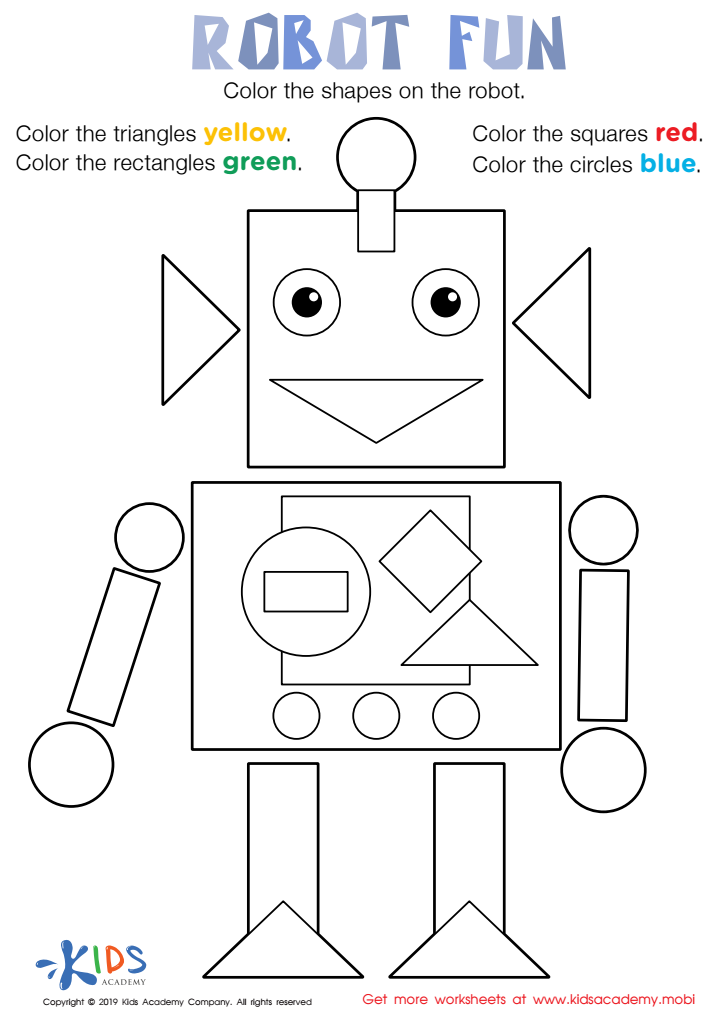
Robot Fun Worksheet
 Assign to My Students
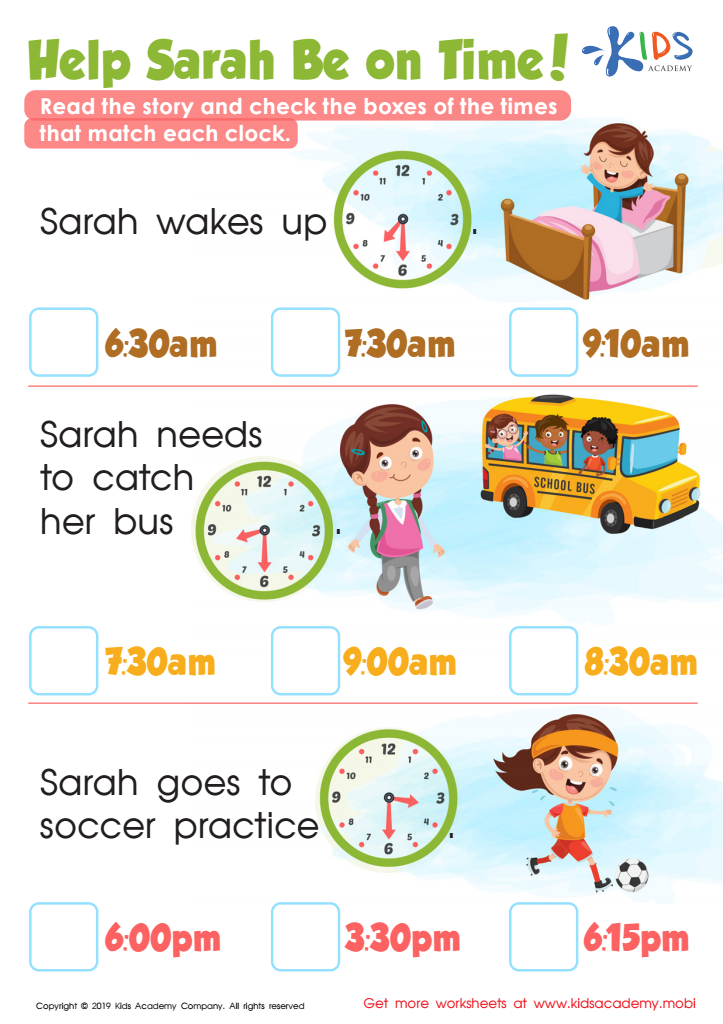
Help Sarah Be on Time! Worksheet







Identifying shapes is a foundational skill in early mathematics that sets children up for success in various aspects of learning and daily life. For ages 6-8, recognizing basic shapes like circles, squares, and triangles forms the basis for more complex mathematical concepts, such as geometry, spatial reasoning, and pattern recognition.
Firstly, understanding shapes helps children develop visual and spatial awareness, which are crucial for solving puzzles, reading maps, and even understanding graphs and charts later on. It also enhances their descriptive vocabulary, allowing them to communicate more precisely about the world around them. When children recognize shapes, they’re better equipped to understand that different shapes have different properties, which leads to a deeper understanding of lines, angles, and dimensions as they progress in their education.
Secondly, learning shapes is directly linked to identifying numbers and understanding their relationships. Shapes teach concepts of symmetry, balance, and proportion, all of which are important in subjects ranging from art to science. This skill also aids in building fine motor skills when children attempt activities that require drawing or constructing shapes.
Overall, identifying shapes fosters cognitive development, boosts problem-solving skills, and supports core educational progress, making it a critical focus for both parents and teachers in the formative years of a child’s development.








