
Vocabulary Enrichment Easy Math Worksheets for Ages 6-8
3 filtered results
Difficulty Level
Grade
Age
-
From - To
Subject
Activity
Standards
Discover fun and engaging "Vocabulary Enrichment Easy Math Worksheets for Ages 6-8" designed to boost both language and math skills. These expertly crafted worksheets not only enhance children's mathematics capabilities through simple addition, subtraction, and basic geometry exercises but also expand their vocabulary with math-related terms. Perfect for young learners, these activities make learning enjoyable and effective, ensuring foundational skills are solid. Ideal for classroom use or homeschooling, these printable worksheets provide a comprehensive, integrated approach to early education, encouraging a lifelong love of math and language. Explore now and watch your child's confidence soar!
Favorites
With answer key
Interactive
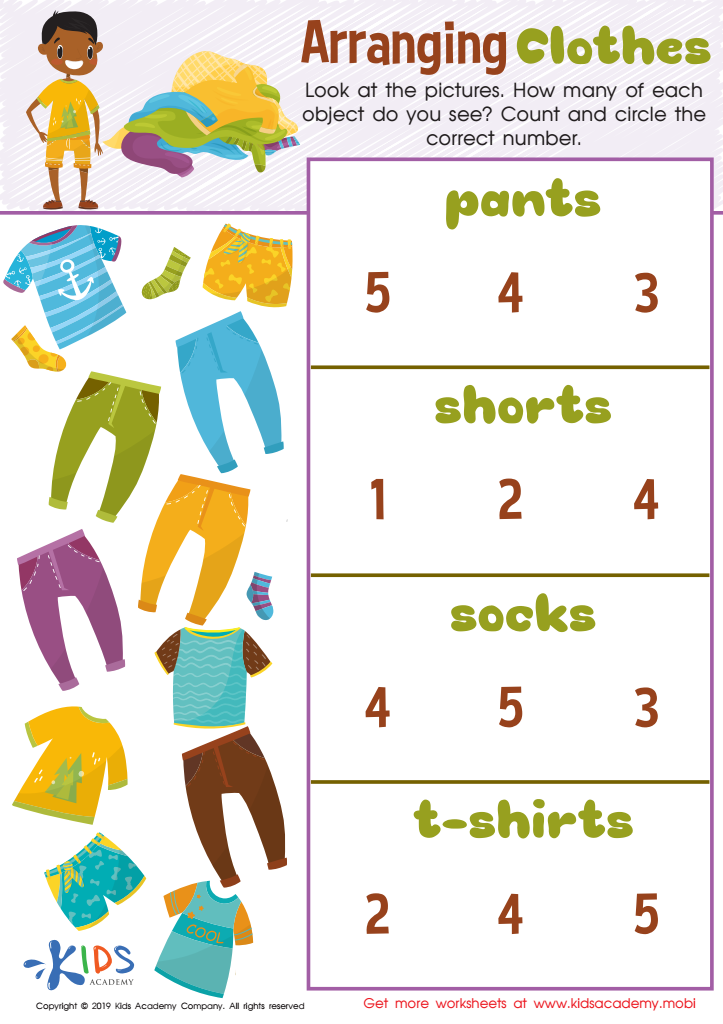
Arranging Clothes Worksheet
This worksheet uses familiar items, brightly colored to attract your kids. Ask them to name each item, then count them and circle the right number.
 Assign to My Students
Arranging Clothes Worksheet
Worksheet
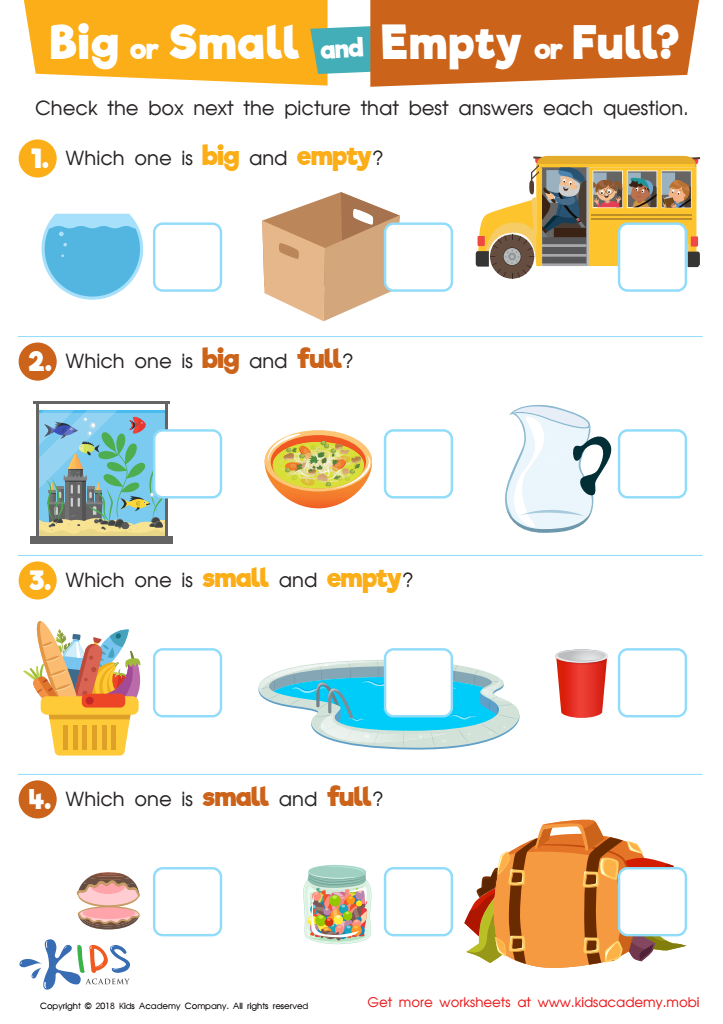
Big or Small and Empty or Full? Worksheet
Early learners can develop their math skills by using this Worksheet with fun, familiar pictures. It reinforces concepts like big/small and empty/full, helping them to differentiate and identify objects that meet those definitions.
Big or Small and Empty or Full? Worksheet
Worksheet
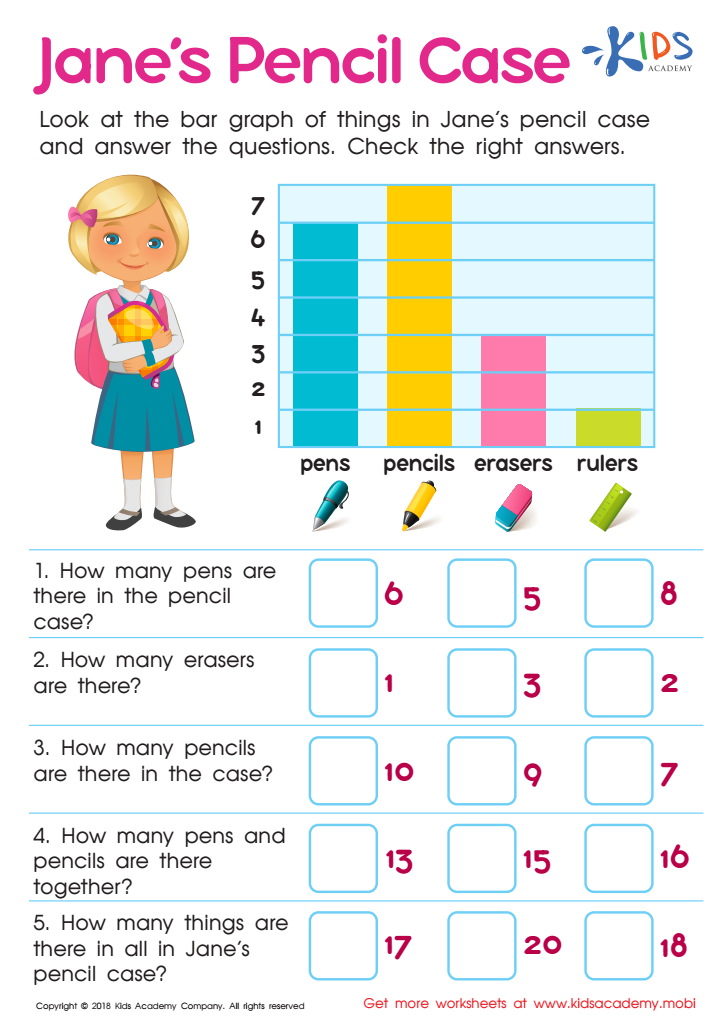
Jane's Pencil Case Worksheet
Help Jane organize her pencil case! Have your child look and the bar graph on the worksheet and interpret the data. Ask them to read each problem, then check the box next to the correct number. It's a fun way to practice reading graphs and reporting data.
Jane's Pencil Case Worksheet
Worksheet
Join Kids Academy for Free
Who is primarily going to use this learning content?







Vocabulary enrichment in early math education for children aged 6-8 is crucial because it builds a strong foundation for future academic success. For both parents and teachers, it's essential to recognize that understanding math vocabulary directly impacts a child's ability to grasp key concepts. When children understand terms like “addition,” “subtraction,” “equal to,” and “greater than,” they can more efficiently tackle math problems.
Additionally, expanding a child’s math vocabulary aids in developing critical thinking and problem-solving skills. It helps them follow instructions accurately and articulate their thought processes clearly. This is particularly important in collaborative learning environments where discussing solutions with peers is common.
For parents, reinforcing math vocabulary at home supports what children learn in school, creating a consistent learning environment. Games, everyday conversations, and reading mathematically-themed books can make math fun and relatable.
For teachers, focusing on vocabulary enrichment can differentiate instruction and cater to diverse learning needs. Visual aids, word walls, and hands-on activities in the classroom can make abstract concepts concrete.
In summary, vocabulary enrichment in early math education bridges the gap between language and numeracy, setting a solid groundwork for comprehension and application. Engaging both at home and in school fosters a cohesive, in-depth understanding, which is essential for a child's ongoing educational journey.








