Interpreting data Easy Measurement Worksheets for Ages 6-8
3 filtered results
-
From - To
Welcome to our Interpreting Data Easy Measurement Worksheets page designed for children ages 6-8! Our thoughtfully crafted worksheets help young learners develop essential skills in data interpretation and measurement concepts. Through engaging activities, children will explore various ways to collect, analyze, and represent data, making math fun and relatable. Each worksheet encourages critical thinking, encouraging students to interact with graphs, charts, and real-world scenarios. Enhance your child's mathematical foundation while fostering their confidence with engaging, age-appropriate materials. Perfect for home or classroom use, these worksheets are a valuable resource for nurturing early data literacy skills. Start exploring today!
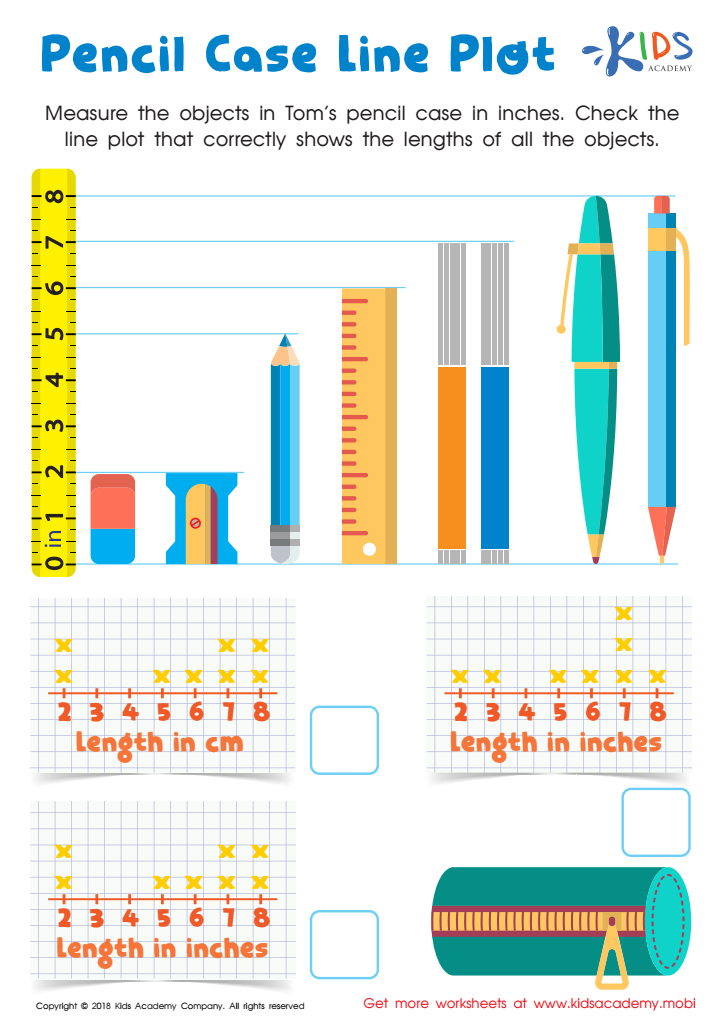
Pencil Case Line Plot Worksheet
 Assign to My Students
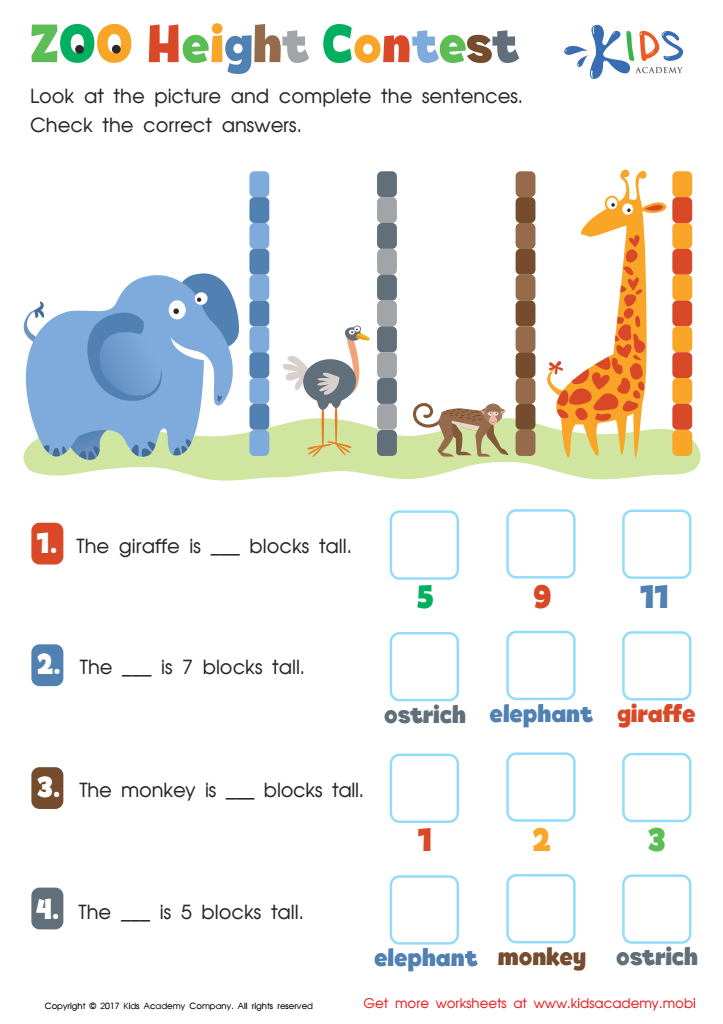
Zoo Height Contest Worksheet
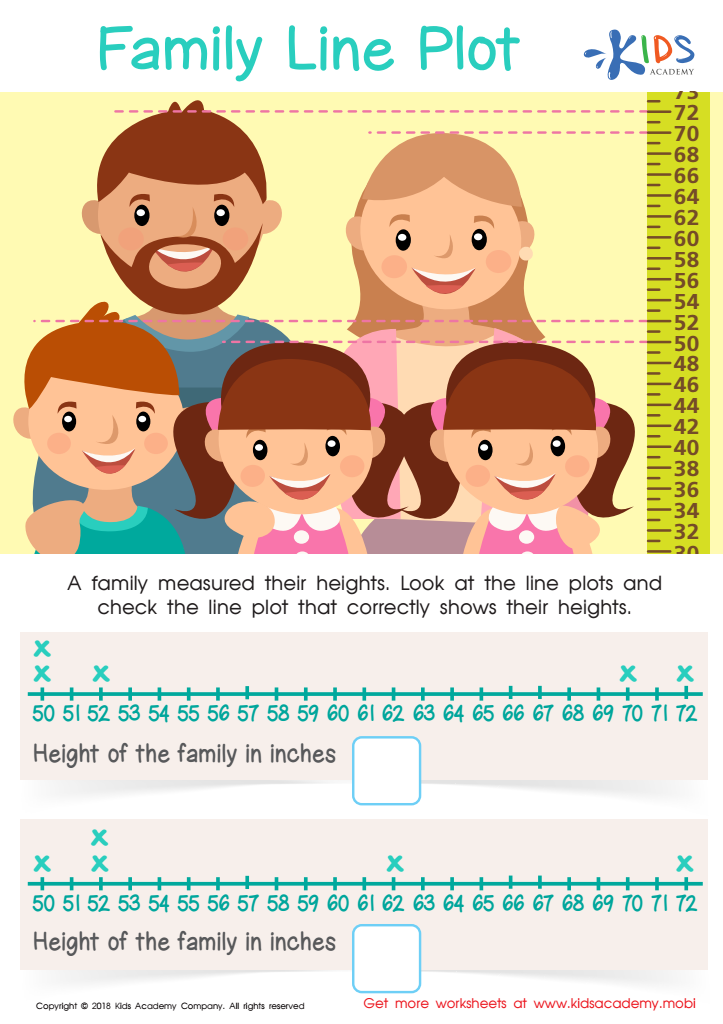
Family Line Plot Worksheet








Interpreting data and understanding measurements is essential for children aged 6-8, as it lays the foundation for critical thinking and problem-solving skills. At this age, children are beginning to develop numeracy skills, and teachers and parents play a crucial role in helping them navigate these concepts.
Fostering data interpretation skills encourages children to analyze everyday information, whether it be through simple graphs, charts, or measurements in real-life contexts, like cooking or measuring height. This form of learning not only makes mathematics more accessible but also helps children retain information by connecting it to tangible experiences. Moreover, as they learn to interpret data, children become more confident in making decisions based on evidence.
For example, understanding how to measure ingredients in a recipe helps them appreciate the importance of accuracy, while interpreting a bar graph about their favorite fruits makes them engage with the data meaningfully. Growing these skills early cultivates curiosity and instills a lifelong love for learning and inquiry. Ultimately, both teachers and parents should prioritize these competencies, as they not only meet curriculum goals but also shape capable, informed future citizens adept at navigating a data-driven world.








