Logical Reasoning Easy Reading Worksheets for Ages 6-8
3 filtered results
-
From - To
Enhance your child's critical thinking and reading skills with our Logical Reasoning Easy Reading Worksheets, designed specifically for ages 6-8. These engaging and educational worksheets from Kids Academy help young learners develop their logical reasoning abilities through fun and interactive activities. Each worksheet encourages children to think critically, draw conclusions, and understand relationships between different concepts, all while honing their reading comprehension. Perfect for both classroom and home use, our worksheets provide a solid foundation for academic success in a playful and supportive environment. Start your child's journey towards better logical reasoning today!
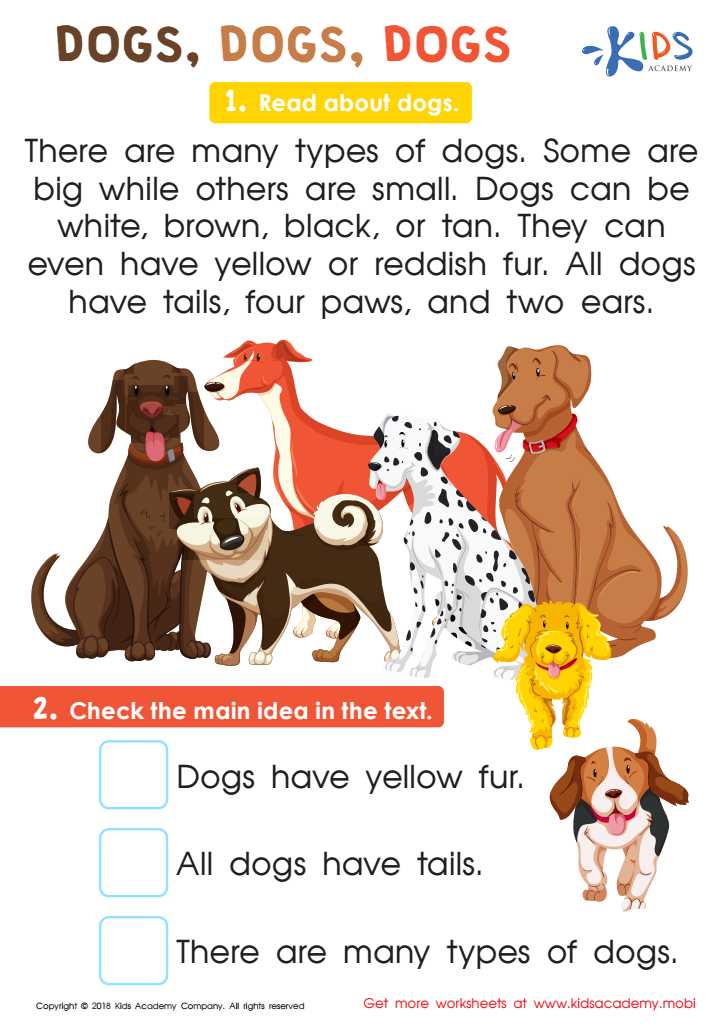
Dogs, Dogs Worksheet
 Assign to My Students
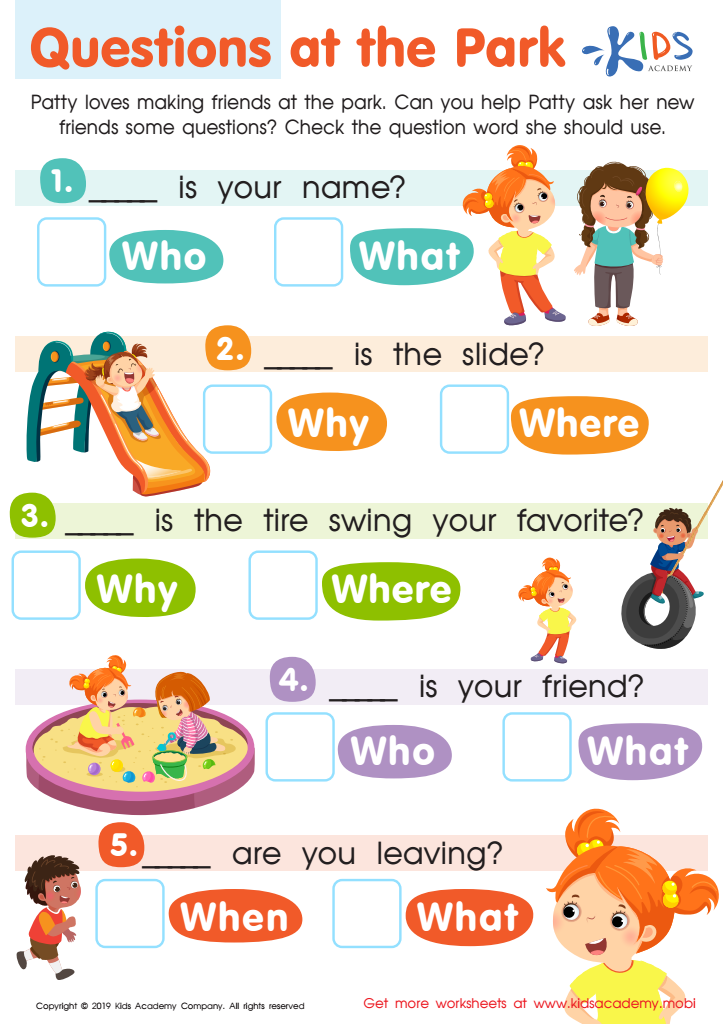
Questions at the Park Worksheet
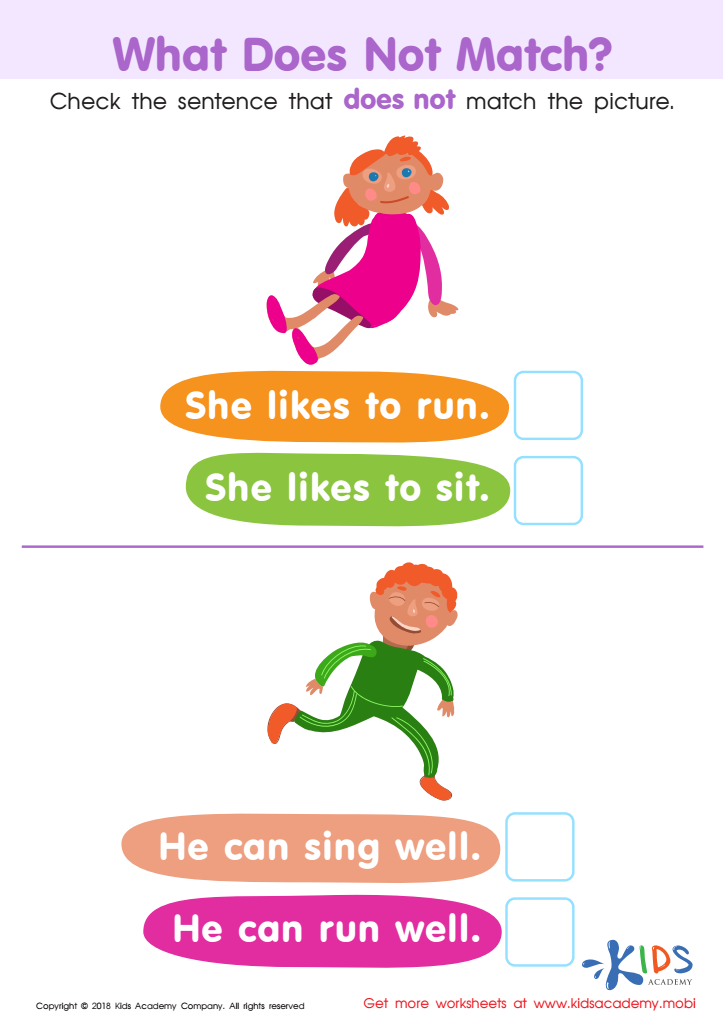
What Does Not Match? Worksheet






.jpg)

Logical reasoning and easy reading hold crucial importance in the development of children aged 6-8. During these formative years, kids transition from recognizing words to understanding context and meaning, critical elements pivotal for their cognitive growth. Logical reasoning is the step beyond simple memorization; it nurtures children's capacity to deduce, infer, and form connections, skills they will use lifelong across various disciplines.
Parents and teachers who invest time in enhancing logical reasoning help children develop problem-solving abilities. These abilities lay the foundation for effective decision-making and adaptive thinking. Children learning through logical reasoning become more adept at tackling new challenges, understanding mathematical concepts, and improving in subjects like science and languages, fostering a well-rounded intellectual growth.
Combined with easy reading, such activities also make reading enjoyable and engaging. Since children often view learning through a lens of play, integrating logical reasoning within simple, captivating stories encourages them to associate learning with fun. This not only enhances their reading proficiency and comprehension but also instills a habit of reading eagerly and wisely.
In summary, logical reasoning and easy reading work hand-in-hand, guiding children towards a path of independent thought, robust learning inclinations, and a lifelong love of knowledge.