
Logical thinking development Easy Worksheets for Ages 6-9
3 filtered results
Difficulty Level
Grade
Age
-
From - To
Subject
Activity
Standards
Fuel your child's learning journey with our "Logical Thinking Development Easy Worksheets for Ages 6-9," specially crafted to enhance critical thinking in a fun, engaging way. Our expertly designed worksheets help young minds develop problem-solving skills, pattern recognition, and deductive reasoning through playful activities and challenges. Perfect for classroom or at-home learning, each worksheet presents a new opportunity for kids to explore logical thinking at their own pace. Support your child’s cognitive growth and boost their confidence with resources that turn learning into an enjoyable adventure. Dive in and watch your young thinkers shine!
Favorites
With answer key
Interactive
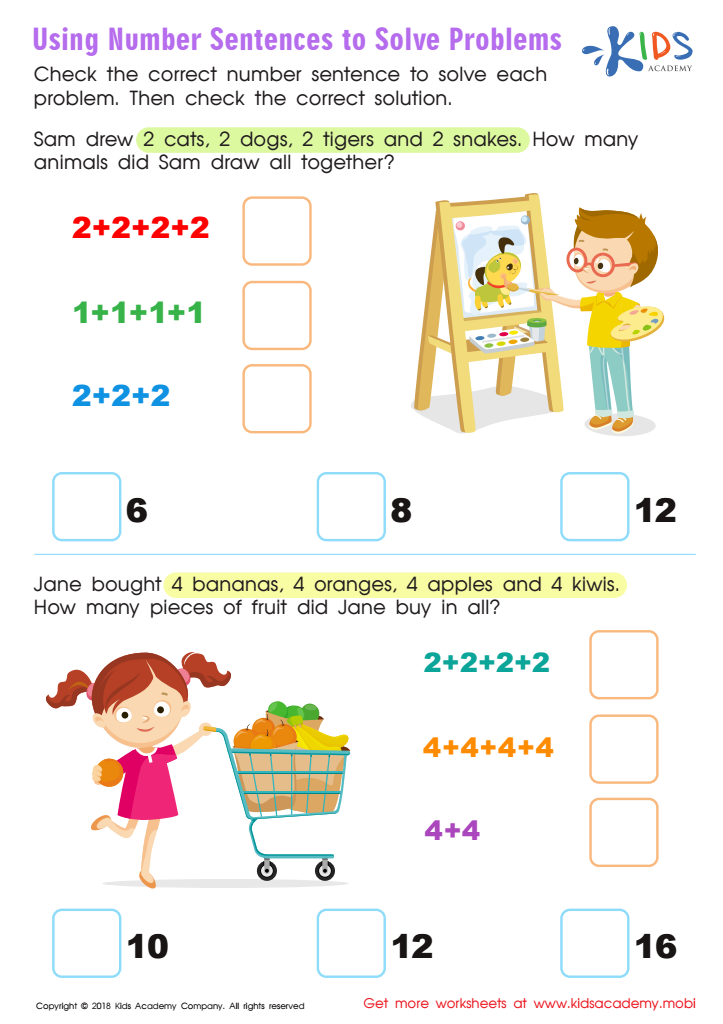
Using Number Sentences to Solve Problems Worksheet
Solving math problems requires an efficient strategy. Picture representation can help young mathematicians with basic addition problems, especially when it involves repeated addends. As they gain confidence, they'll be able to apply their number sentence solving abilities to more complex equations.
 Assign to My Students
Using Number Sentences to Solve Problems Worksheet
Worksheet
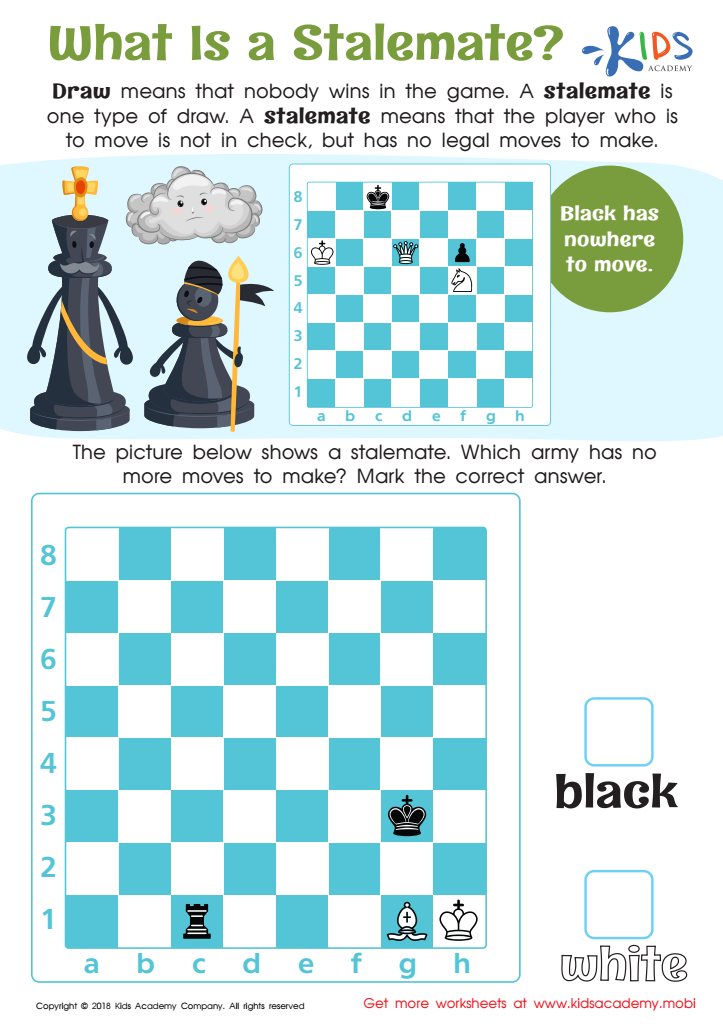
What Is a Stalemate? Worksheet
Chess is an ideal way to develop logic, strategizing, problem-solving and more! Even kids can learn it. With this worksheet, children can learn about draws and stalemates. Sample boards will help them decide which team, black or white, is at a stalemate.
What Is a Stalemate? Worksheet
Worksheet
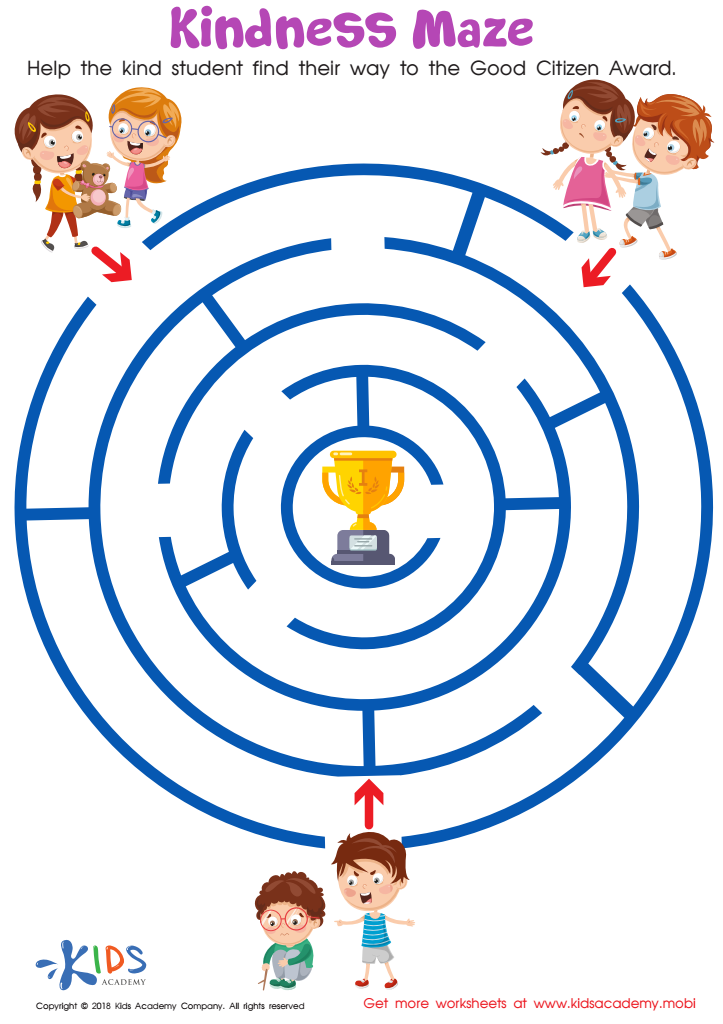
Kindness Maze Worksheet
Rewards come in many forms for kind deeds. When your children do good, you can choose to reward them with a gift or compliment. The students in this worksheet have been awarded the Good Citizen Award for kindness. Let your kids help the students find their way to the award - at the center of the maze. Guide them through to get their prize.
Kindness Maze Worksheet
Worksheet
Join Kids Academy for Free
Who is primarily going to use this learning content?







Parents and teachers should prioritize the development of logical thinking in children aged 6-9 because it lays the foundation for critical problem-solving skills and academic success. Logical thinking is the ability to reason systematically and make sense of complex concepts, which is crucial not only for math and science but also for daily decision-making and understanding the world.
At this age, children are naturally curious and eager to explore, making it an ideal time to introduce activities that promote logical reasoning. Puzzles, sorting games, and simple coding exercises can stimulate brain development, helping children recognize patterns, cause-effect relationships, and sequences. These skills are transferable and enhance a child's ability to tackle various academic subjects with confidence and competence.
Moreover, fostering logical thinking contributes to emotional resilience. Children who can analyze a situation logically are better equipped to manage their emotions, handle conflicts, and develop coping strategies. They become more independent thinkers, capable of assessing situations more objectively without being swayed by impulsive reactions or misinformation.
In summary, focusing on logical thinking development for children aged 6-9 equips them with essential tools for academic achievement and emotional intelligence, setting them up for future success in a rapidly changing world. Parents and teachers who nurture these skills are investing in well-rounded, capable, and confident individuals.








