Map reading skills Easy Worksheets for Ages 6-9
4 filtered results
-
From - To
Discover fun and engaging map reading skills worksheets designed for children ages 6-9! Our easy-to-follow activities help young learners develop essential navigation and map interpretation skills, including understanding symbols, directions, and scale concepts. Each worksheet is thoughtfully crafted to promote critical thinking and improve spatial awareness while keeping kids excited about learning. Perfect for home or classroom use, these resources cater to various learning styles through colorful visuals and hands-on exercises. Enhance your child’s geographical knowledge and confident decision-making abilities while ensuring a joyful educational experience. Explore our collection today and help your child become a map-reading whiz!
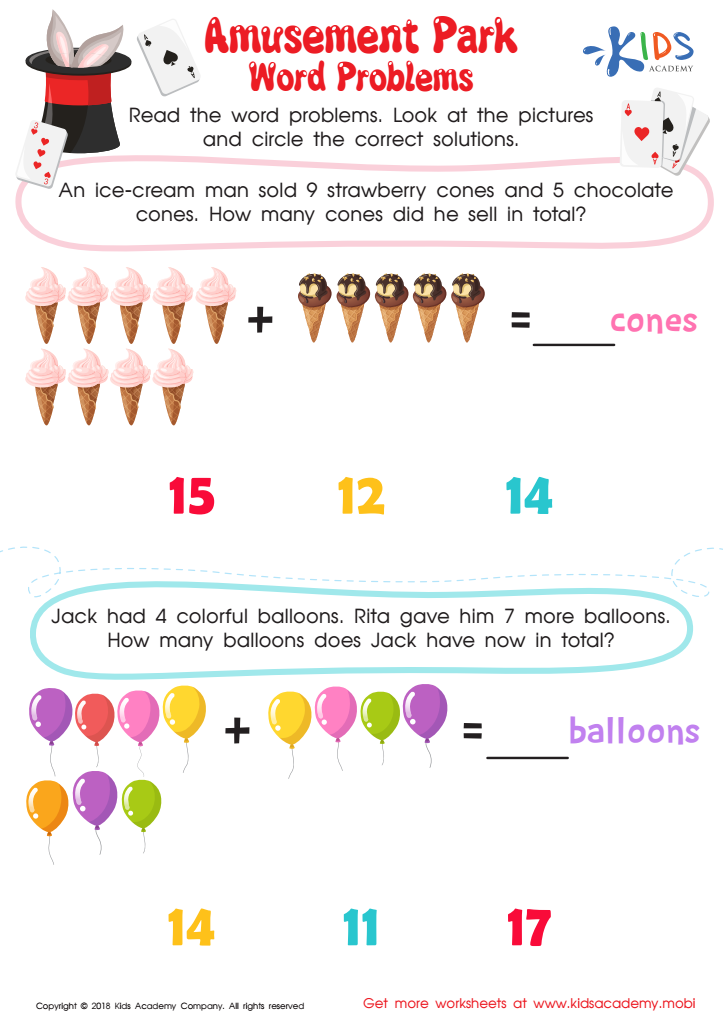
Amusement Park Word Problems Worksheet
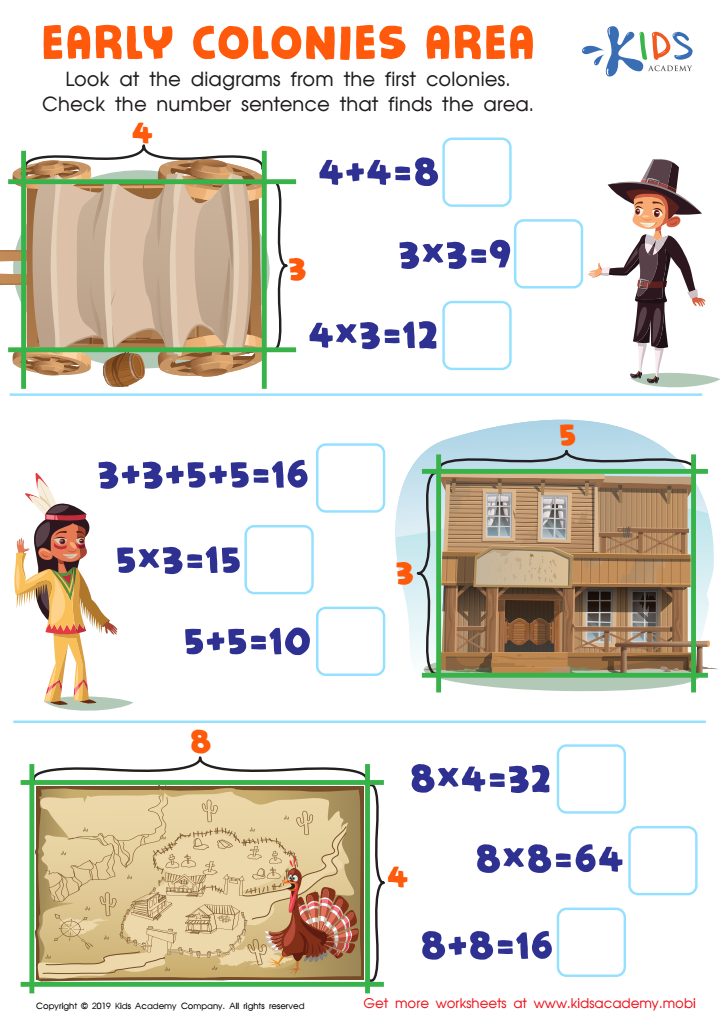
Early Colonies Area Worksheet
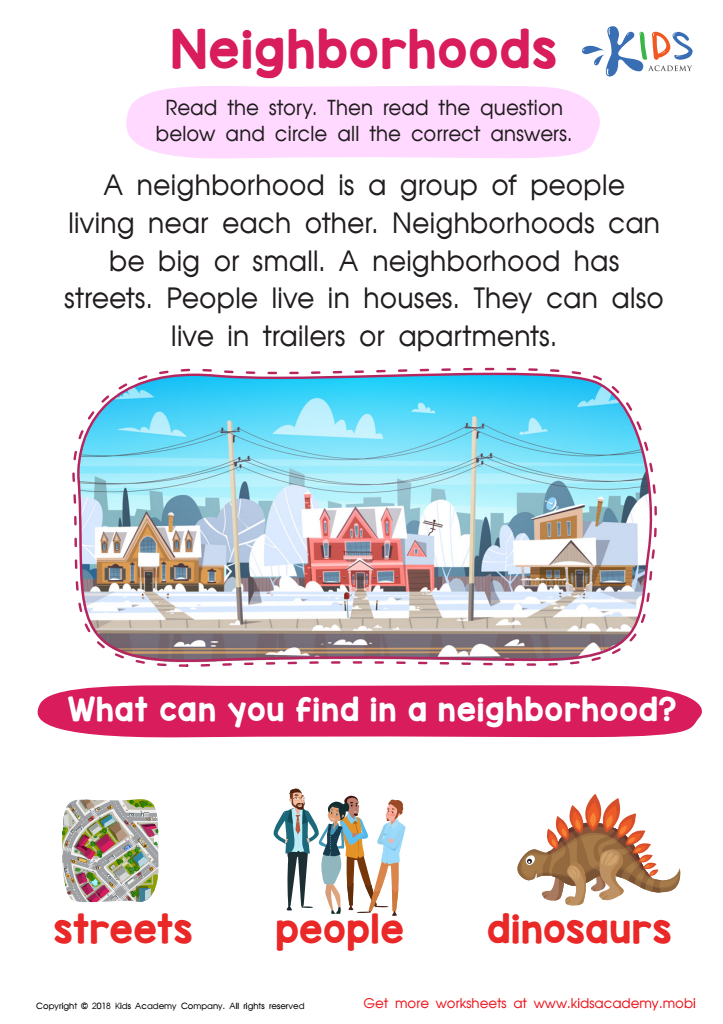
Neighborhoods Worksheet
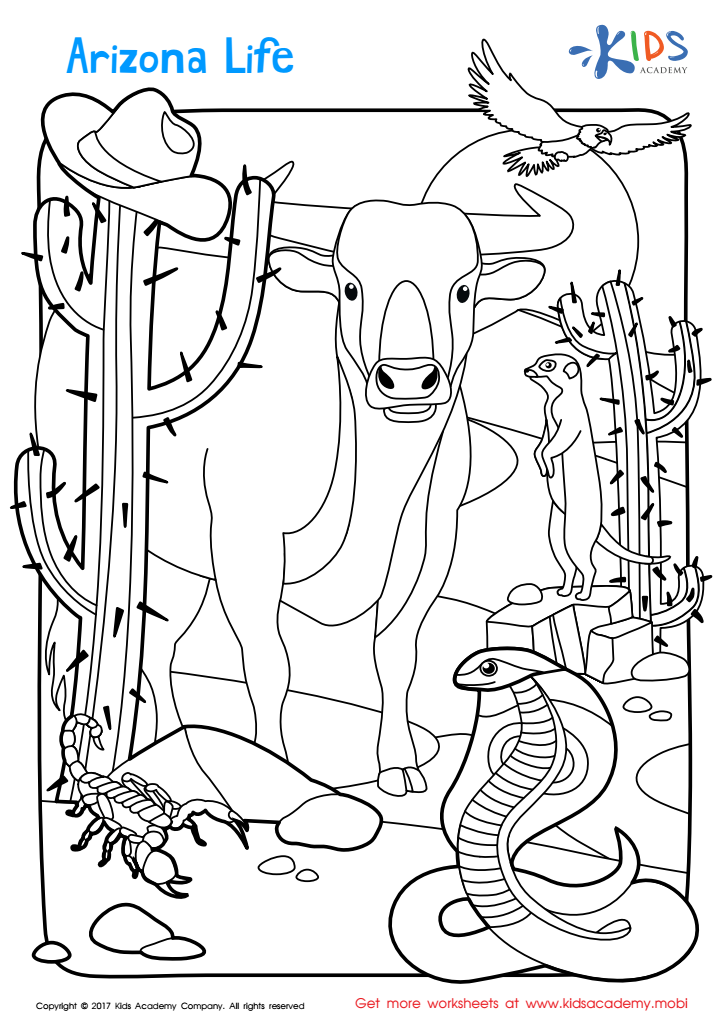
Arizona Coloring Page Worksheet
 Assign to My Students






Map reading skills are crucial for children aged 6-9, and both parents and teachers should prioritize them for several reasons. First, learning to read maps enhances spatial awareness, which helps children understand their environment better. This understanding builds confidence when navigating new places, whether in their neighborhood or during travels.
Second, map reading develops critical thinking and problem-solving skills. Children learn to interpret symbols, scales, and directions, which sharpens their analytical abilities and encourages them to think logically about how to reach a destination. This skill transferable extends to other areas of learning, such as math and geography.
Additionally, map reading fosters independence. When children can follow a map, they're more likely to explore safely and confidently, engaging in outdoor activities that promote physical health and social interactions.
Lastly, encouraging map reading at a young age can spark an interest in geography and the world around them. As they understand different cultures and locations, they're more likely to grow into globally aware citizens.
In conclusion, nurturing map reading skills helps young children develop essential life skills, fosters creativity, and prepares them for an increasingly interconnected world. Parents and teachers play a vital role in supporting this valuable learning process.








