Sentence structuring Easy Worksheets for Ages 6-9
3 filtered results
-
From - To
Discover a fun and engaging way to enhance your child's sentence structuring skills with our Easy Worksheets for Ages 6-9! Each worksheet is thoughtfully designed to help young learners understand the basics of sentence formation, including subject-verb agreement and punctuation. Through a variety of interactive activities, children will explore vocabulary expansion and improve their writing clarity. Our user-friendly format keeps learning enjoyable, allowing kids to practice at their own pace. Perfect for home or classroom use, these worksheets foster creativity and build a solid foundation in language skills. Start your child's journey to confident writing today!
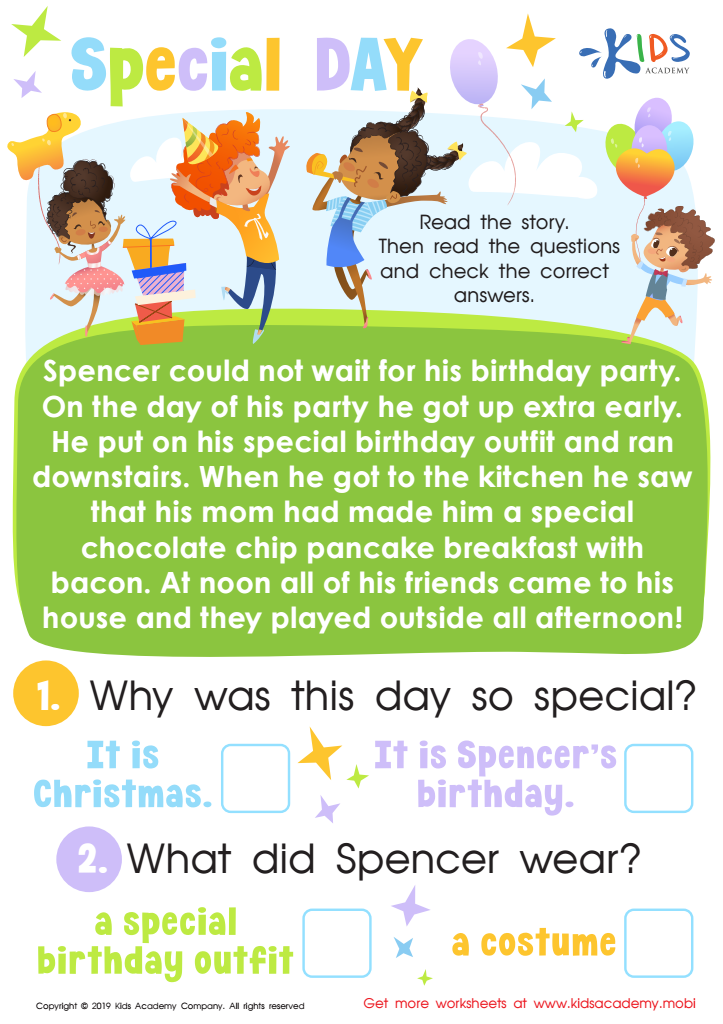
Special Day Worksheet
 Assign to My Students
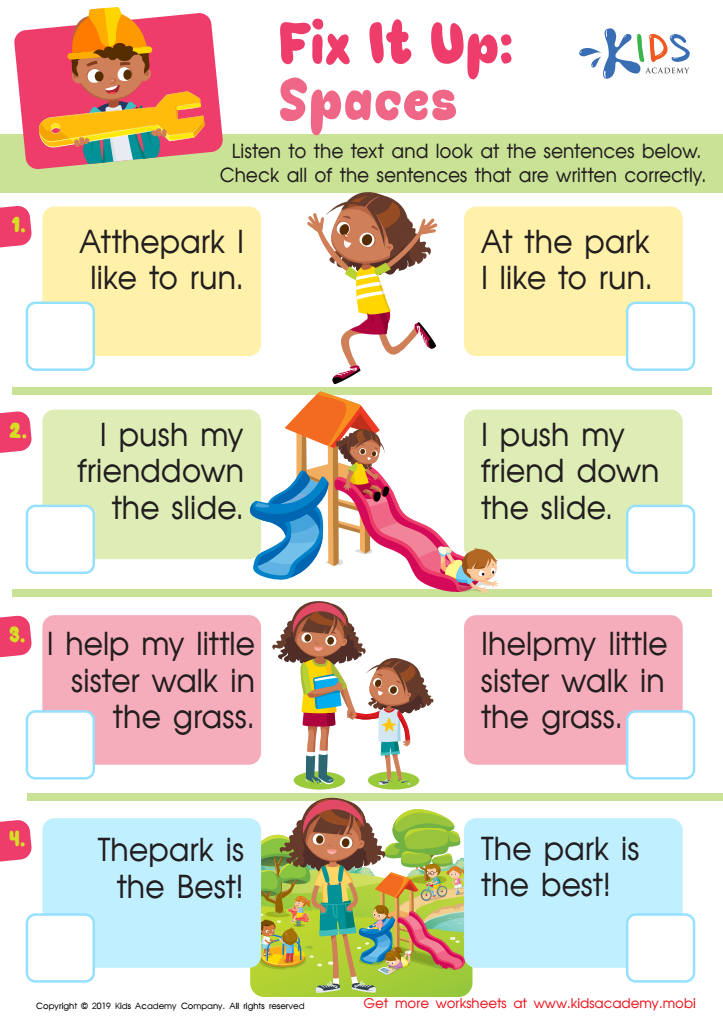
Fix Spaces Worksheet
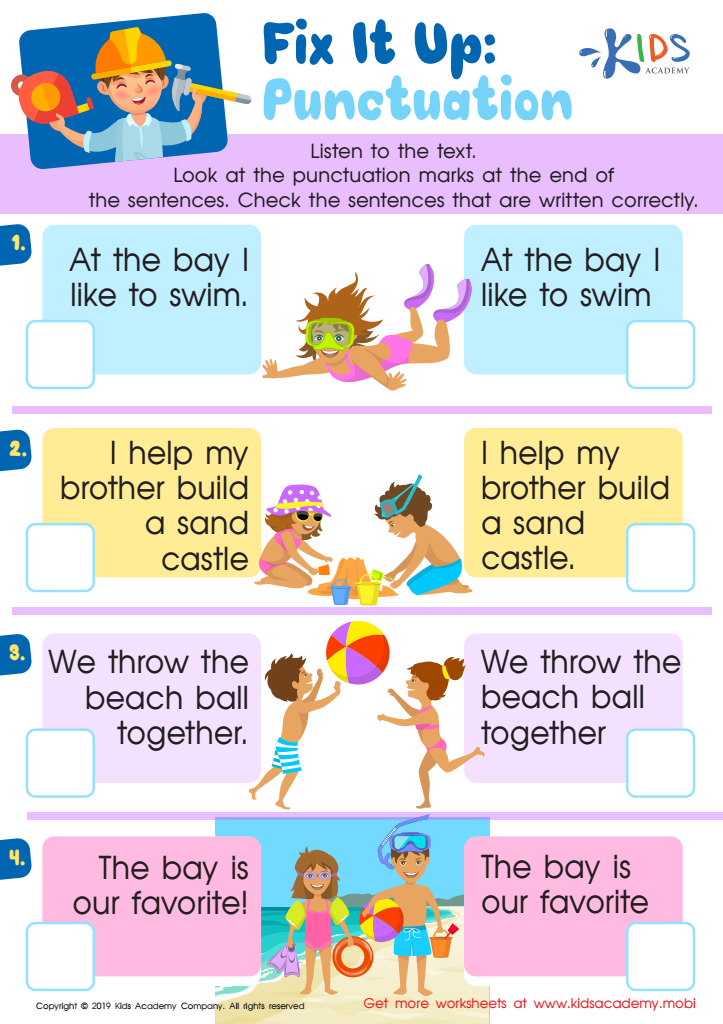
Fix Punctuation Worksheet







Sentence structuring is a foundational skill for children aged 6-9, making it crucial for parents and teachers to prioritize in their early education efforts. At this age, children are developing their language skills, learning how to express their thoughts clearly and coherently. Proper sentence structure helps them convey their ideas more effectively, which boosts their confidence in communication.
Moreover, mastering sentence structure enhances reading comprehension. As children encounter varied texts, understanding how sentences are constructed will help them grasp meanings and improve their overall literacy. This foundational skill not only supports academic achievement but also fosters critical thinking, as children learn to organize their thoughts logically.
Encouraging children to experiment with different sentence types — from simple to complex — can stimulate creativity and enrich their writing. Additionally, structured sentences are essential for future language skills, impacting writing clarity and persuasive abilities as they grow.
Involving parents in this process reinforces learning at home, as they can provide meaningful opportunities for practice through conversations and storytelling. Thus, fostering strong sentence structuring skills in young learners leads to improved academic performance, confident communication, and a love for language that will last a lifetime.








