Understanding times tables Easy Worksheets for Ages 6-9
3 filtered results
-
From - To
Unlock the magic of multiplication with our "Understanding Times Tables Easy Worksheets" designed for children aged 6-9. These engaging printables make learning times tables fun and accessible, helping young learners build a strong mathematical foundation. With colorful illustrations and interactive exercises, kids will quickly grasp essential multiplication concepts. Our worksheets aim to enhance problem-solving skills and boost confidence in mathematics. Ideal for classroom use or homeschooling, these resources cater to various learning styles. Support your child's journey towards math mastery today, and watch them excel with these easy-to-follow worksheets that turn multiplication into an enjoyable adventure!
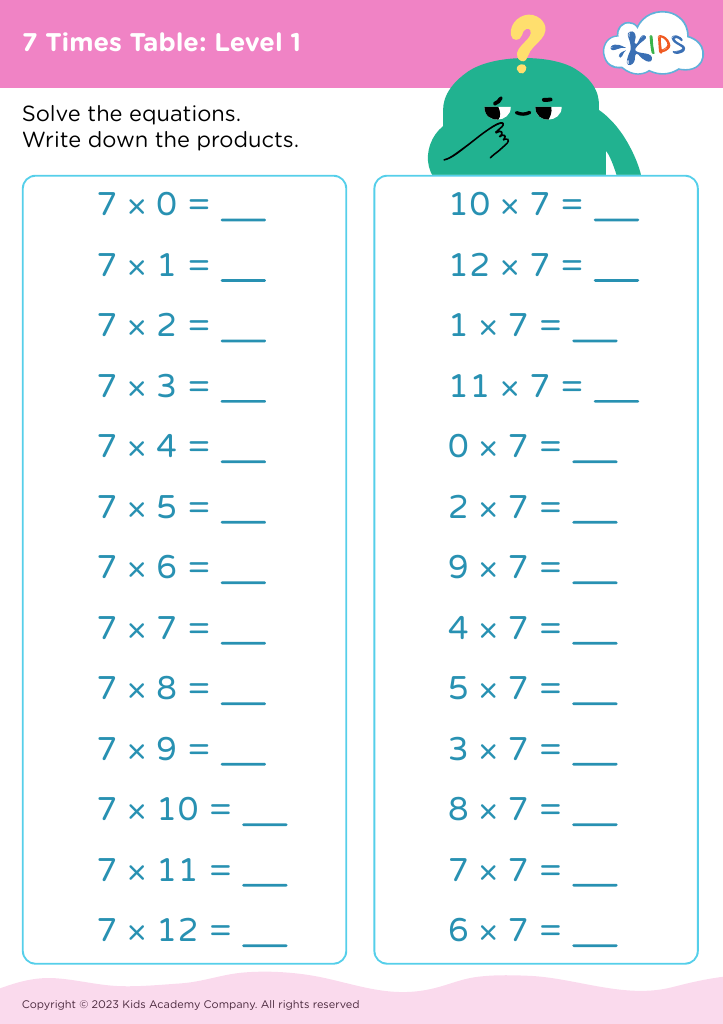
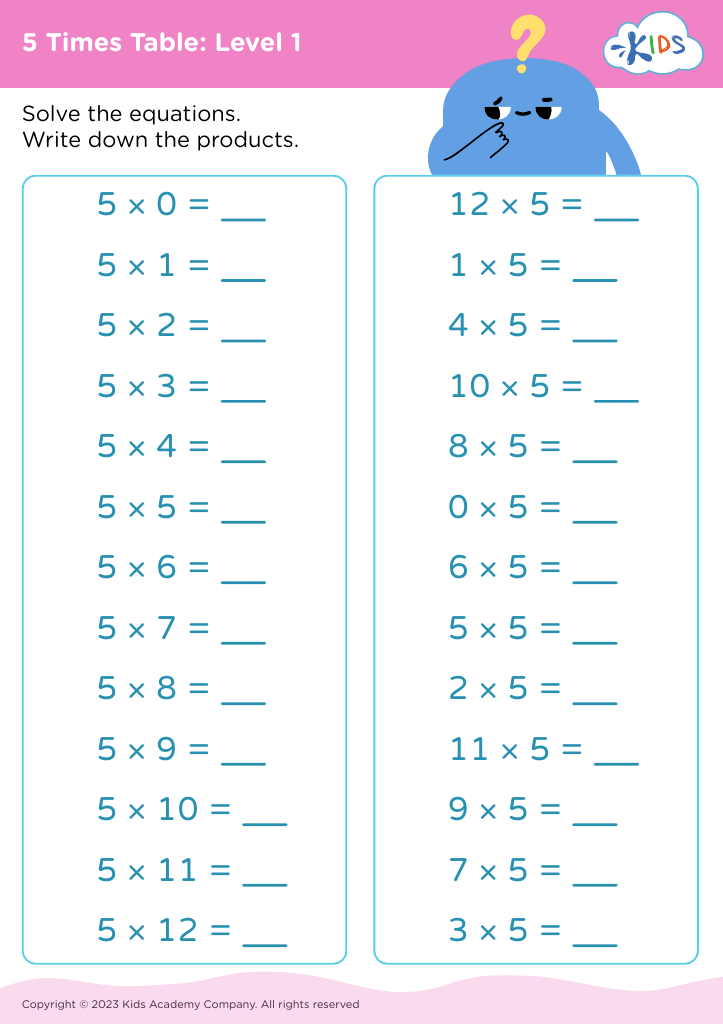
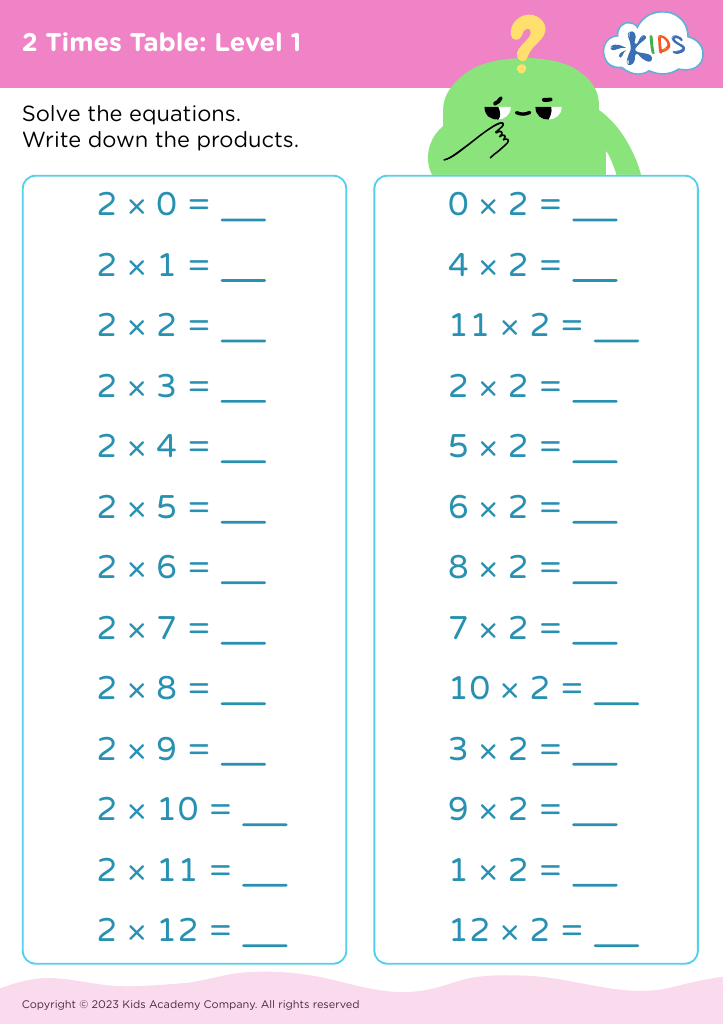








Understanding times tables is crucial for children aged 6-9, as it lays the foundation for essential mathematical skills. For parents and teachers, fostering this understanding is vital because it impacts overall academic performance and cognitive development. Mastering times tables enhances computational fluency, enabling children to solve problems more efficiently and boosts their confidence in math. This early proficiency can prevent future math anxiety and help ensure that children do not fall behind as they progress to more complex concepts like multiplication, division, fractions, and algebra.
Additionally, learning times tables helps children understand the concept of groups, which is fundamental in everyday scenarios like sharing, budgeting, and data interpretation. Engaging with times tables through fun activities and games makes the learning process enjoyable, encouraging a lifelong appreciation for math.
Moreover, a strong grasp of times tables empowers children to tackle real-life situations, such as calculating totals while shopping or measuring ingredients while cooking. Ultimately, when parents and teachers prioritize and support the understanding of times tables in early education, they contribute significantly to a child's long-term academic success, fostering critical thinking and problem-solving abilities essential for future learning.








