Visual Learning Easy Addition and Subtraction Word Problems Worksheets for Ages 6-9
3 filtered results
-
From - To
Unlock the power of visual learning with our engaging Addition and Subtraction Word Problems Worksheets, specifically designed for children ages 6-9. These worksheets use colorful images and relatable scenarios to simplify math concepts, making problem-solving easy and enjoyable. By combining visual aids with real-life challenges, young learners develop critical thinking and mathematical skills while boosting their confidence. Perfect for classroom use or at-home practice, these resources cater to diverse learning styles and help students grasp foundational math concepts effortlessly. Explore our fun and interactive worksheets today, and watch your child thrive in mathematics as they tackle word problems with ease!
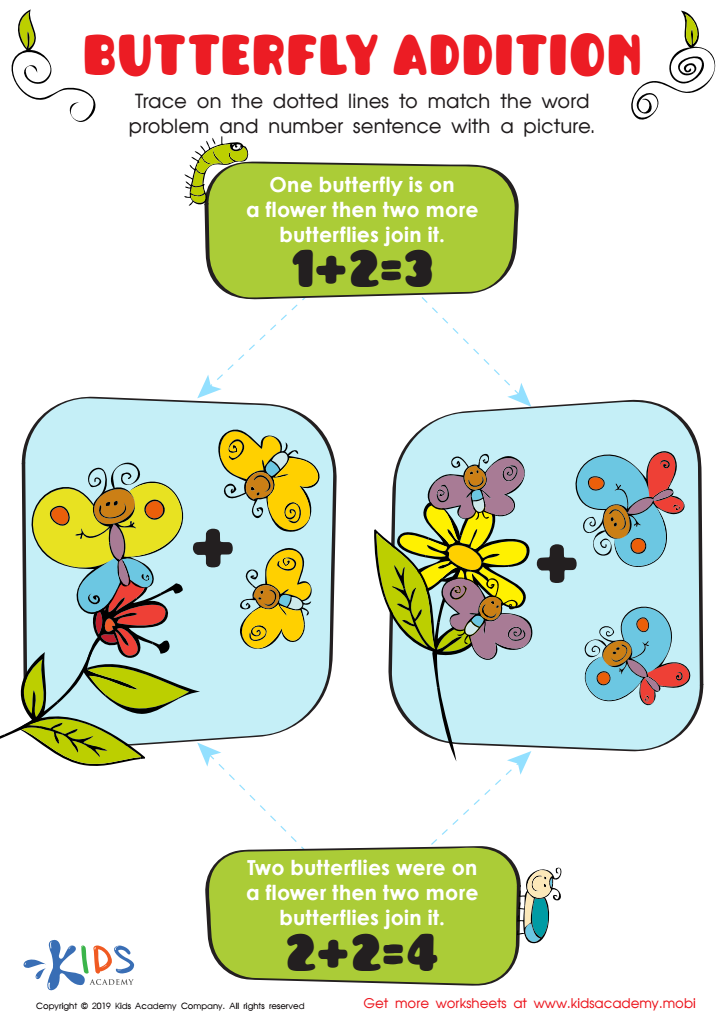
Butterfly Addition Worksheet
 Assign to My Students
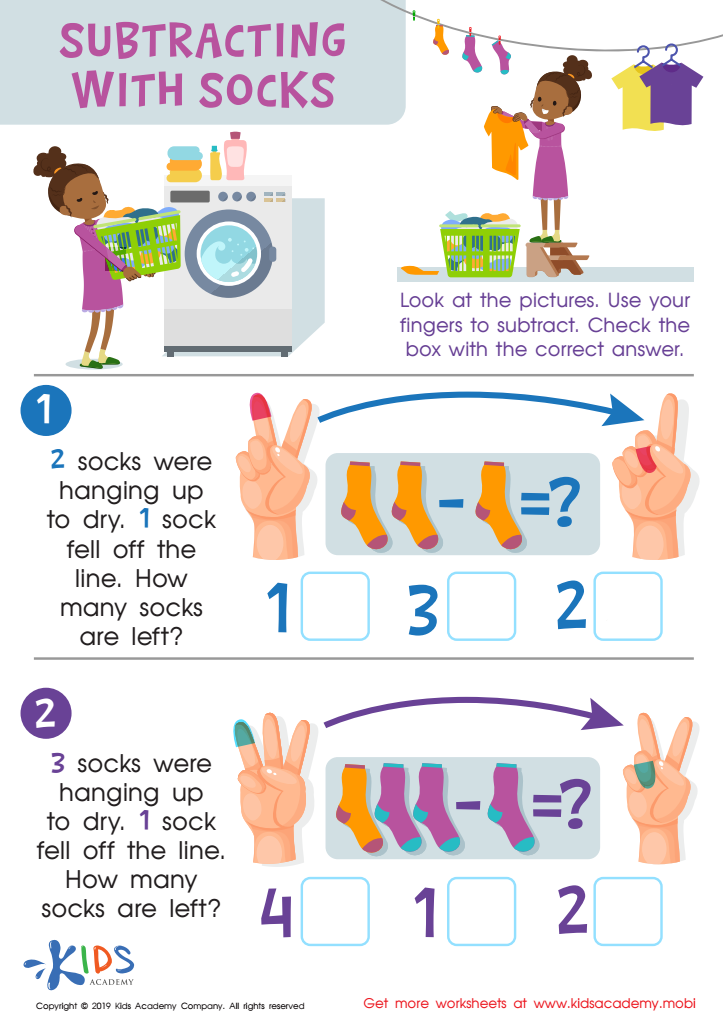
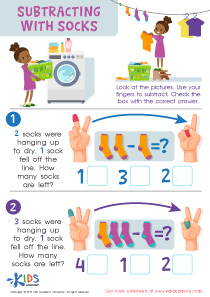
Subtracting Socks Worksheet
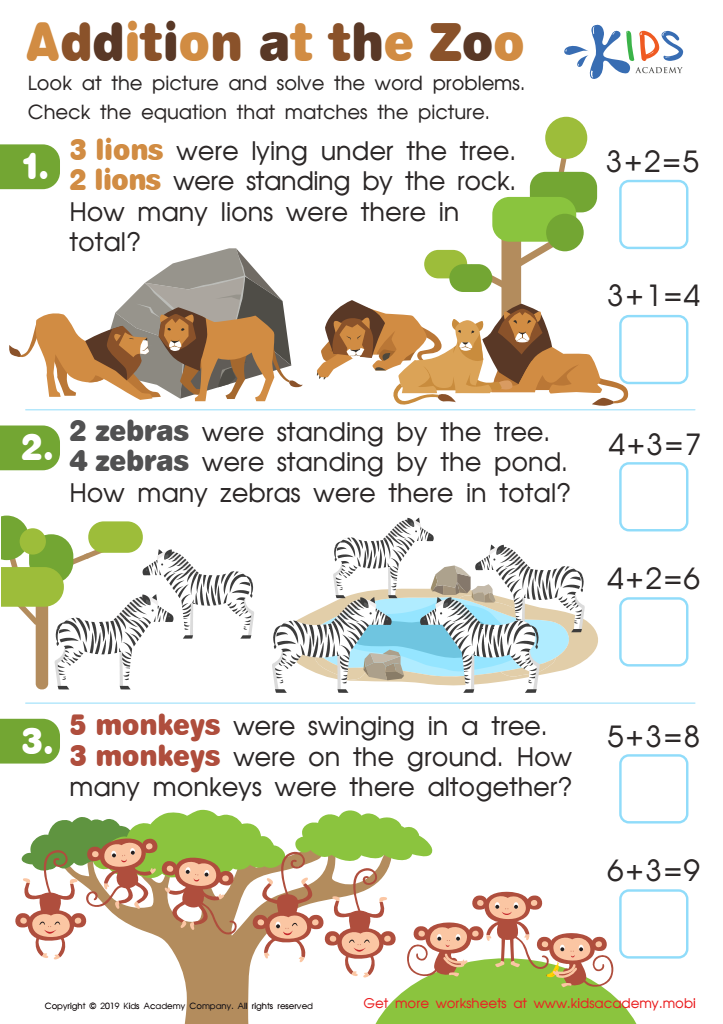
Addition at the Zoo Worksheet








Parents and teachers should prioritize Visual Learning Easy Addition and Subtraction Word Problems for children aged 6-9 due to its significant impact on early mathematical understanding. At this stage, children are forming foundational skills that will influence their future learning. Visual aids help make abstract concepts more concrete, allowing children to grasp addition and subtraction through engaging illustrations, diagrams, and relatable scenarios.
By using visual word problems, children anchor their understanding of mathematical operations in real-world contexts, making math relevant and enjoyable. This technique caters to varied learning styles, especially for visual learners, enhancing their ability to solve problems independently.
Furthermore, visual learning promotes critical thinking and comprehension skills as children must interpret information and connect ideas to arrive at solutions. By applying these skills in a safe, structured environment, they build confidence, reducing anxiety associated with math tasks.
Moreover, early mastery of these skills can lead to better long-term academic performance and a positive attitude toward math. When parents and teachers engage with visual learning strategies, they're not just teaching addition and subtraction; they're fostering a love of learning that supports overall educational development. This investment sets the stage for robust problem-solving skills in the years to come.