Problem-Solving Skills Easy Addition & Subtraction Worksheets for Ages 6-9 - Page 2
26 filtered results
-
From - To
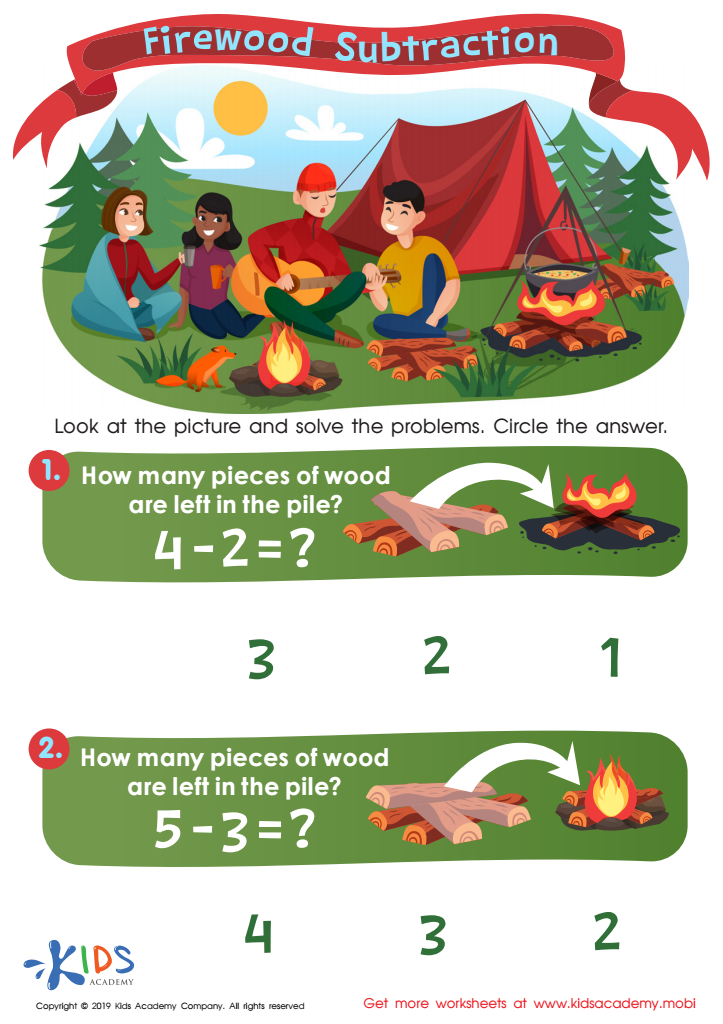
Firewood Subtraction Worksheet
 Assign to My Students
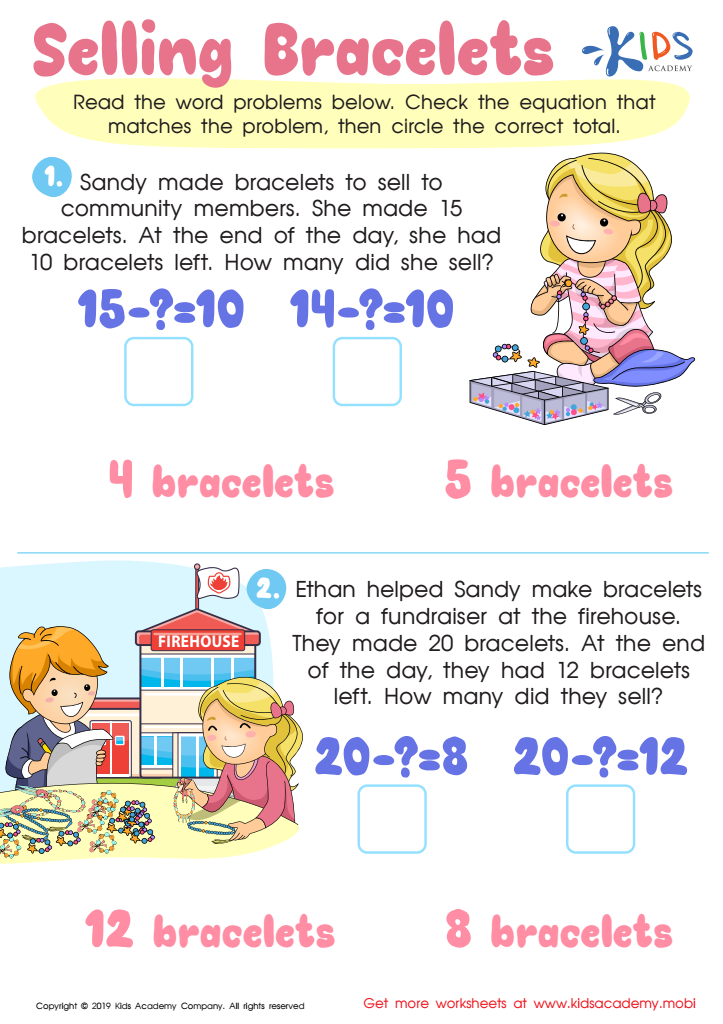
Selling the Bracelets Worksheet








Fostering problem-solving skills through easy addition and subtraction for children ages 6-9 is crucial for several reasons. At this developmental stage, acquiring fundamental mathematical skills builds a strong foundation for future complex problem-solving. These skills encourage logical thinking, which is necessary not just in mathematics but in everyday situations and other academic subjects.
Learning addition and subtraction through problem-solving helps children grasp concepts of numbers and their relationships, boosting numerical literacy. It enhances critical thinking, allowing children to approach problems with confidence and persistence, attributes invaluable for lifelong learning and personal growth.
Having strong problem-solving skills sharpens a child’s ability to analyze and tackle tasks systematically, fostering resilience. It also advances their capacity to think independently and collaboratively, paving the way for effective teamwork in later stages of education and life.
Parents and teachers should care about these skills because they cultivate a child’s intrinsic motivation and love for learning. The progress children make through engaging and success-driven math problems empowers them, promoting self-esteem and a positive attitude towards challenges. By nurturing problem-solving abilities at a young age, we equip children with essential tools for academic success and competent, innovative participation in society.








