Critical thinking skills Easy Math Worksheets for Ages 6-9
3 filtered results
-
From - To
Enhance your child's problem-solving abilities with our "Critical Thinking Skills Easy Math Worksheets" designed for ages 6-9. These engaging worksheets help young learners develop essential critical thinking skills through fun math challenges that encourage creativity and reasoning. Your child will tackle puzzles that promote logical thinking, pattern recognition, and analytical skills, all while enjoying the learning process. Perfect for home or classroom use, our easy-to-follow worksheets make math engaging and accessible, fostering a solid foundation for future learning. Unlock your child's potential and inspire a love for math with our thoughtfully crafted worksheets today! Download now and watch their skills flourish!
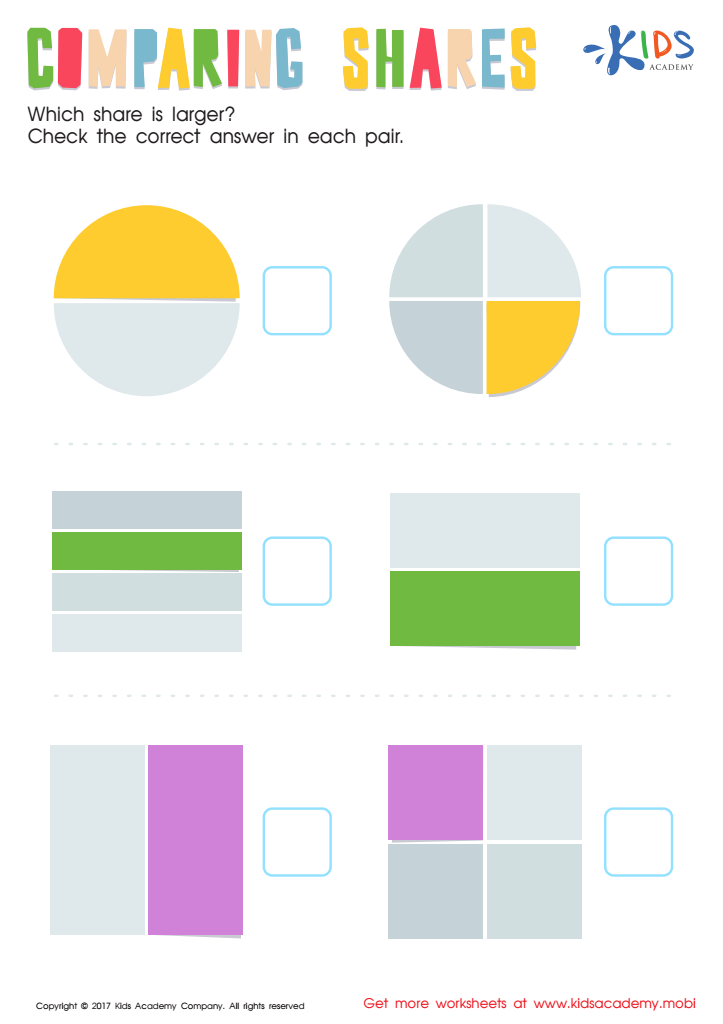
Comparing Shares Worksheet
 Assign to My Students
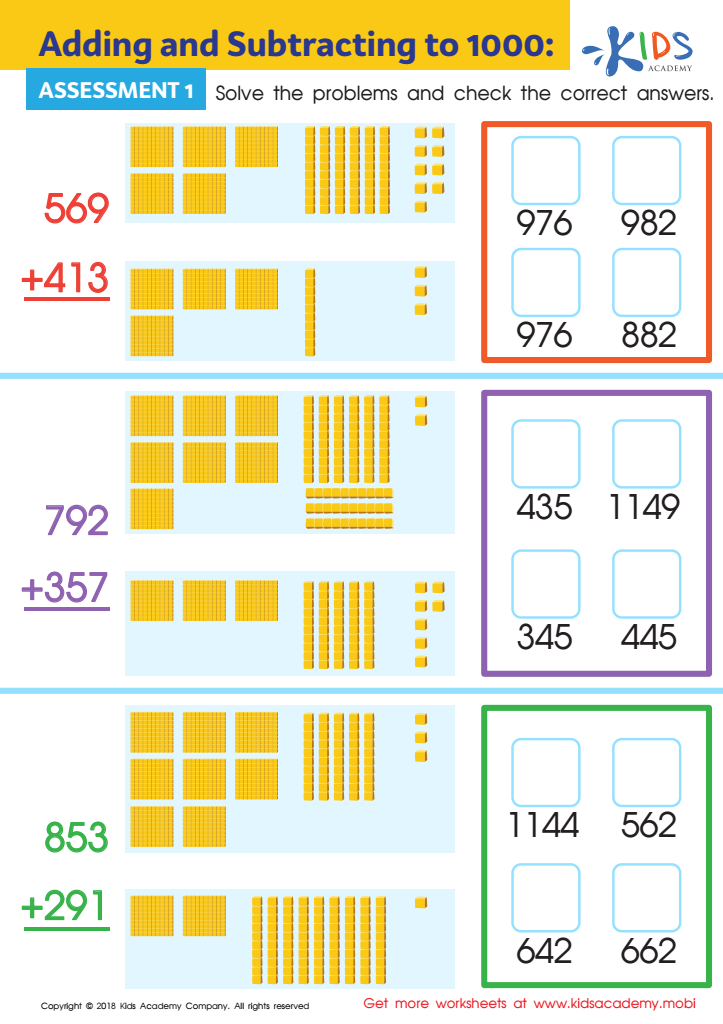
Adding and Subtracting to 1 Worksheet: Assessment 1
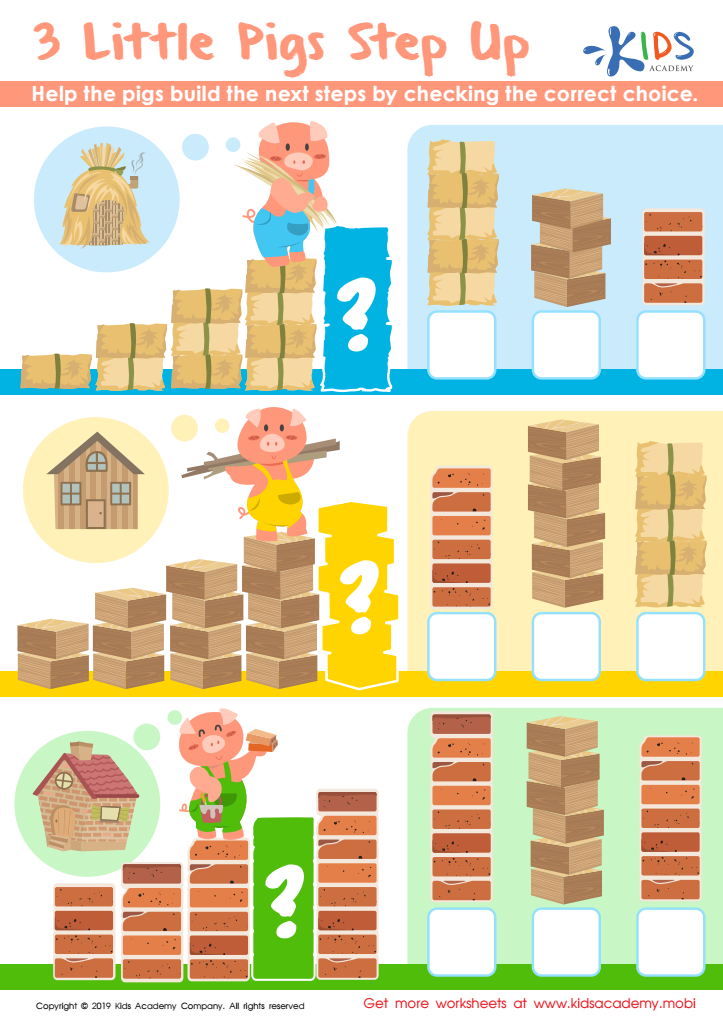
3 Little Pigs Step Up Worksheet








Critical thinking skills in math for children aged 6-9 are essential because they lay the foundation for problem-solving and reasoning abilities throughout their lives. During these formative years, children are developing cognitive skills that will influence their approach to learning and understanding complex concepts in later grades. By fostering critical thinking in math, parents and teachers encourage students to analyze problems, evaluate solutions, and make informed decisions, rather than relying on rote memorization.
Moreover, easy math for this age group, when integrated with critical thinking, transforms math into an engaging and enjoyable subject. Mathematical puzzles, logic games, and real-world problem scenarios stimulate children's curiosity and creativity, allowing them to see math as a vital tool in everyday life. This increased engagement can lead to a greater love for learning and improved academic performance.
Furthermore, critical thinking equips children with skills to tackle challenges effectively. They learn to ask questions, reason through their thought processes, and develop a growth mindset. As these skills strengthen, children are better prepared for future educational challenges and life situations, highlighting the importance for both parents and teachers to prioritize critical thinking in math education.








