Enhancing Counting Skills Easy Math Worksheets for Ages 6-9
5 filtered results
-
From - To
Boost your child's counting skills with our engaging Easy Math Worksheets designed specifically for ages 6 to 9! These user-friendly worksheets offer fun activities that make learning to count enjoyable and effective. Ideal for both home and classroom use, our resources cater to varying skill levels, ensuring every child can practice at their own pace. From simple numeral recognition to more complex counting exercises, these worksheets are crafted to reinforce foundational math concepts. Unlock your child's potential and foster a love for math with our carefully designed materials. Discover the joy of counting with our Enhance Counting Skills worksheets today!
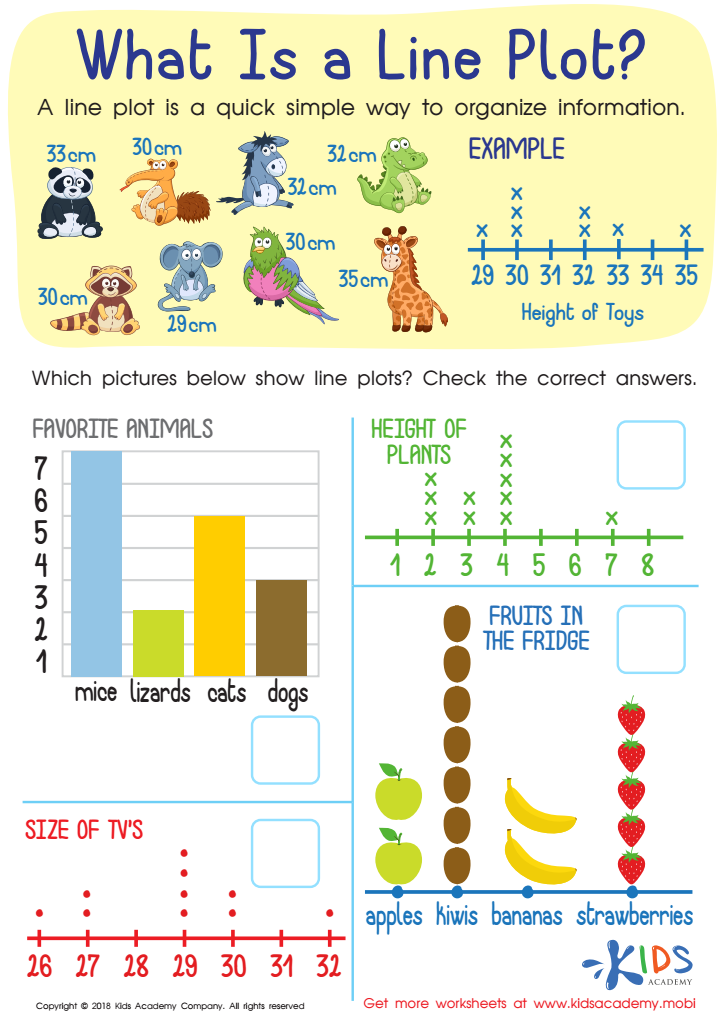
What Is a Line Plot? Worksheet
 Assign to My Students
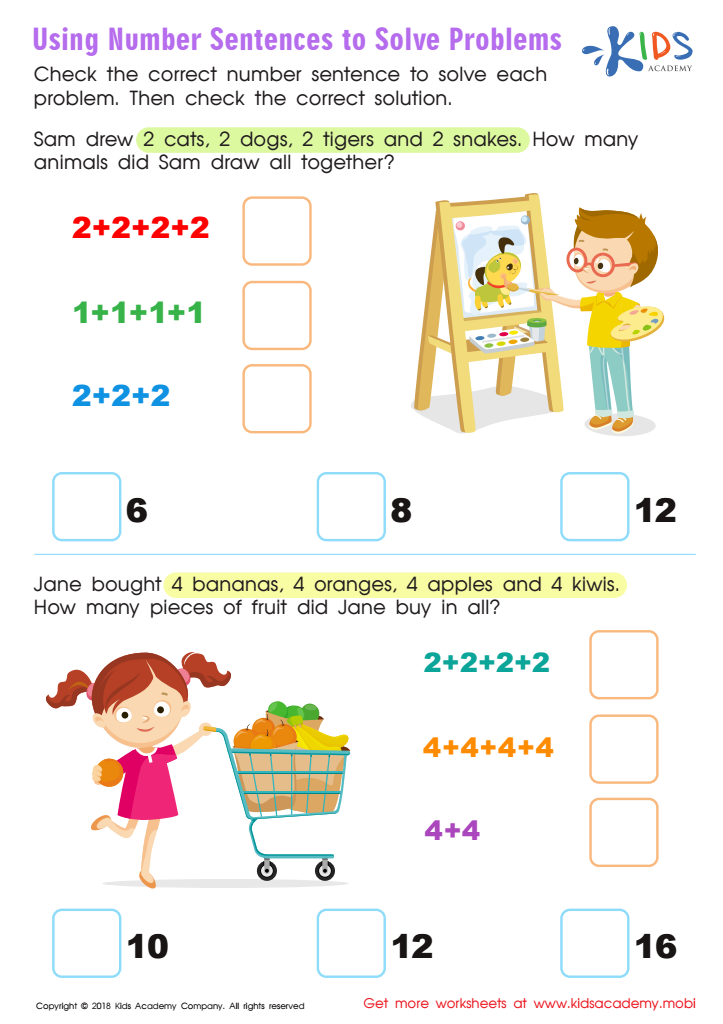
Using Number Sentences to Solve Problems Worksheet
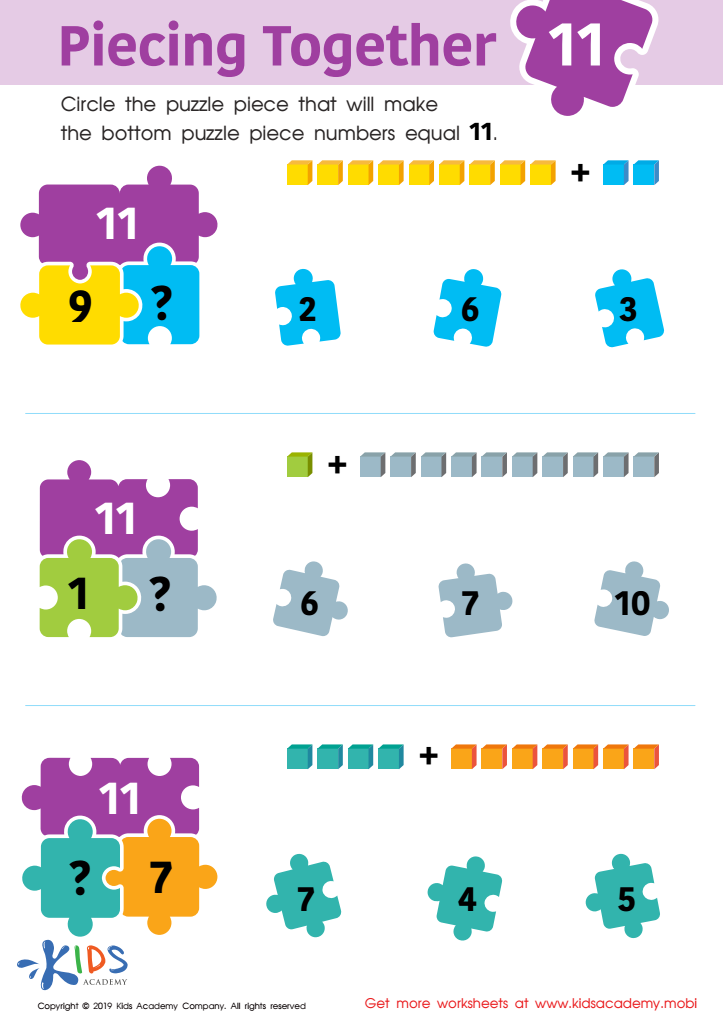
Piecing Together 11 Worksheet
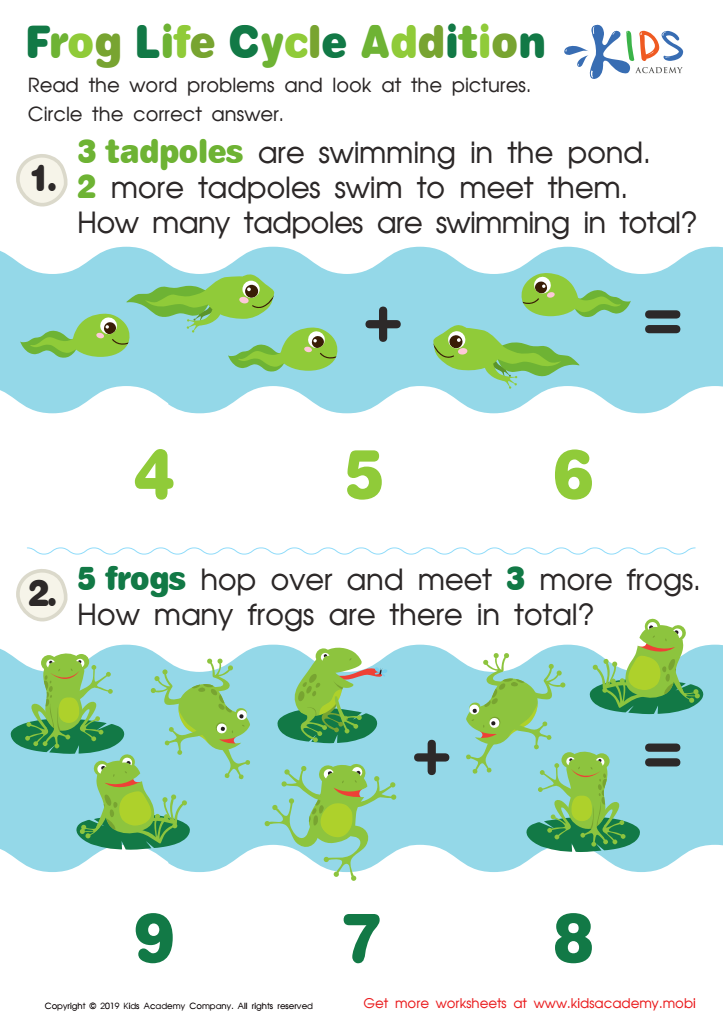
Frog Life Cycle Addition Worksheet
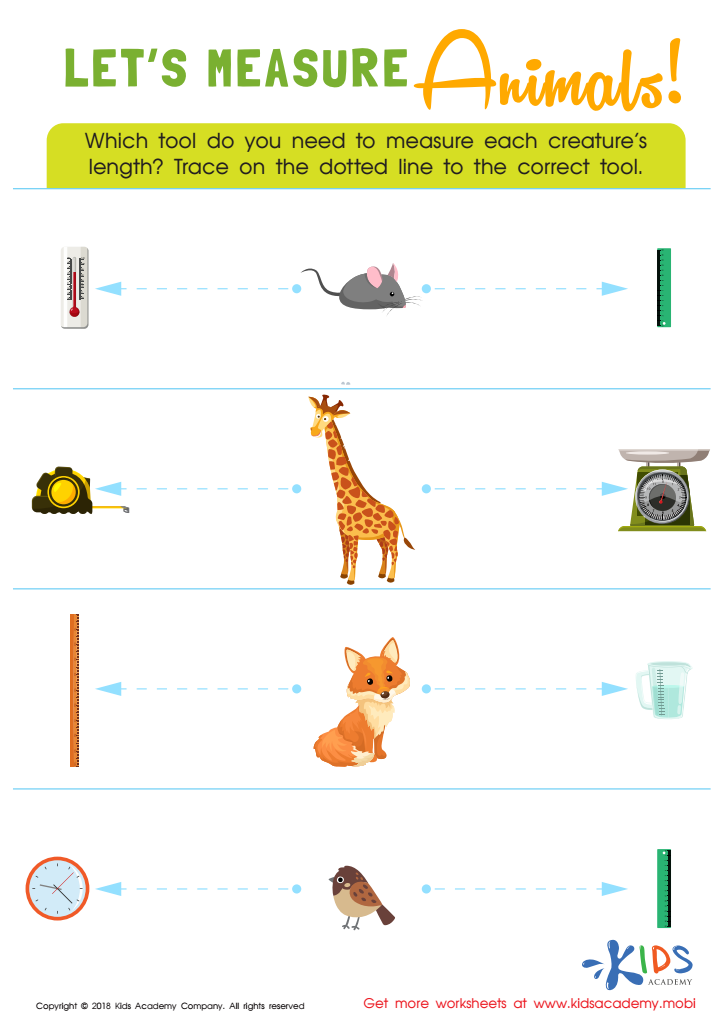
Let's Measure Animals! Worksheet


.jpg)





Enhancing counting skills is crucial for children aged 6-9 as it lays the foundation for future mathematical understanding. During these formative years, children develop essential cognitive skills, and proficiency in counting is vital for their overall math development. By solidifying their counting skills, children can more easily grasp advanced concepts such as addition, subtraction, and even basic multiplication.
Parents and teachers should care about this stage because it directly impacts a child’s confidence and attitude towards math. When children feel competent in counting, they are more likely to engage with math-related activities, reducing math anxiety and building a positive association with learning. Moreover, counting enhances critical thinking skills as children learn to recognize patterns, categorize objects, and solve problems.
Additionally, enhancing counting skills fosters important life skills, as math is an essential aspect of daily activities. Whether it's counting change, measuring ingredients, or understanding time, these skills are integral to everyday functioning. By investing time and resources to enhance counting skills, parents and teachers can provide children with not just academic success, but also empower them with the ability to thrive in real-world settings. Thus, advancing counting proficiency is a critical step in nurturing a well-rounded, capable individual.








