Fine motor skills (writing) Easy Math Worksheets for Ages 6-9
3 filtered results
-
From - To
Enhance your child's fine motor skills and writing abilities with our engaging Easy Math Worksheets designed specifically for ages 6-9. These worksheets combine fun mathematical concepts with writing exercises to help your child develop essential skills like pencil control, letter formation, and number writing. Ideal for early learners, each worksheet offers clear instructions and vibrant illustrations to keep kids motivated and eager to learn. Our carefully crafted activities not only build math proficiency but also strengthen fine motor skills, ensuring a well-rounded educational experience. Explore our collection today and watch your child's confidence and competence grow as they master writing while having fun!
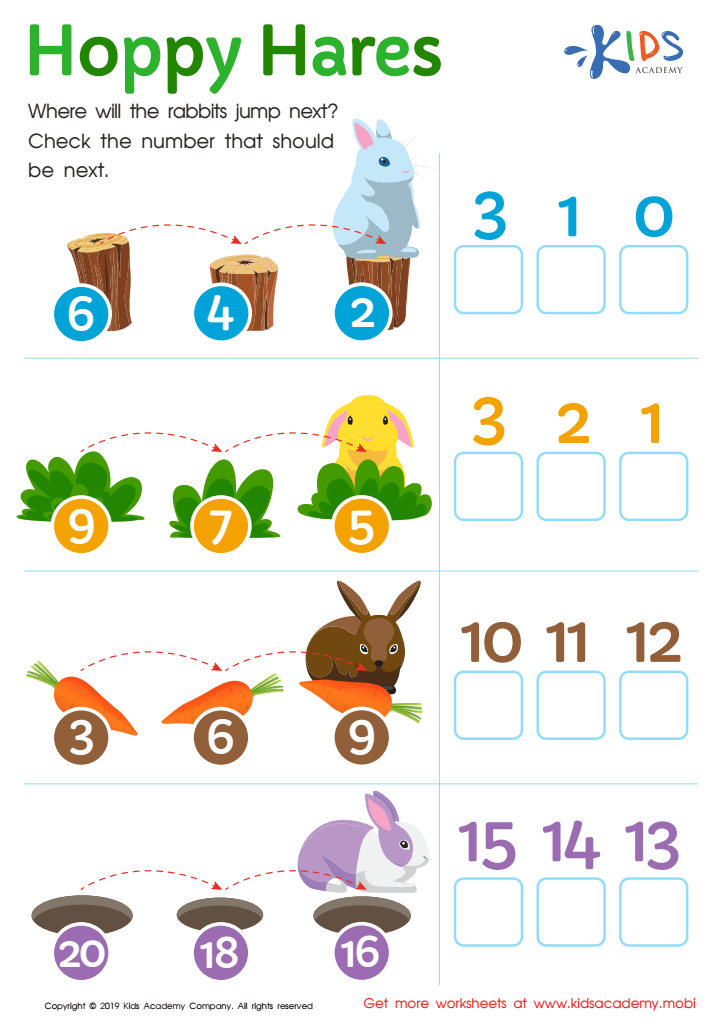
Hoppy Hares Worksheet
 Assign to My Students
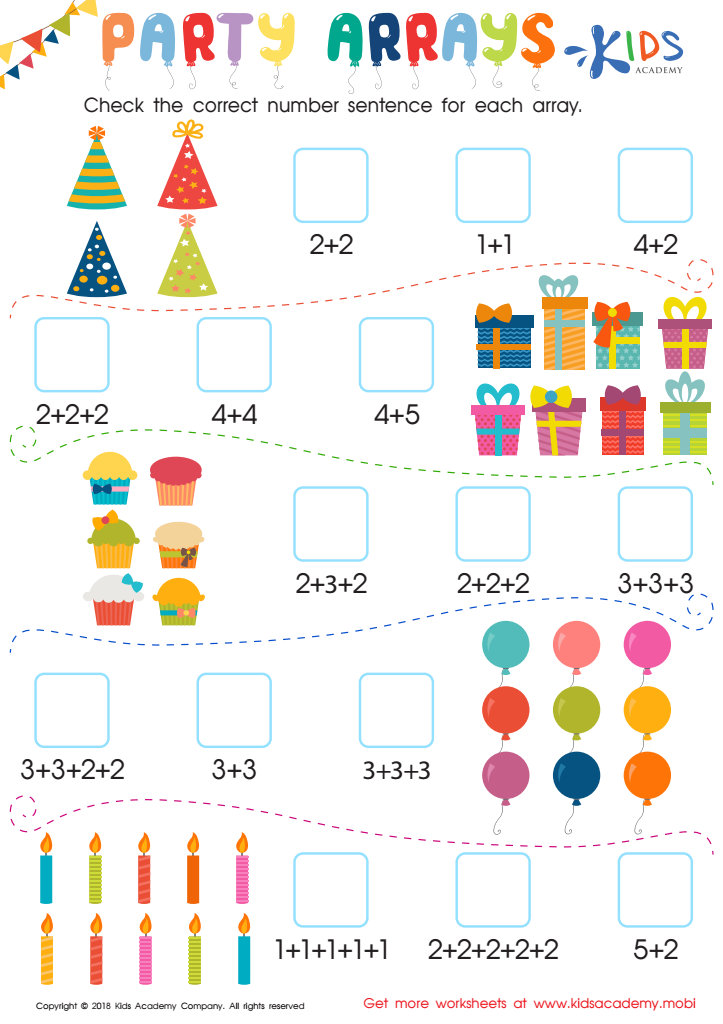
Party Arrays Worksheet
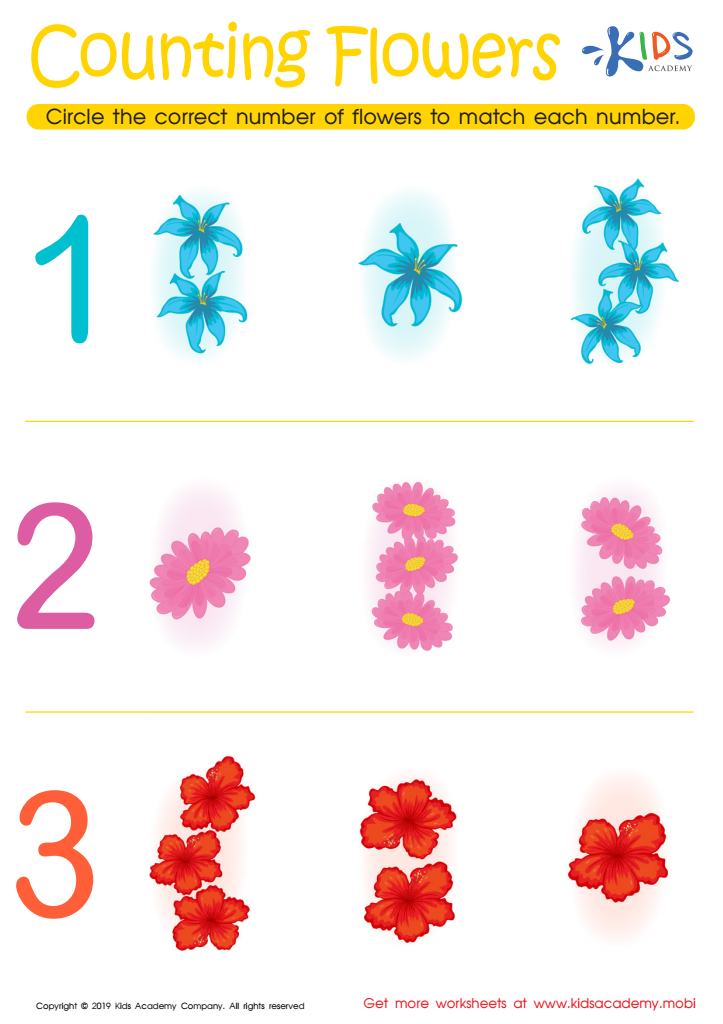
Counting Flowers Worksheet








Fine motor skills and foundational math abilities are crucial for children aged 6 to 9, as they lay the groundwork for future academic success and everyday functioning. Fine motor skills, particularly writing, involve the controlled movements of small muscles in the hands and fingers. Developing these skills enhances a child's ability to hold a pencil, form letters, and take notes, all of which are essential for effective communication and expression.
Similarly, "Easy Math" at this stage introduces basic concepts like addition, subtraction, and number recognition. Mastery of these skills promotes logical thinking, problem-solving, and promotes mathematical literacy, which is vital in our increasingly data-driven world.
Parents and teachers should care about these areas because they directly influence a child's confidence and enthusiasm toward learning. As children develop fine motor skills and numerical understanding, they gain independence and a sense of accomplishment. These skills are interrelated; for instance, even basic math often involves writing down equations. Prioritizing fine motor development and math skills in early education fosters a more rounded, competent learner, setting the stage for more complex tasks in the future. Engaging kids in fun activities that encourage these skills can have a lasting impact on their educational journey.








