Identifying shapes Easy Math Worksheets for Ages 6-9
3 filtered results
-
From - To
Explore our "Identifying Shapes Easy Math Worksheets" designed for children ages 6-9! These engaging worksheets help young learners recognize and name various shapes, fostering essential geometry skills in a fun and interactive way. Featuring colorful illustrations and clear instructions, our materials make shape identification simple and enjoyable. Perfect for classroom use or at-home practice, these worksheets cater to different learning styles, ensuring every child succeeds. Encourage your child's mathematical confidence as they match, trace, and classify shapes. Download our free worksheets today and watch your child thrive in their early math journey! Ideal for teachers and parents alike.
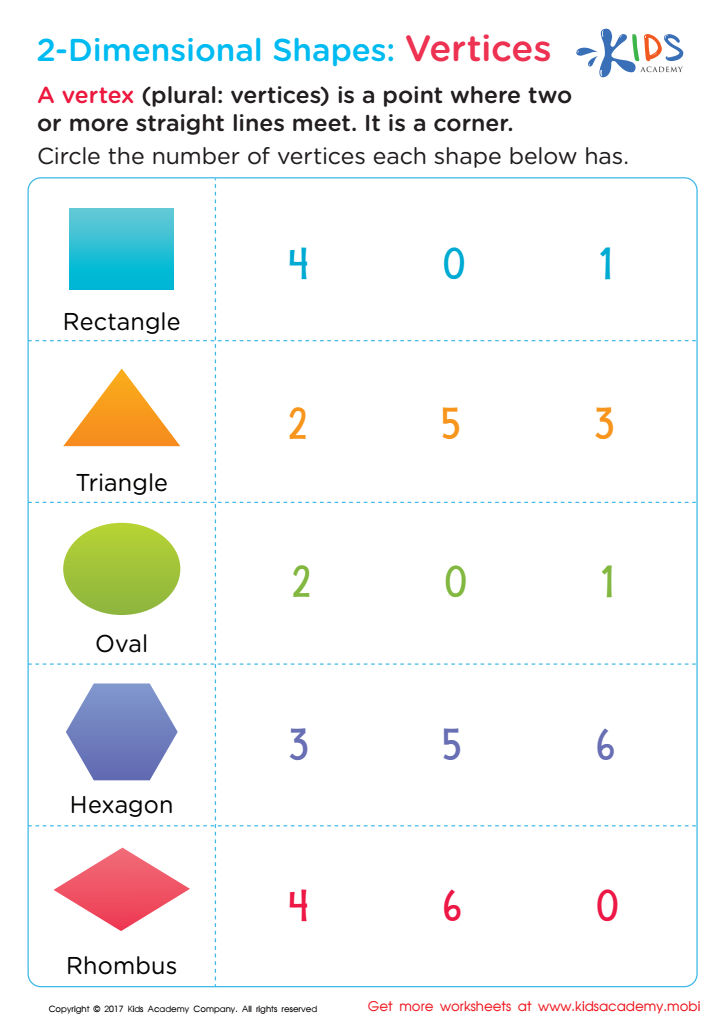
Two–Dimensional Shapes: Vertices Printable
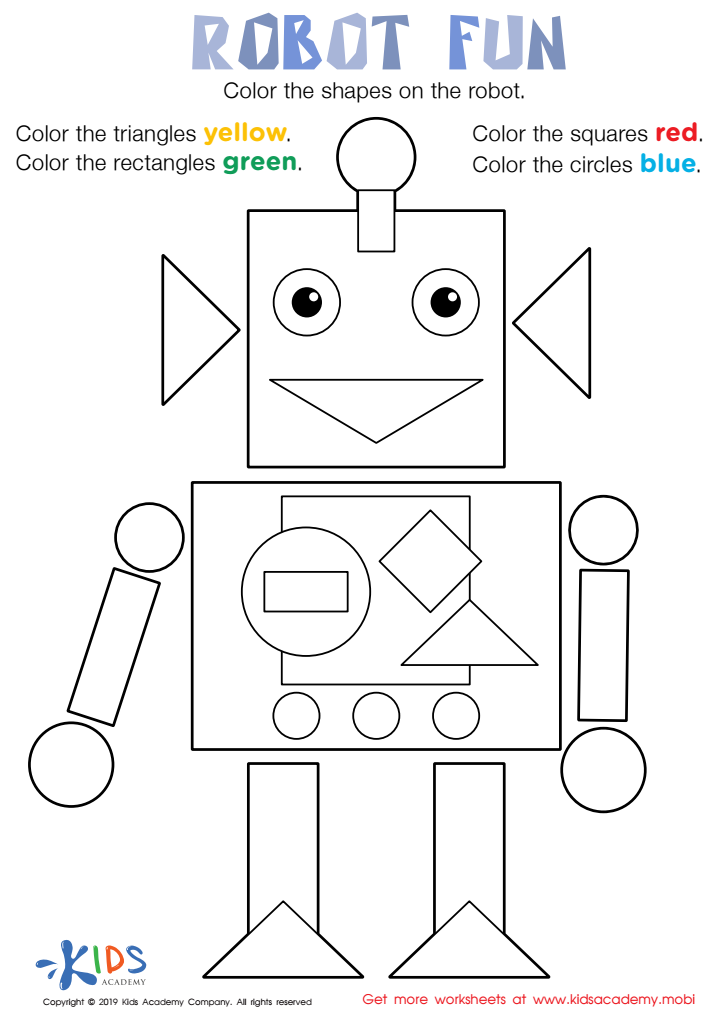
Robot Fun Worksheet
 Assign to My Students
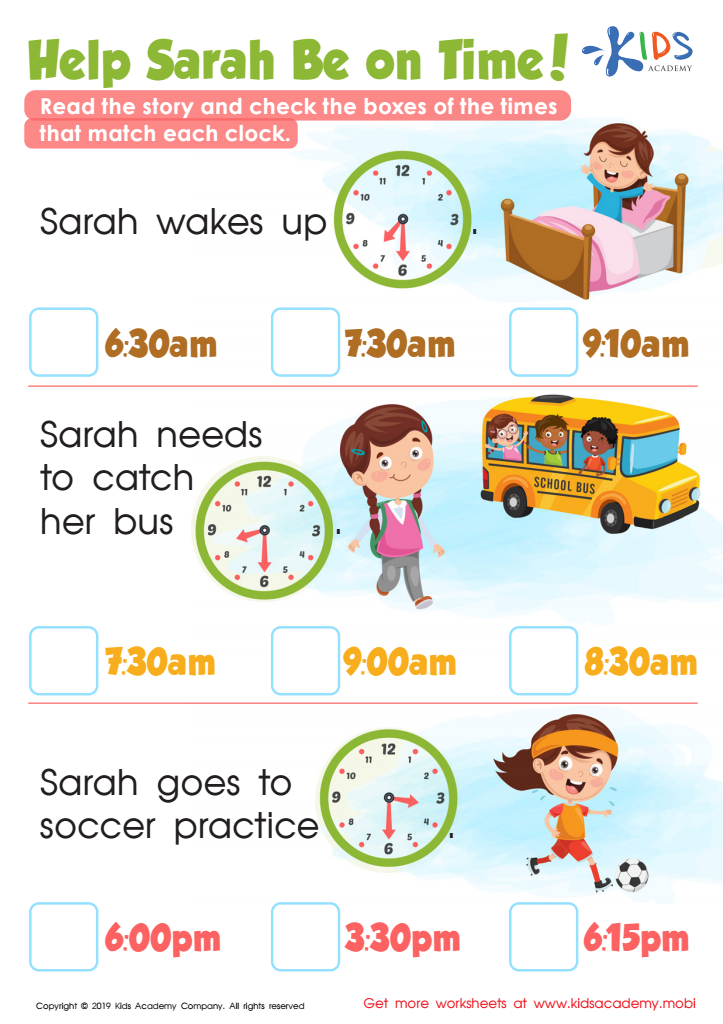
Help Sarah Be on Time! Worksheet







Identifying shapes is a foundational math skill that greatly benefits children aged 6-9. This critical period in cognitive development offers a unique opportunity to shape a child's understanding of the world through mathematical concepts. Parents and teachers should value this skill because it supports not only mathematical reasoning but also spatial awareness, logical thinking, and problem-solving abilities.
Recognizing shapes helps children develop fundamental skills for more complex mathematical concepts, like geometry, fractions, and even algebra. Furthermore, shape identification is tied to everyday experiences, aiding children in making sense of their environment. Activities involving shapes promote fine motor skills through drawing and crafting, enhancing their cognitive and physical development.
Developing shape knowledge also lays the groundwork for STEM (Science, Technology, Engineering, Mathematics) learning, fostering curiosity and scientific inquiry. Additionally, when children identify shapes, they gain confidence in participating in discussions about their findings, enhancing their communication skills.
In summary, supporting shape identification is essential in fostering a holistic education for children, making it a priority for parents and teachers aiming to cultivate confident, capable learners ready to take on more advanced mathematical challenges.








