Understanding times tables Easy Math Worksheets for Ages 6-9
3 filtered results
-
From - To
Discover the joy of learning multiplication with our "Understanding Times Tables" easy math worksheets, designed specifically for children aged 6-9. Our engaging and interactive resources help young learners master multiplication concepts through fun activities and clear explanations. Each worksheet introduces essential skills step-by-step, ensuring children build a strong mathematical foundation. With colorful visuals, varied problem formats, and practice exercises, students will develop confidence and fluency in times tables. Perfect for classroom use or at-home learning, these worksheets make mastering multiplication exciting and accessible. Start your child's journey to math success today with these invaluable educational tools!
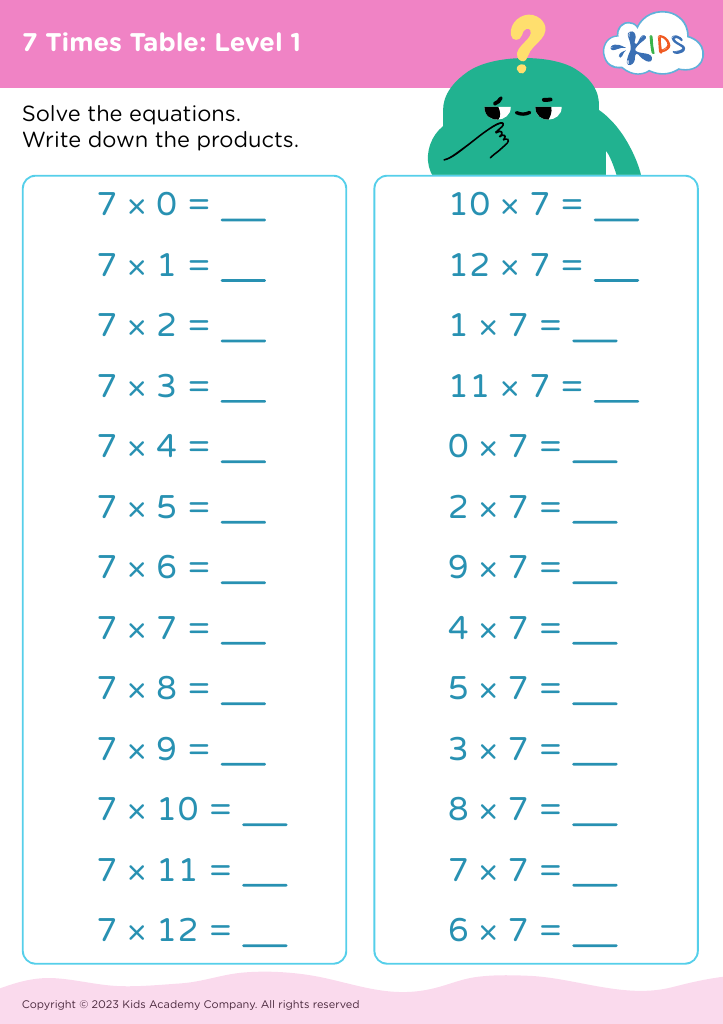
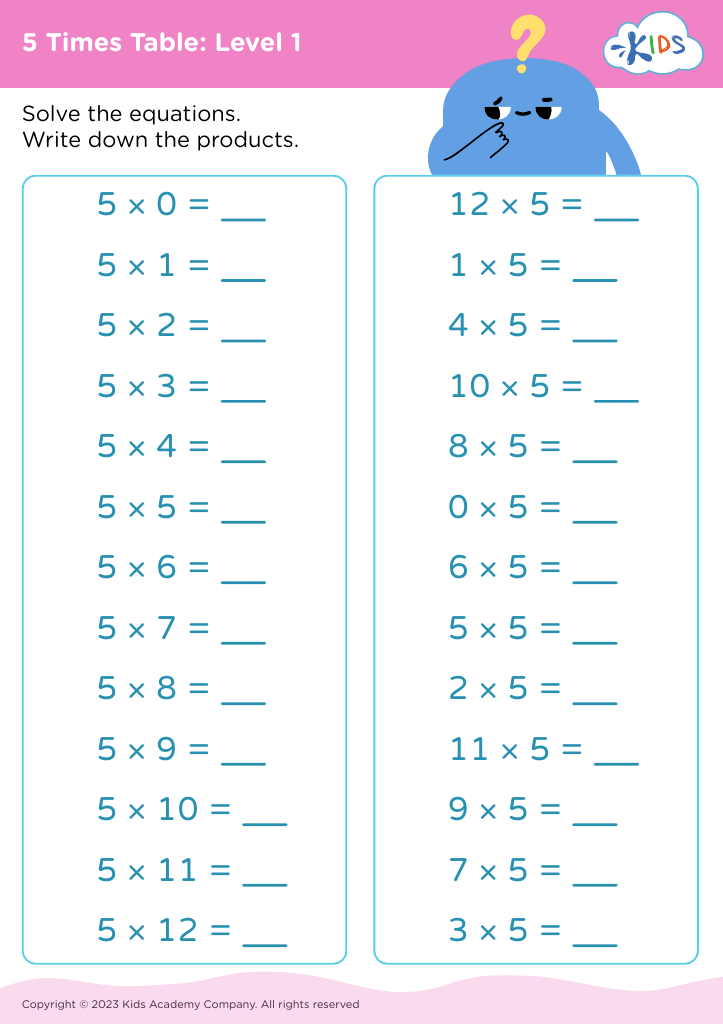
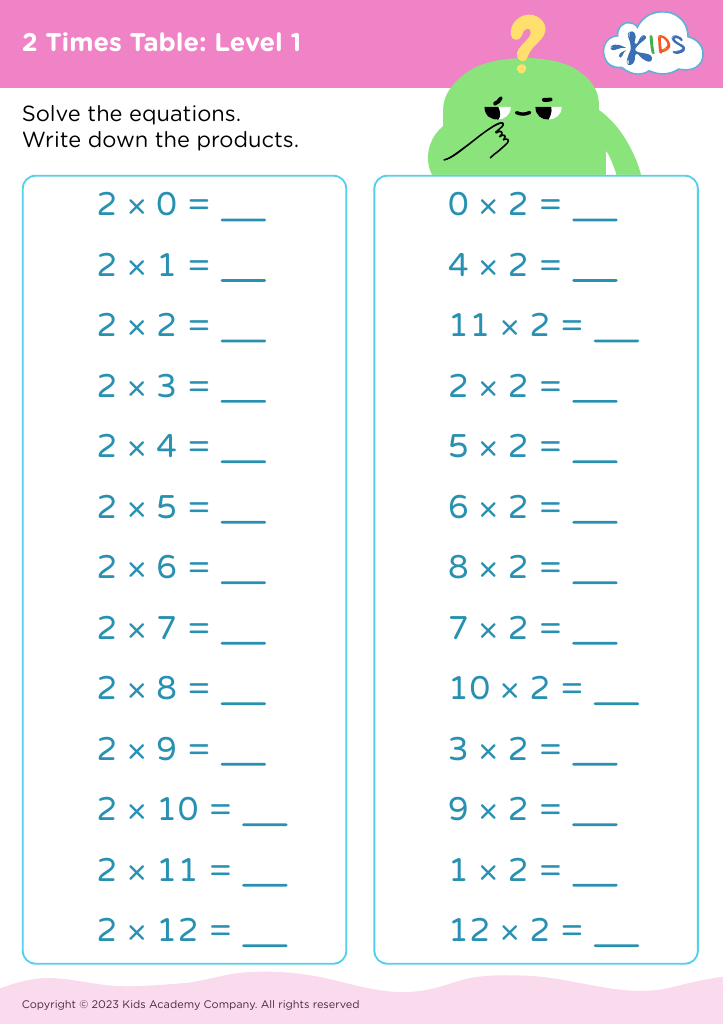








Understanding times tables is a fundamental skill for children aged 6-9, and it serves as a building block for more complex mathematical concepts. Parents and teachers should care about this for several reasons.
Firstly, mastering times tables enhances numerical fluency. Children become more confident in their ability to solve arithmetic problems quickly and accurately, which lays a solid foundation for future learning in mathematics. This confidence translates into greater participation and enthusiasm in math activities.
Secondly, a strong grasp of multiplication tables aids in developing critical thinking and problem-solving skills. When children understand the relationship between numbers, they are better equipped to tackle word problems and real-world situations that require mathematical reasoning.
Additionally, early proficiency in times tables helps prevent math-related anxiety. When children are comfortable with basic multiplication, they are less likely to struggle with advanced topics in later grades, promoting a more positive attitude toward math.
Lastly, involving parents in this learning process fosters a supportive environment. Engaging in fun and interactive ways to practice times tables can strengthen the parent-child relationship while simultaneously boosting the child's learning experience. In short, understanding times tables is essential, setting the stage for future academic success and a love for learning in mathematics.








