Number Recognition Easy Measurement Worksheets for Ages 6-9
3 filtered results
-
From - To
Welcome to our "Number Recognition Easy Measurement Worksheets" designed specifically for children aged 6 to 9! These engaging worksheets help young learners build essential number recognition skills while exploring the world of measurements. Each activity introduces fun, interactive methods for identifying numbers through hands-on exercises that align with educational standards. Perfect for both in-class learning and home practice, our worksheets promote critical thinking and number fluency. Teachers and parents will find a variety of exercises, ensuring that each child can learn at their own pace. Start your child's journey to mastering numbers and measurements with our thoughtfully crafted resources! Enjoy learning today!
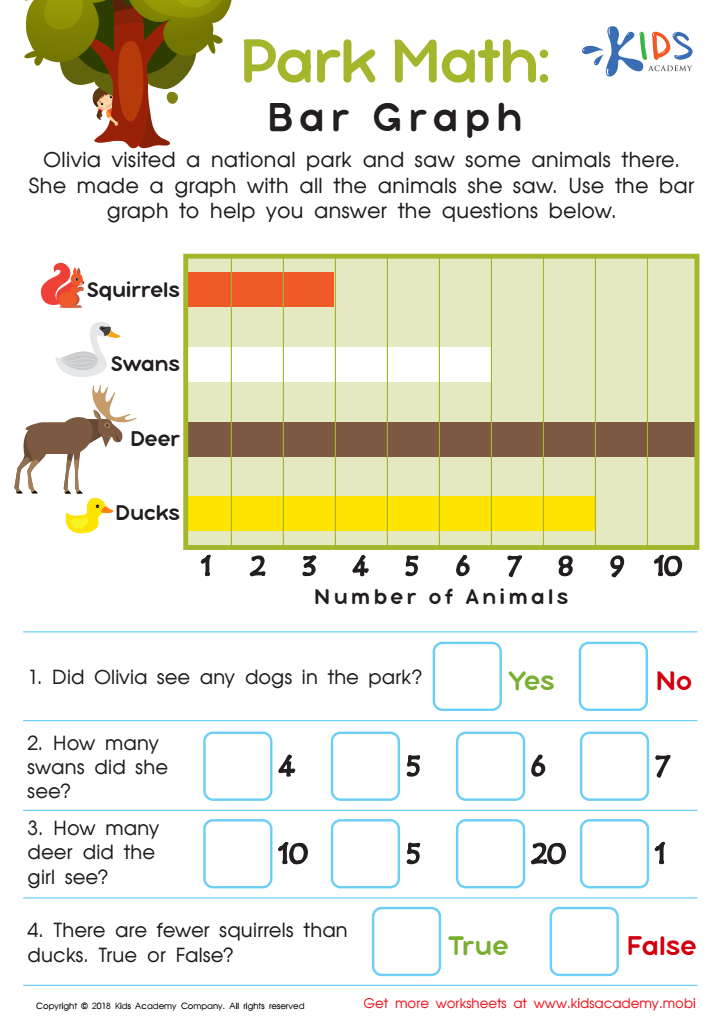
Park Math: Bar Graph Worksheet
 Assign to My Students
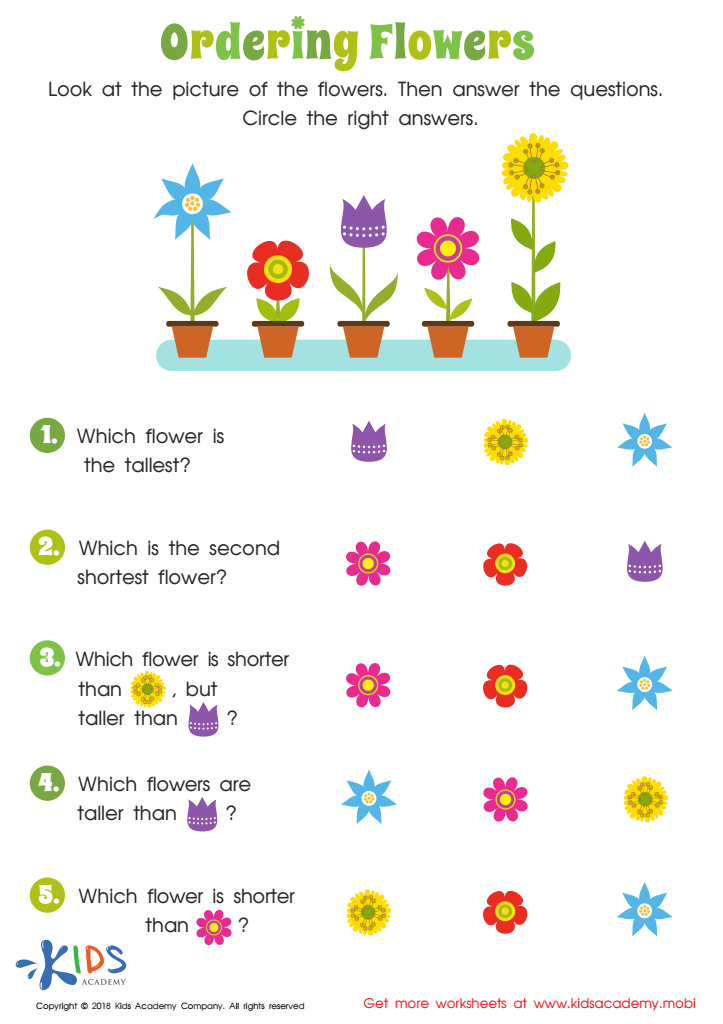
Ordering Flowers Worksheet
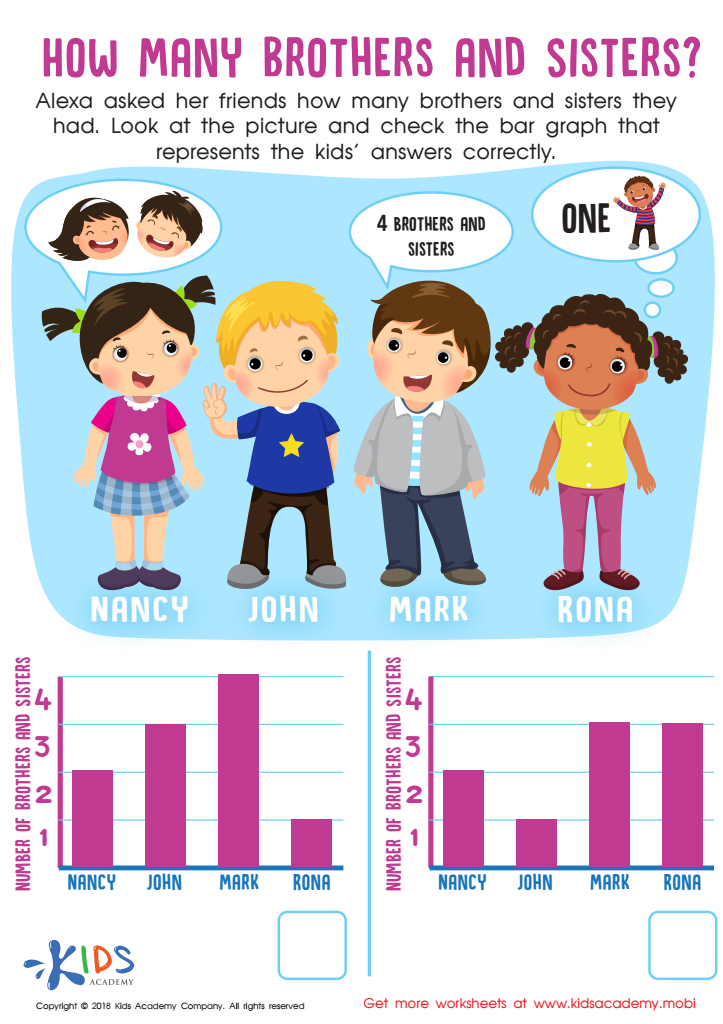
How Many Brothers and Sisters? Worksheet








Parents and teachers should prioritize number recognition and measurement skills for children aged 6-9 because these foundational concepts play a crucial role in their overall cognitive development and future learning. Number recognition enables children to identify, understand, and manipulate numbers, which is essential for advancing their mathematical abilities. Early exposure to numbers fosters a positive attitude towards math, preventing future aversions.
Measuring enhances a child's spatial awareness and comprehension of dimensions, promoting critical thinking and problem-solving skills. It allows children to understand the world around them, bridging the gap between abstract concepts and tangible experiences. Engaging children in these activities can ignite curiosity and create a richer learning environment, encouraging exploration and discovery.
Moreover, mastering number recognition and basic measurements can boost a child's confidence, equipping them with essential skills for everyday life, whether they're measuring ingredients for a recipe or identifying numbers while playing games. The collaborative support from parents and teachers can further reinforce these skills, ensuring that children develop a strong mathematical foundation. By investing in number recognition and measurement early on, adults can cultivate lifelong learners who are well-equipped to tackle more complex mathematical challenges in the future.








