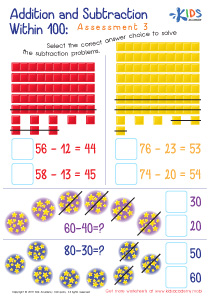
Counting skills Easy Numbers up to 100 Worksheets for Ages 6-9
6 filtered results
-
From - To
Our "Counting Skills: Easy Numbers up to 100" worksheets, designed for ages 6-9, offer an engaging approach to mastering basic math concepts. These printable sheets help young learners enhance their counting abilities, sequential number understanding, and recognition skills in a fun and interactive way. Each worksheet progresses logically, building confidence and promoting a solid foundation in early mathematics. By providing diverse exercises like number patterns, missing numbers, and counting objects, children can practice at their own pace. Perfect for both classroom and home learning, these resources make numbers up to 100 accessible and enjoyable for young minds.
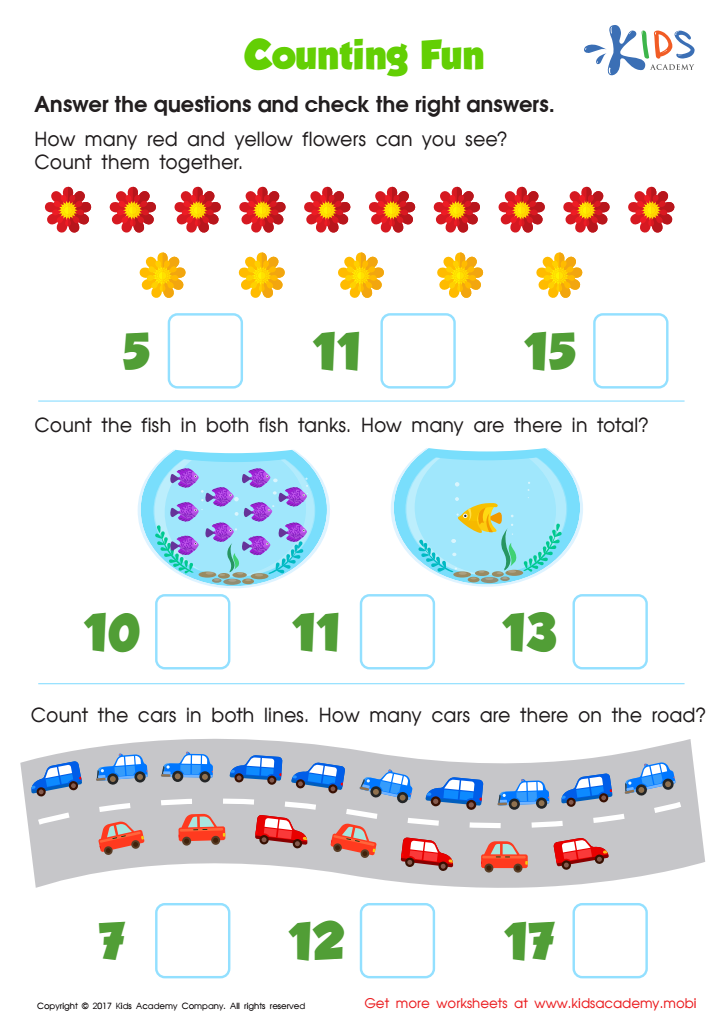
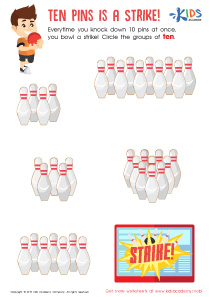
Counting Fun Worksheet
 Assign to My Students
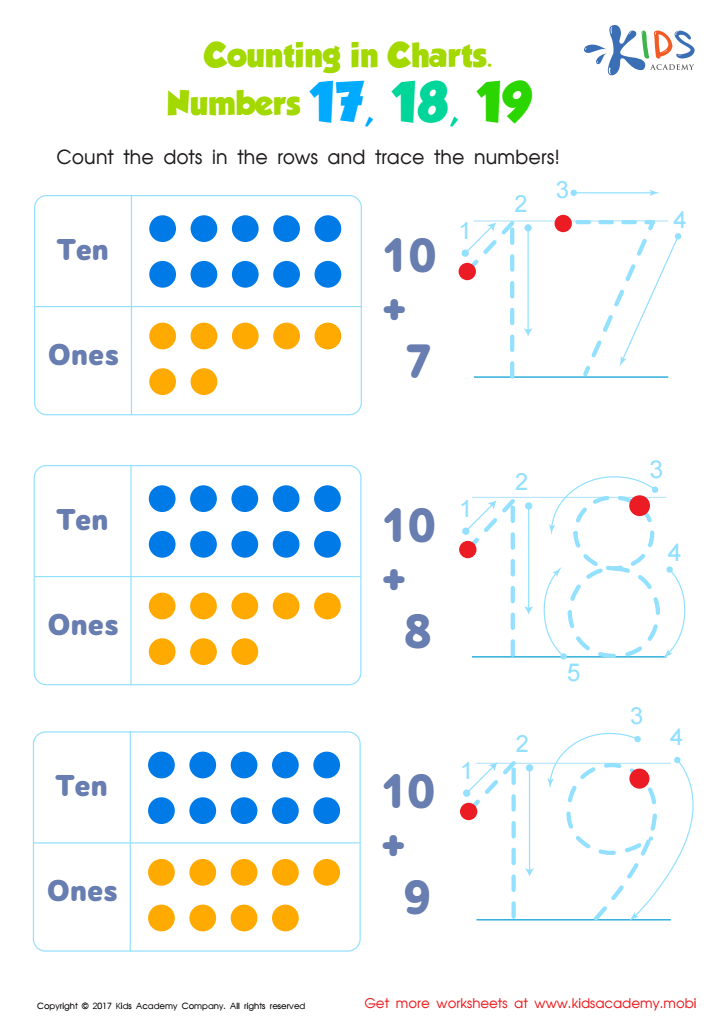
Kindergarten Number Tracing: Counting in Charts Worksheet
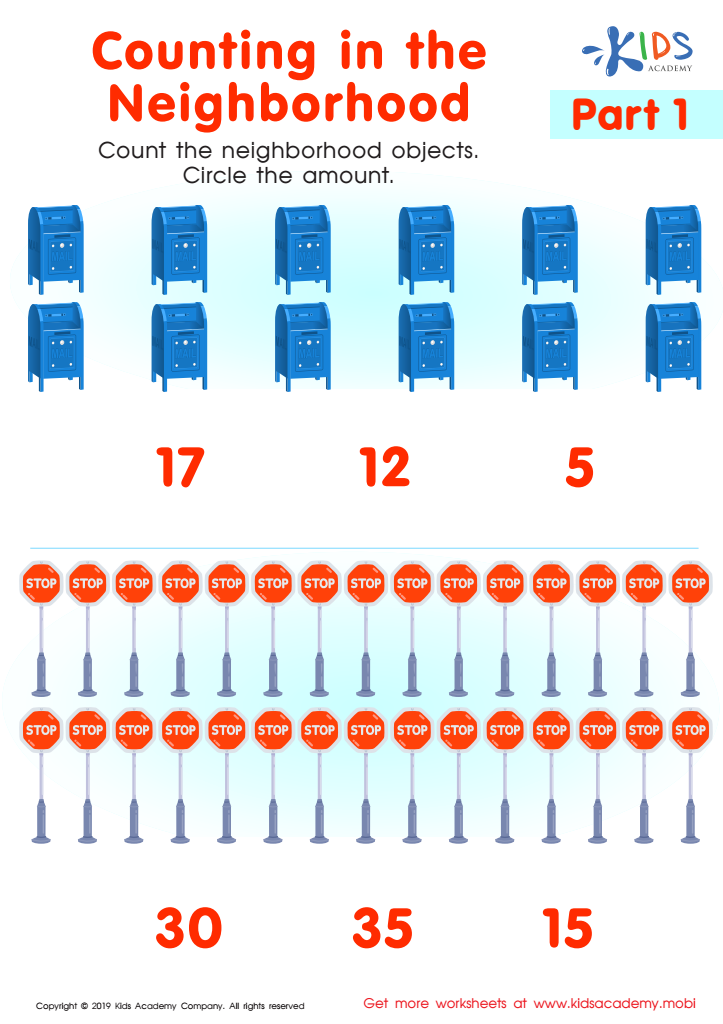
Counting in the Neighborhood Part1 Worksheet
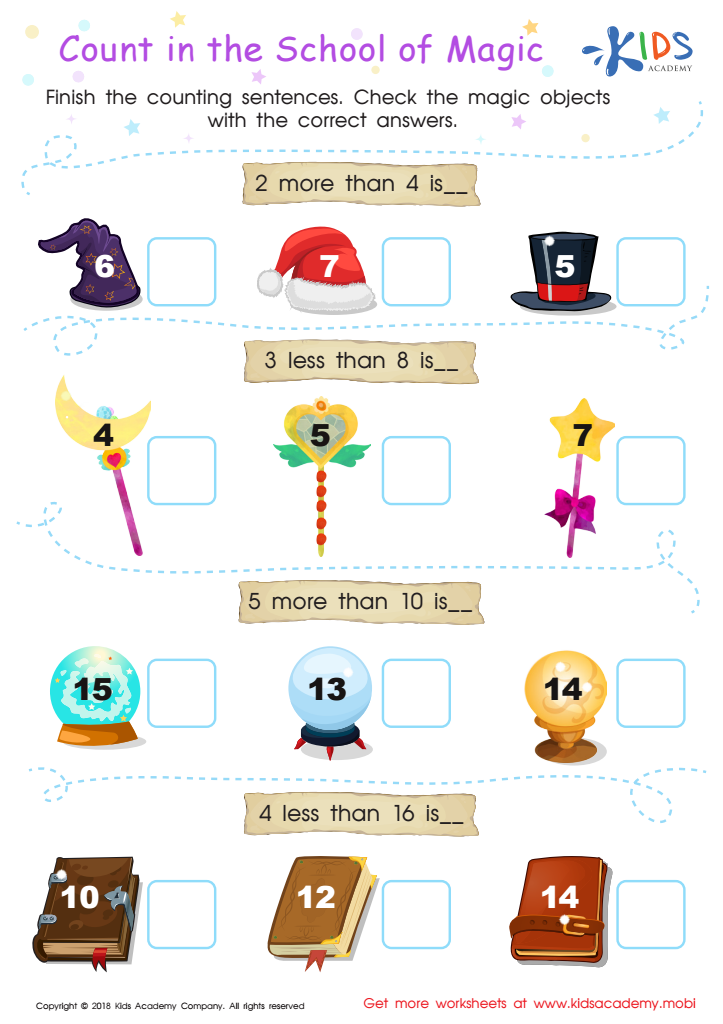
Count in the School of Magic Worksheet
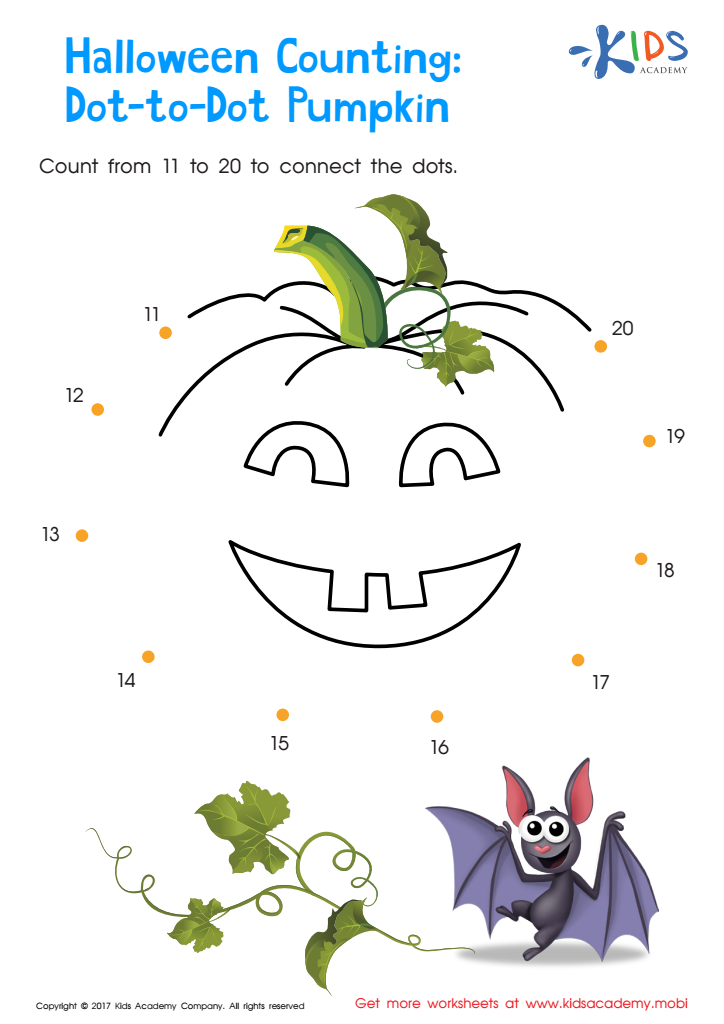
Ordering 11–20: Halloween Counting Worksheet
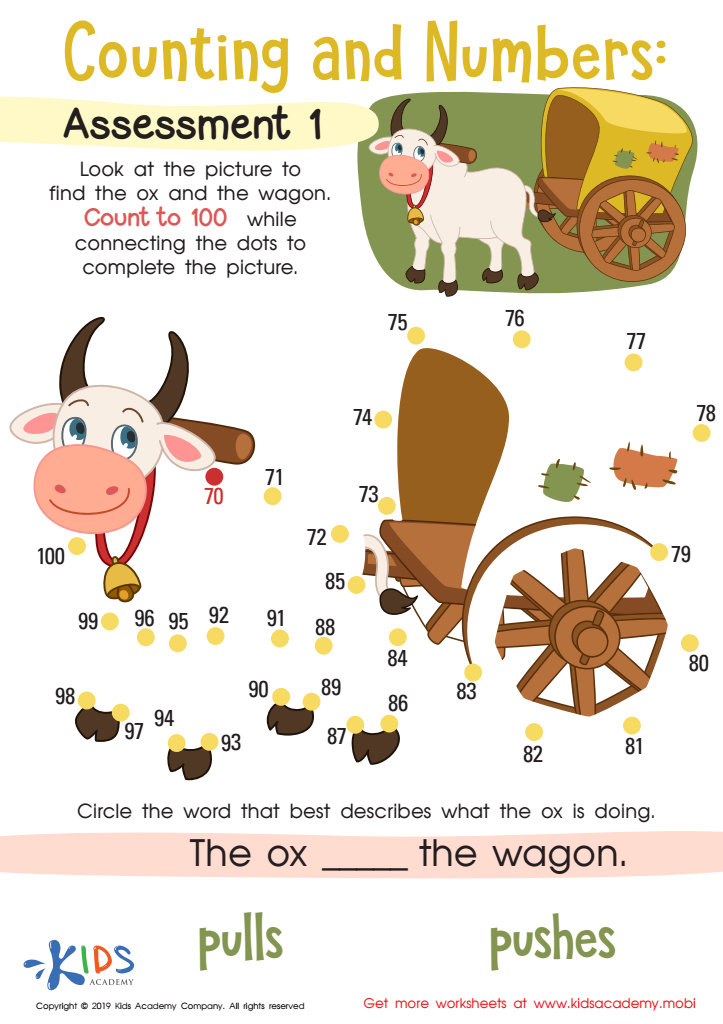
Counting and Numbers: Assessment 1 Worksheet








Counting skills are foundational to a child's early mathematical development and form the basis for more advanced math concepts later in life. For children aged 6-9, mastering counting with easy numbers up to 100 is crucial for several reasons.
Firstly, it helps develop number sense, which includes understanding the value of numbers, their order, and the relationship between them. This understanding is essential for performing basic arithmetic operations such as addition and subtraction. For instance, a child comfortable counting to 100 can quickly grasp what it means to add or subtract smaller values within this range.
Secondly, proficiency in counting aids in developing problem-solving and critical thinking skills. When a child learns to count systematically, they also learn to approach problems in an organized manner, which is a key component of logical reasoning.
Counting skills also enhance a child's ability to recognize patterns and sequences, which are fundamental in many areas of math, including algebra and geometry. For example, the ability to count by twos, fives, or tens introduces children to multiplication and division concepts early on.
Lastly, confidence in counting boosts a child’s overall self-esteem in learning. Feeling proficient in basic counting allows children to tackle more challenging math problems with a positive mindset, which can influence their attitude towards education more broadly.
Thus, parents and teachers fostering counting skills up to 100 ensure children have a robust foundation for all future mathematical learning.