Spelling practice Easy Building Vocabulary Worksheets for Ages 6-9
5 filtered results
Difficulty Level
Grade
Age
-
From - To
Subject
Activity
Standards
Enhance your child's reading and writing skills with our Easy Building Vocabulary Worksheets, perfect for ages 6-9! Designed to make spelling practice fun and engaging, these worksheets provide a variety of activities that promote word recognition and vocabulary expansion. Your young learners will enjoy interactive exercises that foster creativity and critical thinking. With each worksheet, children practice spelling, identify patterns, and apply new words in context. Our resources are tailored to different learning styles, promoting confidence and fluency. Download these printable worksheets today to support your child's literacy development and watch their skills grow!
Favorites
With answer key
Interactive
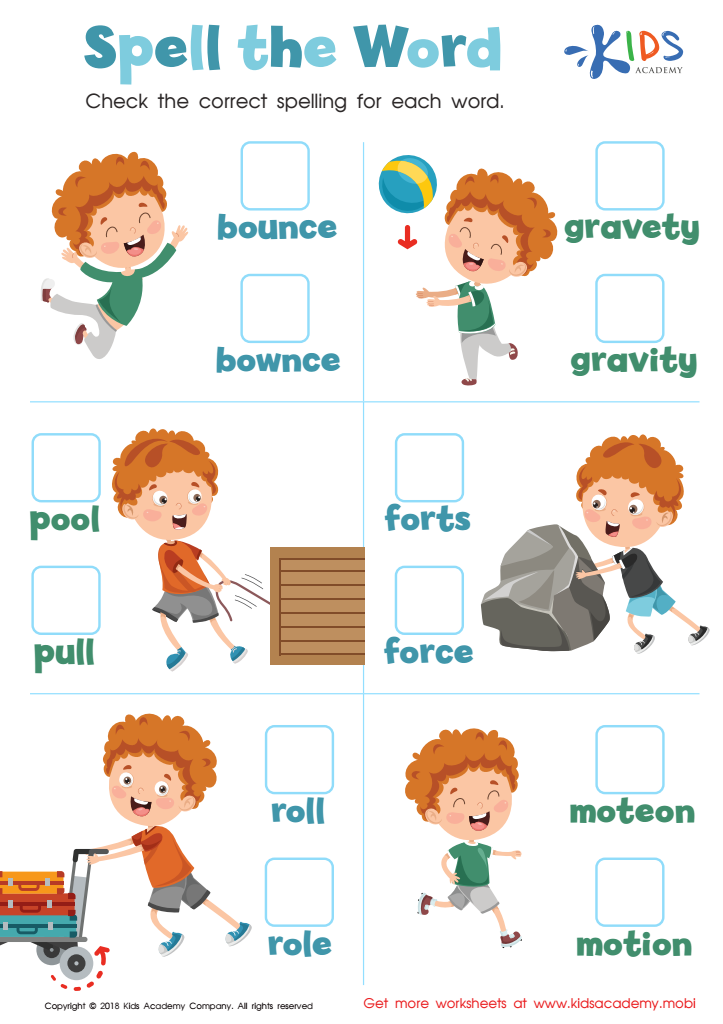
Spell the Word Worksheet
Spelling can be fun for your students with this colorful worksheet. Ask them to identify what the boy is doing in each picture, then check the correct spelling of the words. Let them practice and have fun while learning!
 Assign to My Students
Spell the Word Worksheet
Worksheet











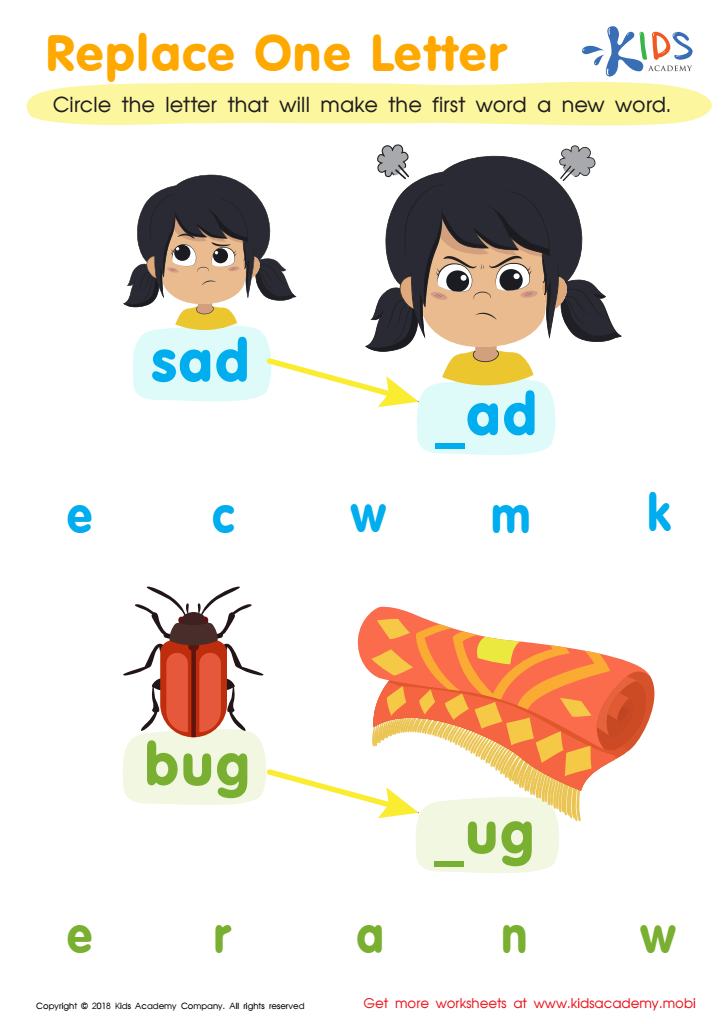
Replace One Letter Worksheet
Emerging readers will practice switching initial consonants to create new words with this fun PDF worksheet. They'll use picture clues, learn about onset letters and work on their fine motor skills as they circle the right letter for each "ad" and "ug" word family.
Replace One Letter Worksheet
Worksheet
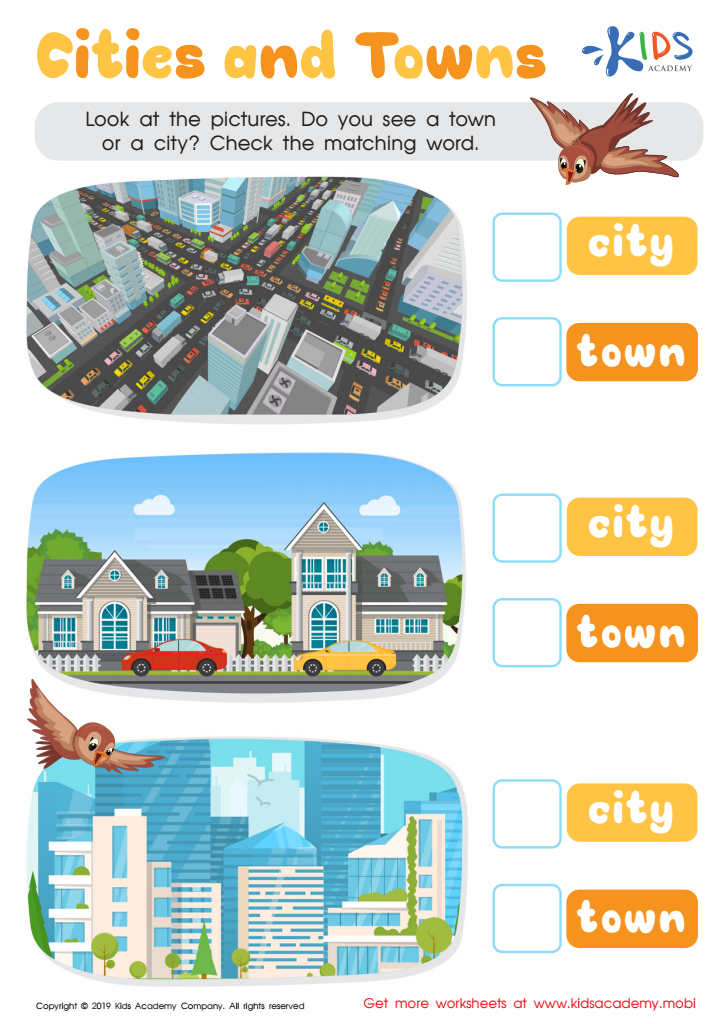
Cities and Towns Worksheet
Cities are buzzy and busy while towns tend to be peaceful. Ask your child if they can tell which one is which from a picture. This could be a great way to test their understanding of the differences between towns and cities. There are many businesses in cities, tall buildings and lots to do. Meanwhile towns are usually quieter.
Cities and Towns Worksheet
Worksheet
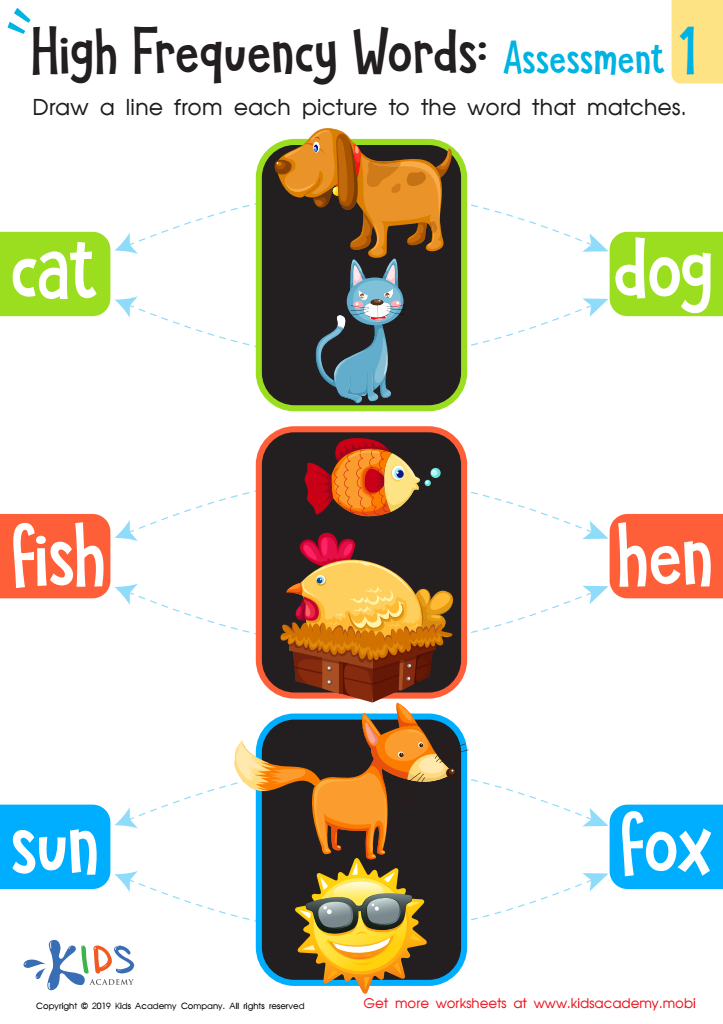
High Frequency Words: Assessment 1 Worksheet
Emergent readers need to know high-frequency words accurately and quickly to develop fluency. Connecting these words to colorful, fun pictures helps reading prosody. This assessment worksheet uses traceable lines to help learners match pictures to words.
High Frequency Words: Assessment 1 Worksheet
Worksheet
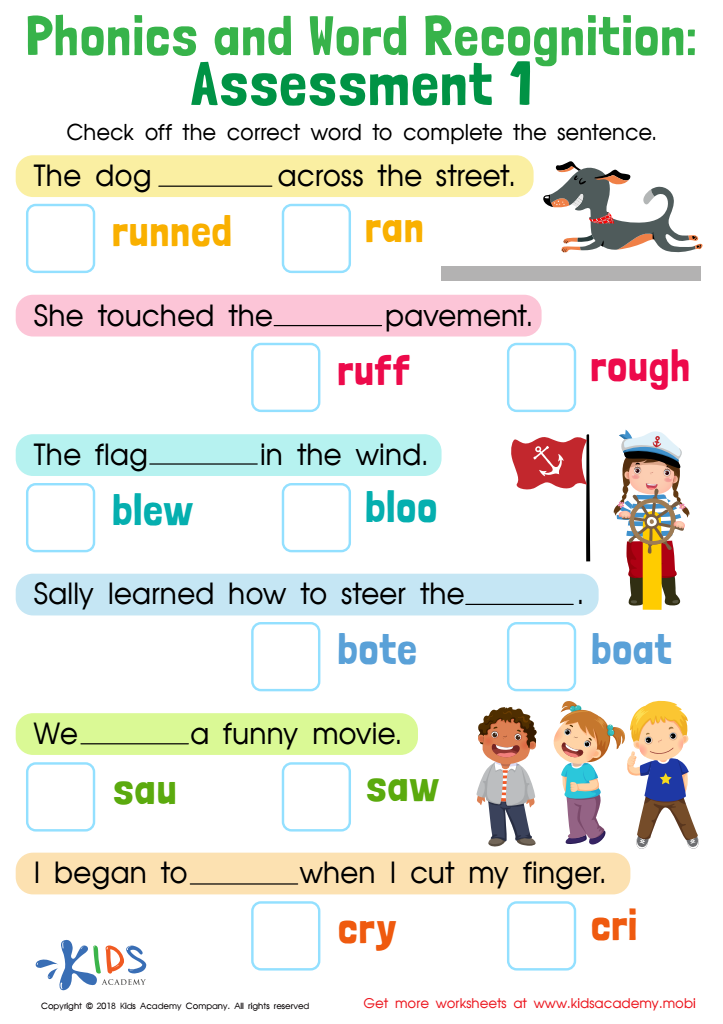
Phonics and Word Recognition: Assessment 1 Worksheet
This worksheet tests phonetics and word recognition. Students should be familiar with past tense verbs. Read incomplete sentences, then read multiple options and help students select the correct one.
Phonics and Word Recognition: Assessment 1 Worksheet
Worksheet
Join Kids Academy for Free
Who is primarily going to use this learning content?








Parents and teachers should prioritize spelling practice and vocabulary building for children aged 6 to 9, as these skills form the foundation for effective communication and academic success. During this critical developmental period, children are acquiring essential literacy skills that will serve them throughout their lives.
Spelling practice helps young learners develop phonemic awareness, allowing them to understand the relationship between sounds and letters. This understanding is crucial for reading fluency and comprehension. Furthermore, as children learn to spell new words, they naturally expand their vocabulary, empowering them to express themselves more clearly and creatively. A rich vocabulary supports not just writing, but also enhances reading comprehension, enabling children to better understand and engage with diverse texts.
Additionally, regular spelling and vocabulary practice builds confidence. When children feel proficient in their language skills, they are more likely to participate in classroom discussions and share their ideas. This engagement fosters a love for learning that can last a lifetime. Ultimately, investing time in spelling and vocabulary development at this age equips children with vital tools for academic achievement and effective communication, laying the groundwork for their future success in school and beyond.