Cognitive Development Easy Reading Fiction Worksheets for Ages 6-9
2 filtered results
-
From - To
Enhance your child's cognitive development with our engaging Easy Reading Fiction Worksheets designed for ages 6-9. These expertly crafted resources combine fun stories with comprehension activities, fostering critical thinking and problem-solving skills. Each worksheet focuses on essential cognitive abilities, including memory, attention, and reasoning. As children delve into captivating narratives, they perform a variety of tasks such as identifying plot elements, sequencing events, and making inferences. Perfect for both classroom use and at-home learning, these worksheets transform reading into a dynamic learning adventure, setting the foundation for lifelong cognitive growth and educational success. Make learning enjoyable and effective today!
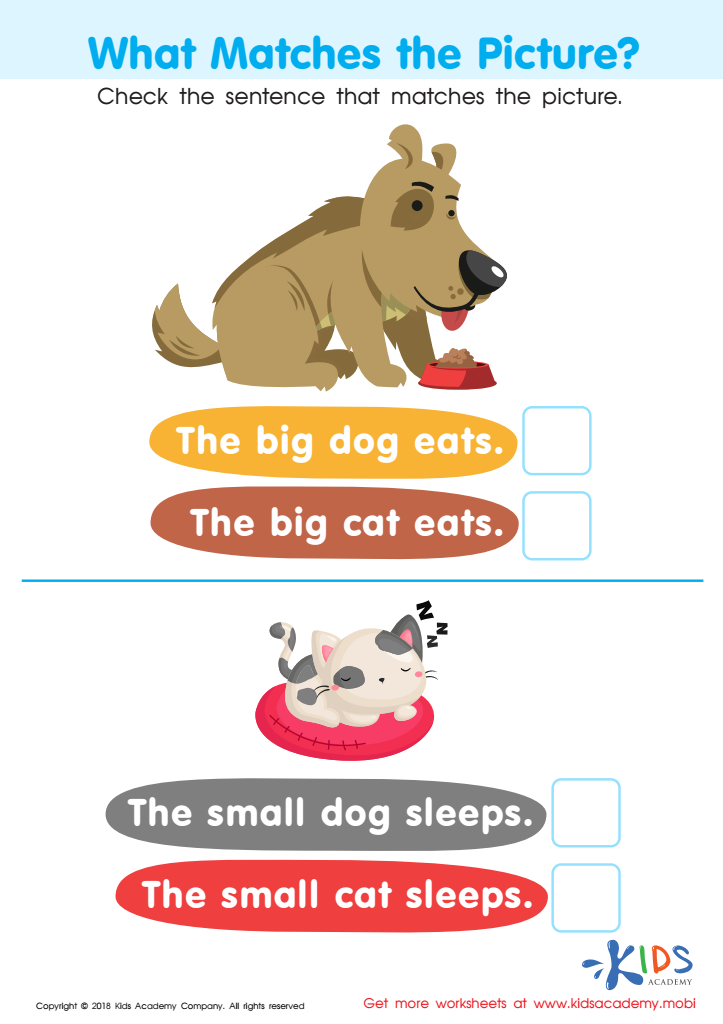
What Matches the Picture? Worksheet
 Assign to My Students
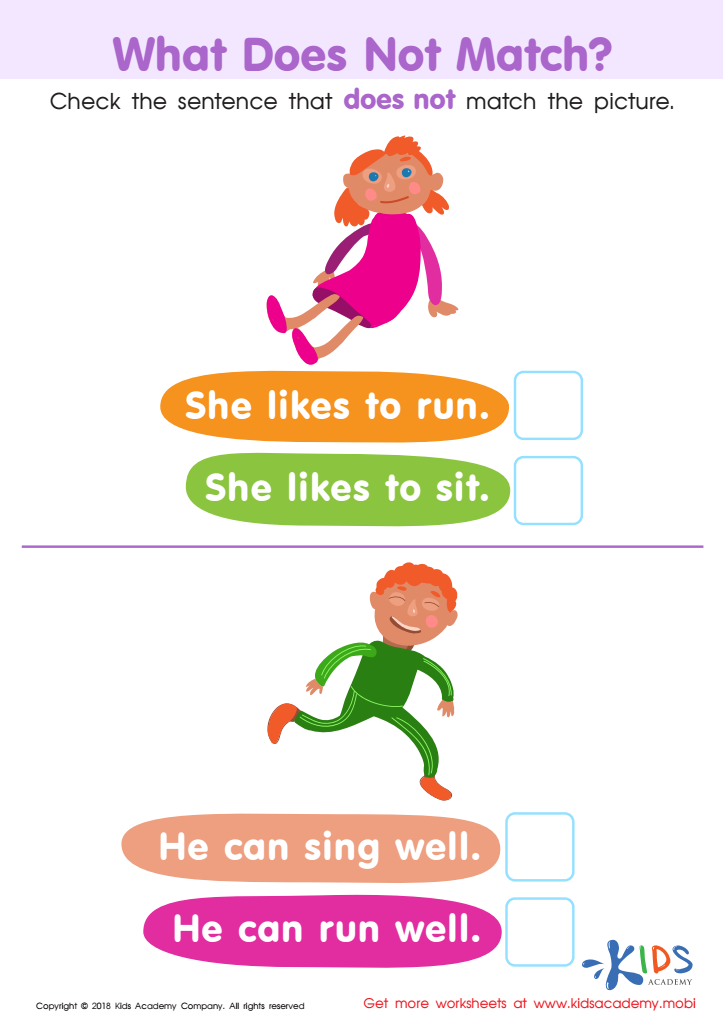
What Does Not Match? Worksheet



.jpg)




Parents and teachers play crucial roles in the cognitive development of children, particularly in the formative years between ages 6-9. Easy reading fiction designed for this age group serves as an essential tool for nurturing young minds. Firstly, such literature promotes literacy skills by introducing vocabulary and grammar in an engaging, digestible manner. As children immerse themselves in simple, captivating stories, they develop their reading fluency and comprehension skills—a foundation for all future learning.
Moreover, easy reading fiction encourages critical and imaginative thinking. When children encounter new scenarios, characters, and problem-solving opportunities within a story, they learn to analyze and interpret different viewpoints and outcomes. This not only boosts their cognitive flexibility but also enhances their problem-solving abilities.
Additionally, storytelling fosters empathy and emotional intelligence by allowing children to see the world through various perspectives. Understanding characters' feelings and motivations leads to greater emotional insight and social skills. These stories often embed moral lessons and ethical considerations that shape a child's understanding of right and wrong.
Finally, parents and teachers who engage with children through reading can create a special bond, fostering a love for reading that lasts a lifetime. This shared activity not only supports cognitive development but also strengthens relationships and builds trust, crucial elements in a child’s overall development.