Enhancing observation skills Easy Reading Non-Fiction Worksheets for Ages 6-9
3 filtered results
-
From - To
Boost your child's observation skills with our Easy Reading Non-Fiction Worksheets designed for ages 6-9! These engaging worksheets provide fun, interactive activities that encourage careful observation and critical thinking. By exploring real-life topics, children will learn to gather information, make predictions, and develop important comprehension skills. Our resources are tailored to suit young learners, making them ideal for both classroom and at-home use. Help your child excel in their reading journey while enhancing their ability to notice details and extract meaningful information from text. Perfect for fostering curiosity and a love for learning! Check out our collection today!
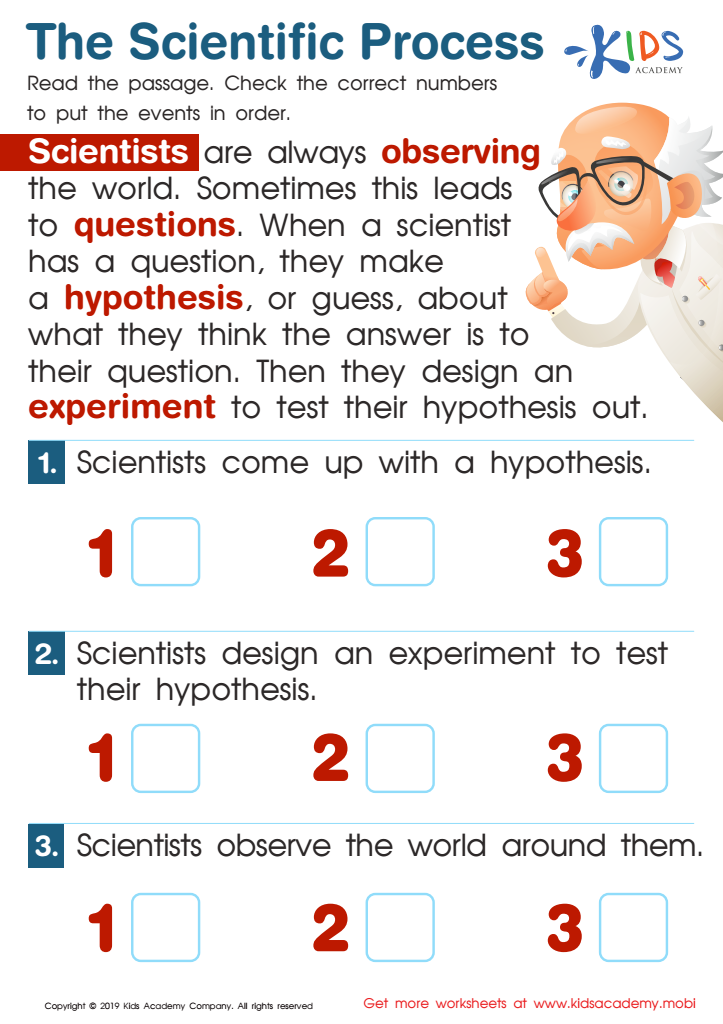
The Scientific Process Worksheet
 Assign to My Students
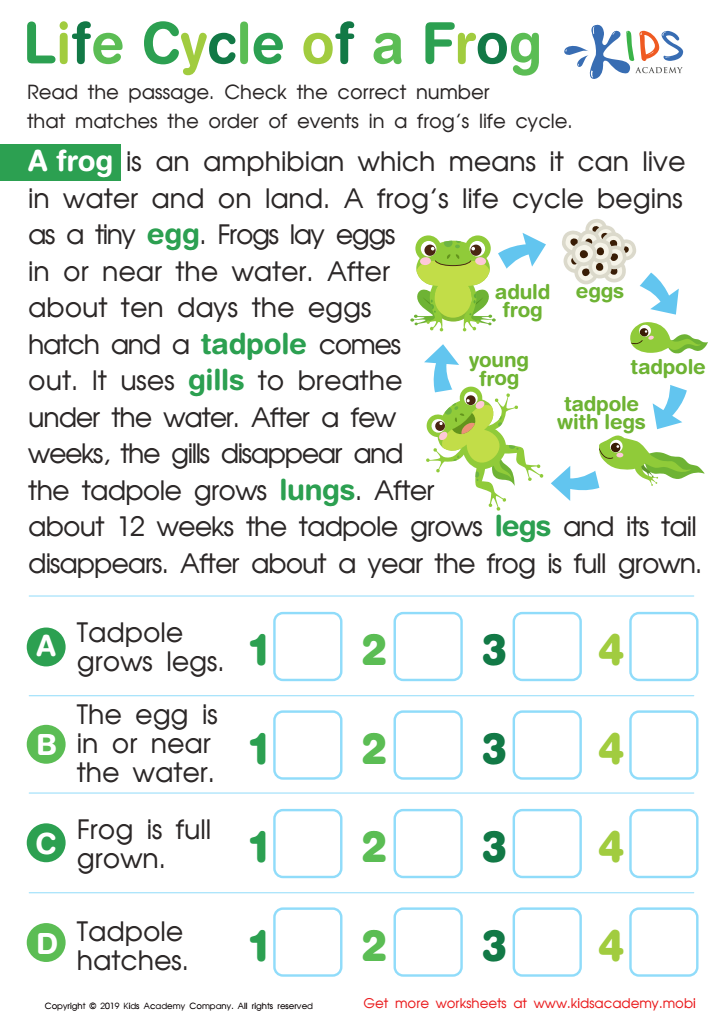
Life Cycle of a Frog Worksheet
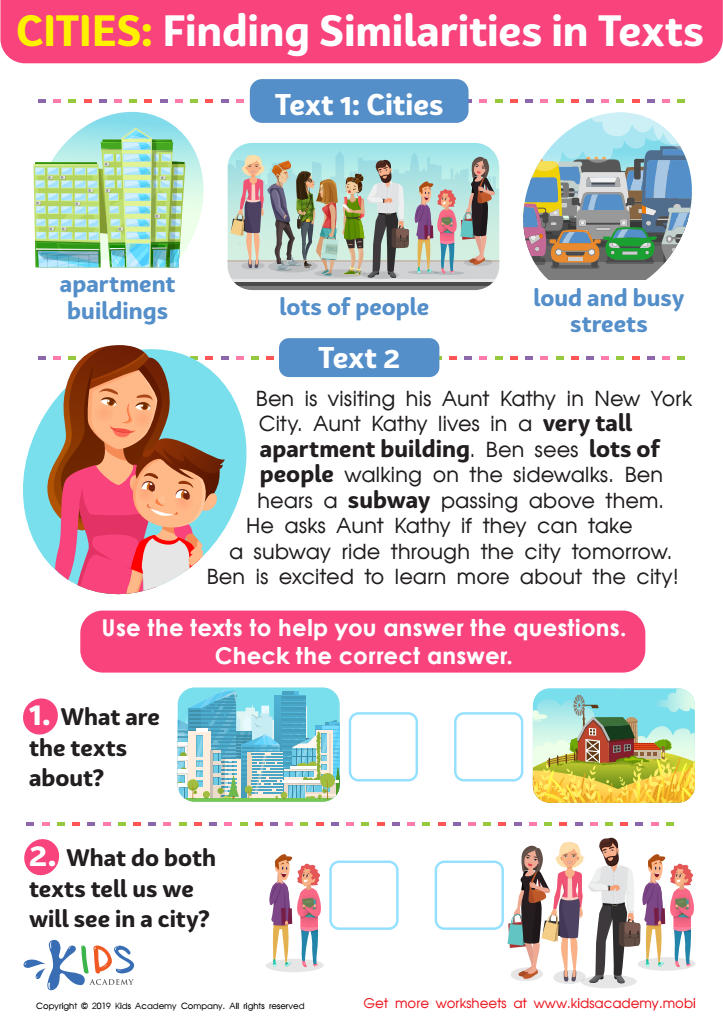
Cities: Finding Similarities Worksheet








Enhancing observation skills in young readers, particularly in the context of easy reading non-fiction for ages 6-9, is crucial for several reasons. First, good observation skills help children engage more deeply with the text. By learning to notice details, they can make connections, ask questions, and understand the content more thoroughly. This fosters critical thinking and encourages a love for learning.
Moreover, developing observation skills supports literacy development. As children hone their ability to observe details and relationships, they become better at comprehending both visual and written information. This skill is not just pivotal for reading non-fiction but also translates across various subjects, helping students in science, social studies, and beyond.
Additionally, enhancing observation skills nurtures curiosity. Children develop a sense of wonder about the world around them, which can lead to a desire to explore new topics and discover new ideas. For parents and teachers, encouraging this skill creates an enriching learning environment, ultimately setting the stage for lifelong learning. By focusing on enhancing observation skills in non-fiction, we equip children with essential tools for academic success and personal growth.







