Filters

7 filtered results

Clear all filters
Favorites
With answer key
Interactive

7 filtered results

Difficulty Level

Grade


Unlock a world of learning fun with our Reading Comprehension Easy Alphabet Worksheets for 6-Year-Olds! Specifically designed to build foundational literacy skills, these worksheets blend engaging activities with educational value. Children can practice recognizing letters, understanding sounds, and beginning to comprehend basic sentences. Perfect for classroom use or at-home practice, our resources ensure young learners develop essential reading capabilities while enjoying the process. Give your child or students the head start they need with our expertly created and enjoyable alphabet worksheets, leading them toward successful reading comprehension and a lifelong love of reading.

Check out this FREE Trial Lesson on Alphabet for age 6!

Review

Favorites
With answer key
Interactive
  • 6
  • Reading comprehension
  • Alphabet
  • Easy
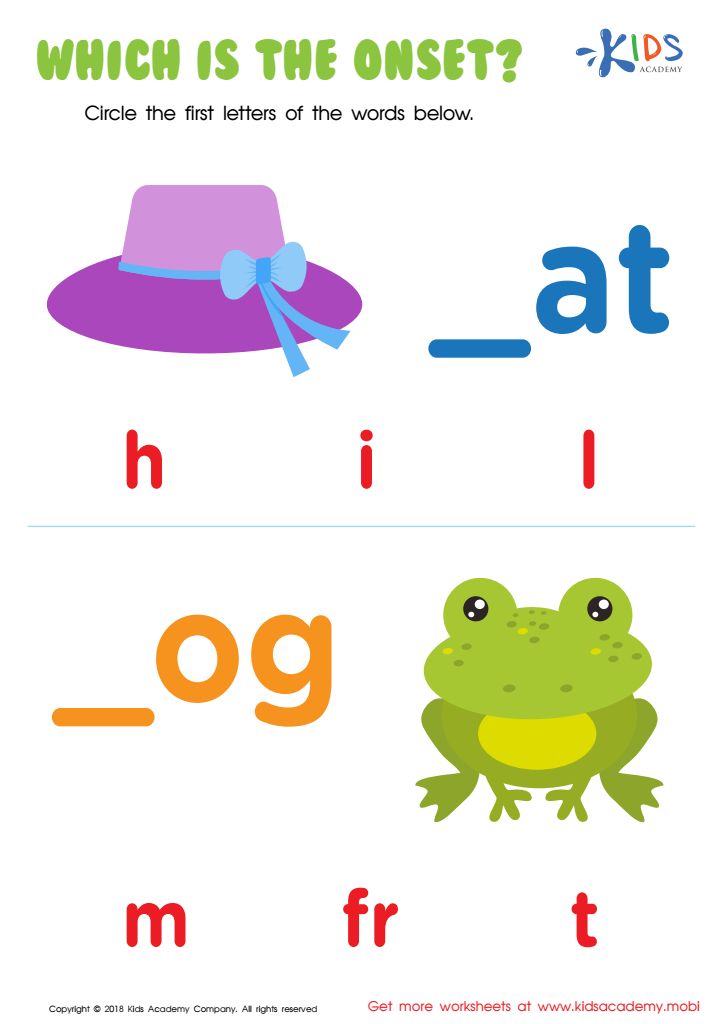
Which Is the Onset? Worksheet

Which Is the Onset? Worksheet

Help your children learn to spell with this bright, fun worksheet. Struggling with spelling small words can make reading and writing sentences difficult. Encourage them to look at the pictures, say the names aloud and circle the correct first letter from the options. They will soon overcome any reluctance to spell.
Which Is the Onset? Worksheet
Worksheet
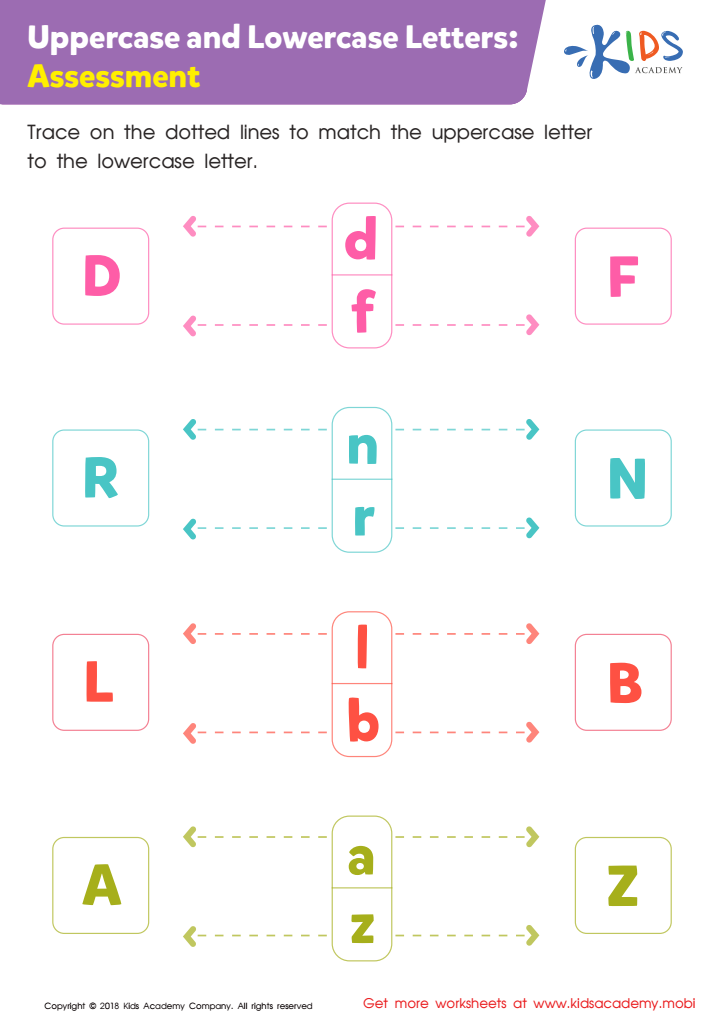
Uppercase and Lowercase Letters: Assessment Worksheet

Uppercase and Lowercase Letters: Assessment Worksheet

Assess your child's knowledge of upper- and lowercase letters with this worksheet. Have them trace the dotted lines to match the lowercase letters with their uppercase counterparts. This is a great way to gauge their progress and identify any areas of difficulty. Get a better understanding of your child's capabilities and encourage their development!
Uppercase and Lowercase Letters: Assessment Worksheet
Worksheet
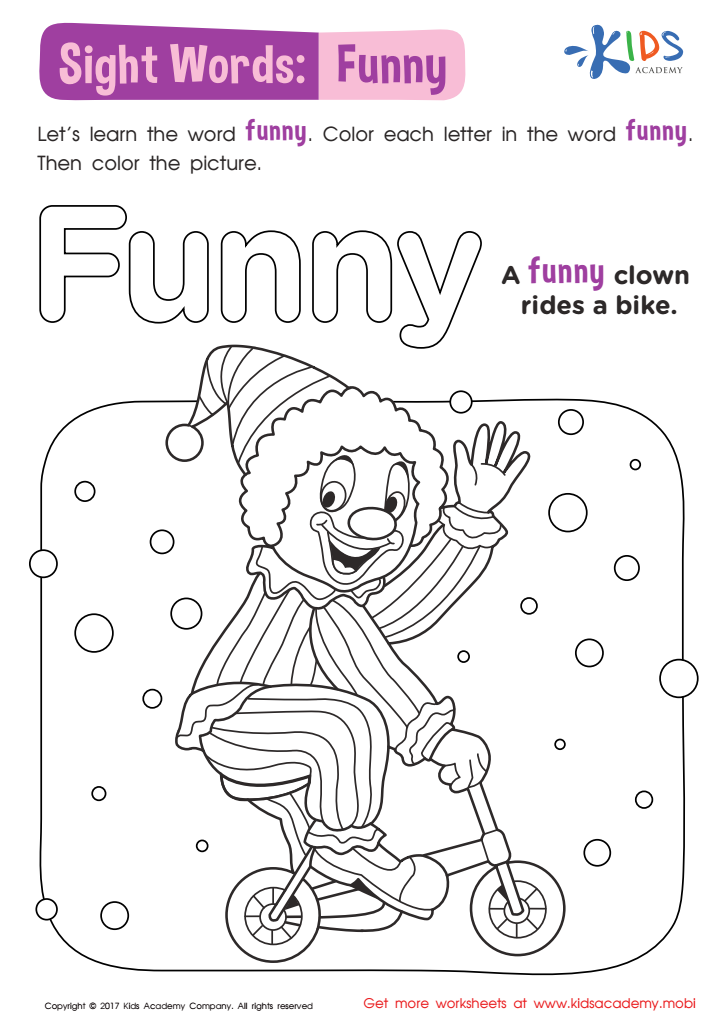
Funny Worksheet Sight Words Worksheet

Funny Worksheet Sight Words Worksheet

Love humor? Introduce "funny" as a sight word with this fun worksheet! Have your child read the sentence then color the word in the center. Let them use their imagination to color the silly clown in any way they like!
Download (PDF)
Assign to My Students
Funny Worksheet Sight Words Worksheet
Worksheet
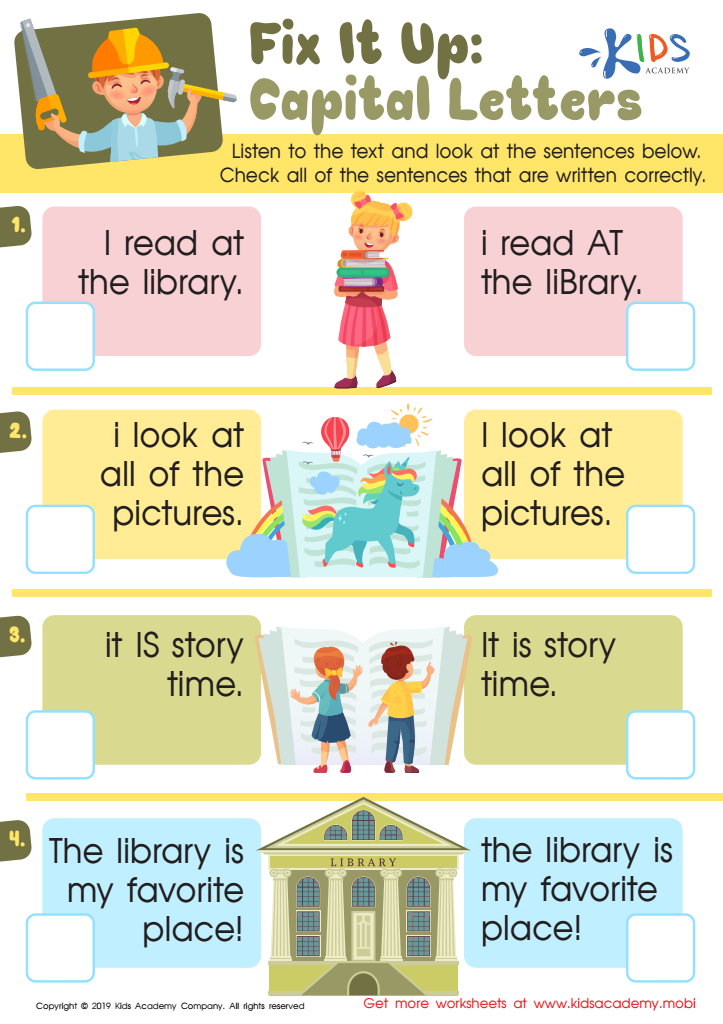
Fix Capital Letters Worksheet

Fix Capital Letters Worksheet

Put on your hardhats and get out the tools - it's time to do some repair work! Have your child identify sentences written with proper capitalization on this fun and colorful worksheet. Ask more advanced students to rewrite incorrect sentences correctly - it'll help them understand letter case better.
Fix Capital Letters Worksheet
Worksheet
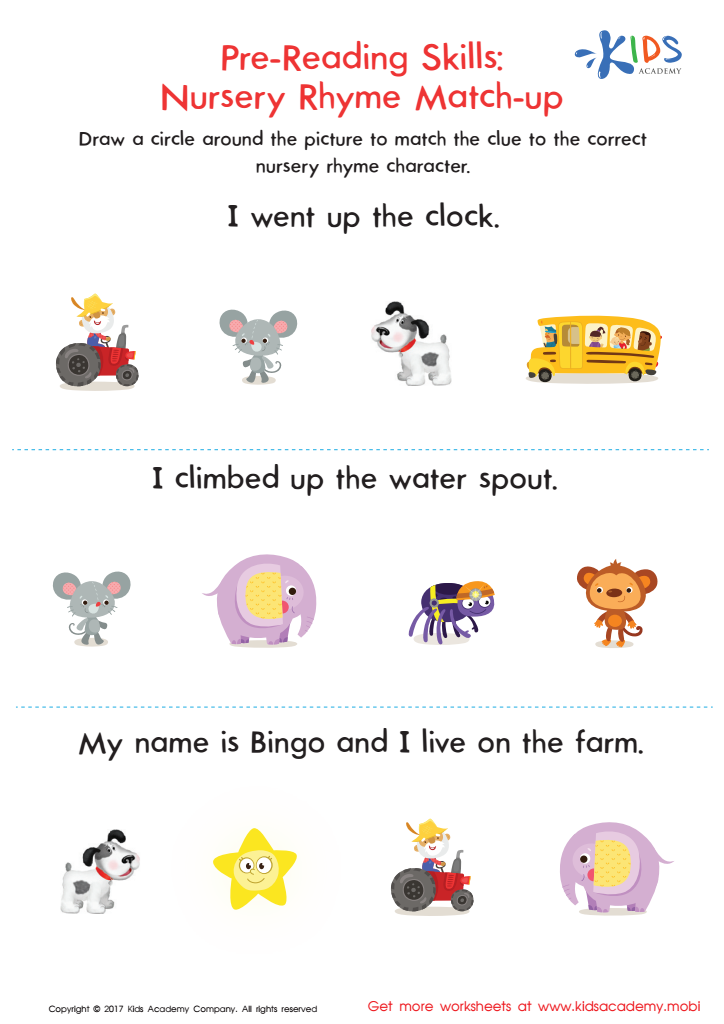
Nursery rhyme match-up worksheet

Nursery Rhyme Match–Up Worksheet
This worksheet helps kids build pre-reading skills using stories they know and love! By connecting with prior knowledge, kids can develop ideas about characters and set the stage for reading strategies.
Nursery Rhyme Match–Up Worksheet
Worksheet
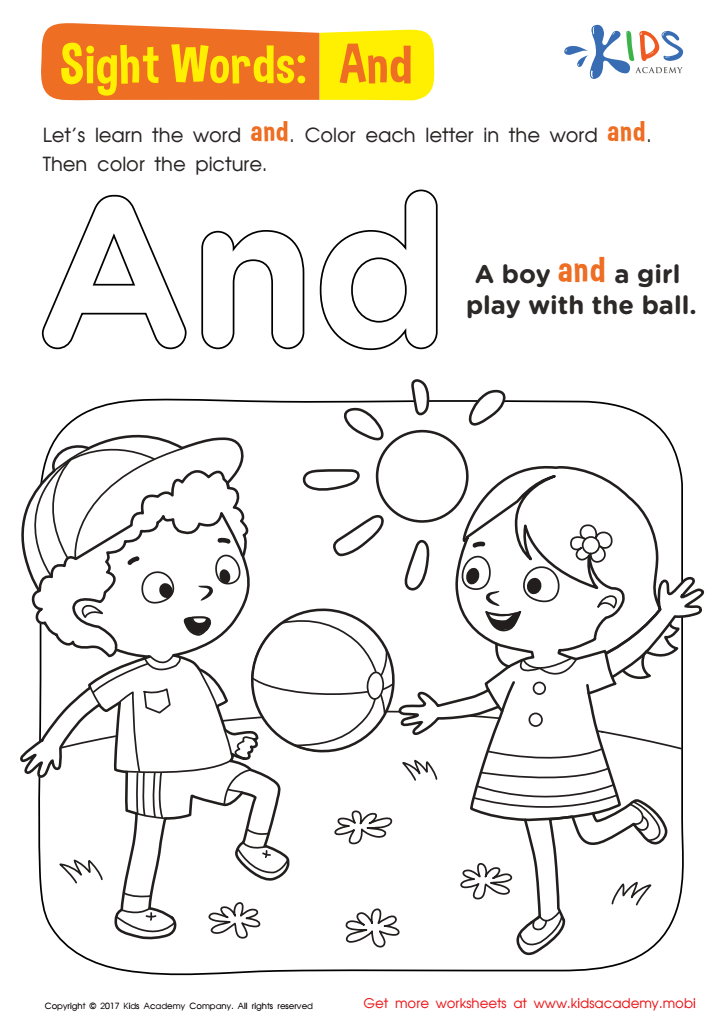
And Worksheet Sight Words Worksheet

And Worksheet Sight Words Worksheet

Help your child get a jumpstart on reading with sight words! Print out this fun worksheet and get your child to read the sentence. Point out the word "and", then color the word and enjoy the rest of the scene! It's a great way to introduce sight words and get their early reading skills going!
Download (PDF)
Assign to My Students
And Worksheet Sight Words Worksheet
Worksheet
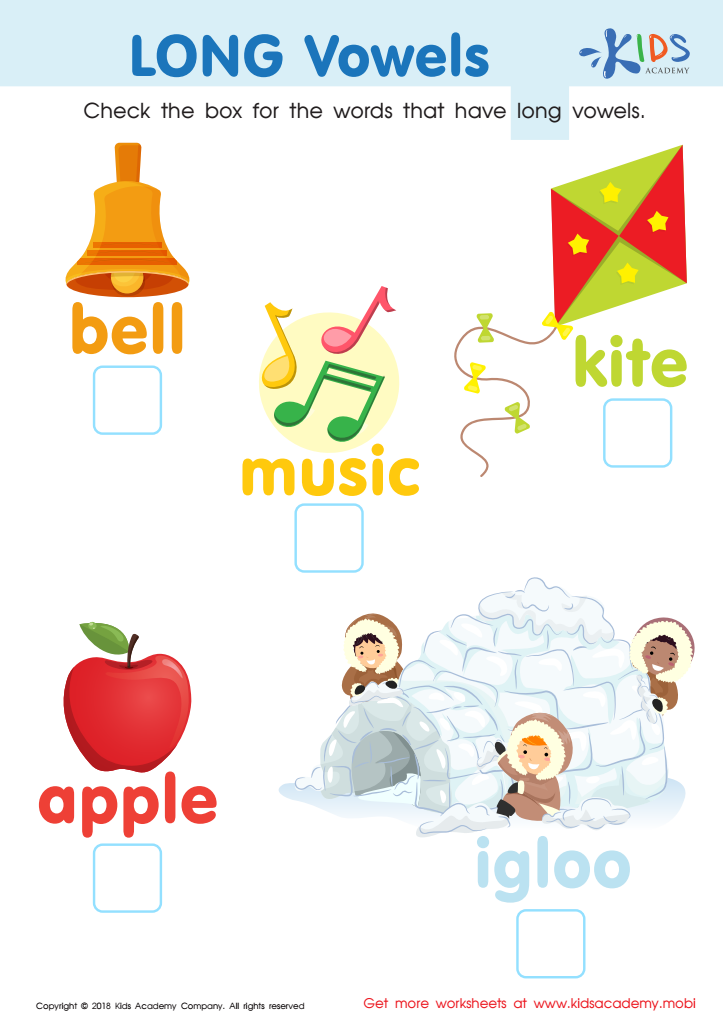
long vowels Worksheet

long vowels Worksheet

Have your early learner identify long vowels with this quick review. Ask them to name each picture aloud and listen out for the long vowel sounds to separate them from the shorter ones. Circle the ones that are long! Watch out for words with two vowels - they can be tricky!
long vowels Worksheet
Worksheet


Reading comprehension and familiarity with the alphabet are foundational skills for 6-year-olds, forming the bedrock of their future academic success and personal growth. Parents and teachers should prioritize these early literacy skills for several compelling reasons.

First, understanding the alphabet is the entry point to reading. When children can recognize and pronounce letters, they are better equipped to decode words, which is vital for phonemic awareness—a critical precursor to fluent reading. By mastering the alphabet, children also gain confidence, fostering a positive attitude towards learning.

Second, reading comprehension is not just about reading words; it's about understanding and interpreting them. Strong comprehension skills enable children to grasp the main idea, make predictions, and connect what they read to their existing knowledge. These abilities are crucial for academic success across all subjects, as they enhance information processing and critical thinking.

Finally, early reading skills have lasting social and cognitive benefits. They help children articulate thoughts more clearly, listen and follow instructions effectively, and engage more deeply with peers and adults. Early literacy fosters a lifelong love of reading, broadening a child's world view and promoting empathy through exposure to diverse perspectives and experiences.

Investing time and resources in developing reading comprehension and alphabet knowledge lays a robust foundation for a child's future intellectual and emotional development.