
Basic Arithmetic Easy Worksheets for 6-Year-Olds
5 filtered results
Difficulty Level
Grade
Age
-
From - To
Subject
Activity
Standards
Welcome to our "Basic Arithmetic Easy Worksheets for 6-Year-Olds" page! Here, you’ll find a collection of engaging and easy-to-use worksheets designed specifically for young learners to master key arithmetic skills. Our printable resources focus on essential topics such as addition, subtraction, and number recognition, making math fun and accessible. Each worksheet is age-appropriate and visually appealing, encouraging kids to practice at their own pace. These educational tools not only reinforce classroom learning but also build confidence in young mathematicians. Dive into our worksheets and turn math time into an exciting adventure for your child!
Favorites
With answer key
Interactive
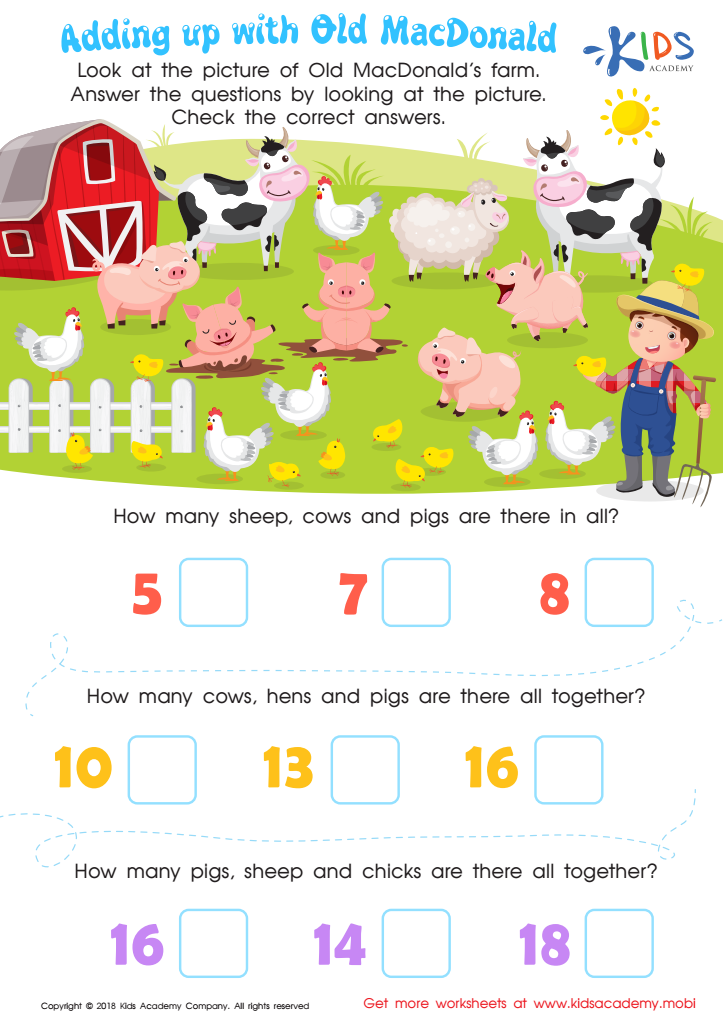
Adding Up with Old MacDonald Worksheet
Old MacDonald needs help counting his animals! Give your little math whiz a fun challenge with a free PDF worksheet. They'll love counting the animals and doing basic addition with two or three addends. Who knew math could be so much fun on the farm?
 Assign to My Students
Adding Up with Old MacDonald Worksheet
Worksheet
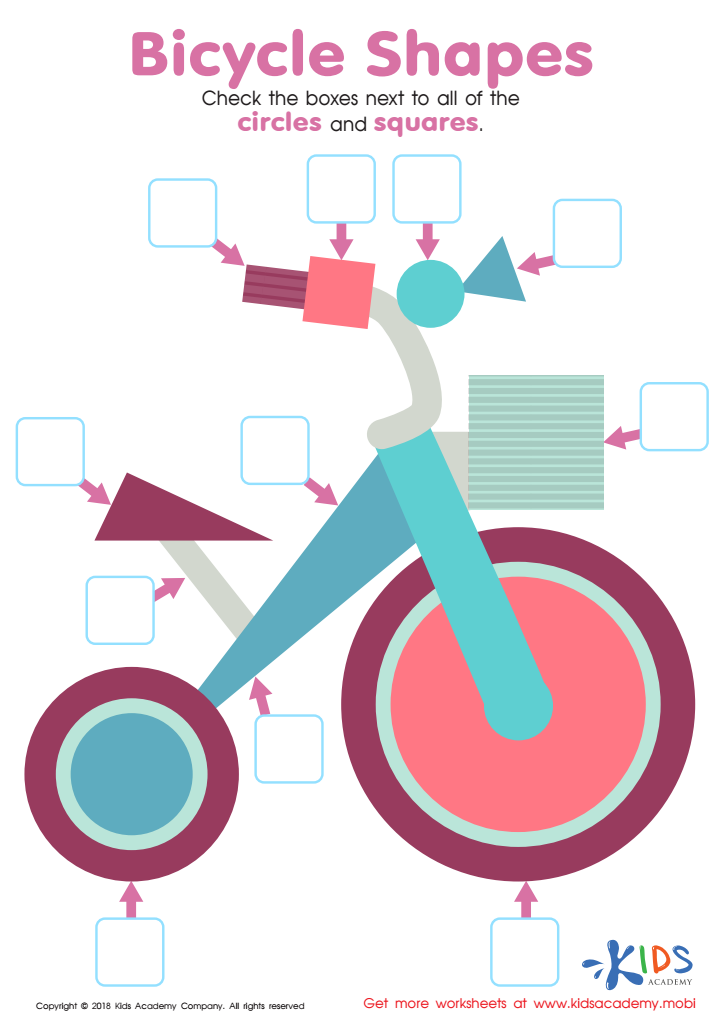
Bicycle Shapes Worksheet
This fun geometry worksheet for preschoolers asks the child to spot hidden shapes (circles, squares) in a colorful bicycle. Each shape varies in size and the child checks the box when it's found. It's a visual way to teach shapes.
Bicycle Shapes Worksheet
Worksheet
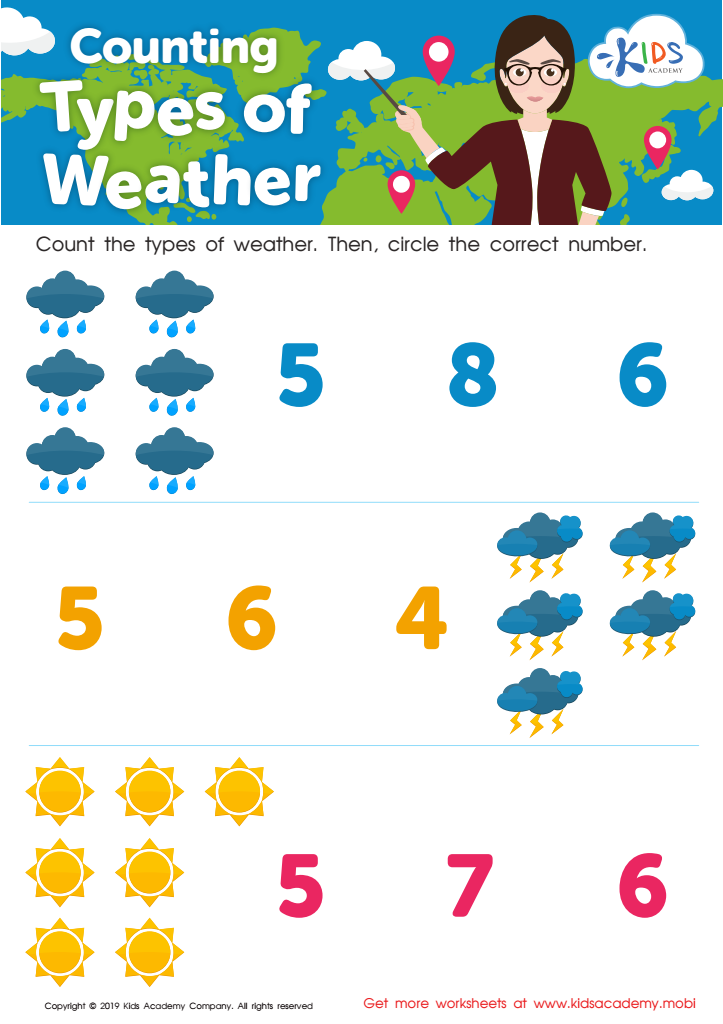
Counting Types of Weather Worksheet
Have your students look outside and tell you the weather today. Get kindergartners thinking by asking them to name different types of weather. Point to each one in the picture and get them to tell you what it is. Then, have them count the types and circle the number.
Counting Types of Weather Worksheet
Worksheet
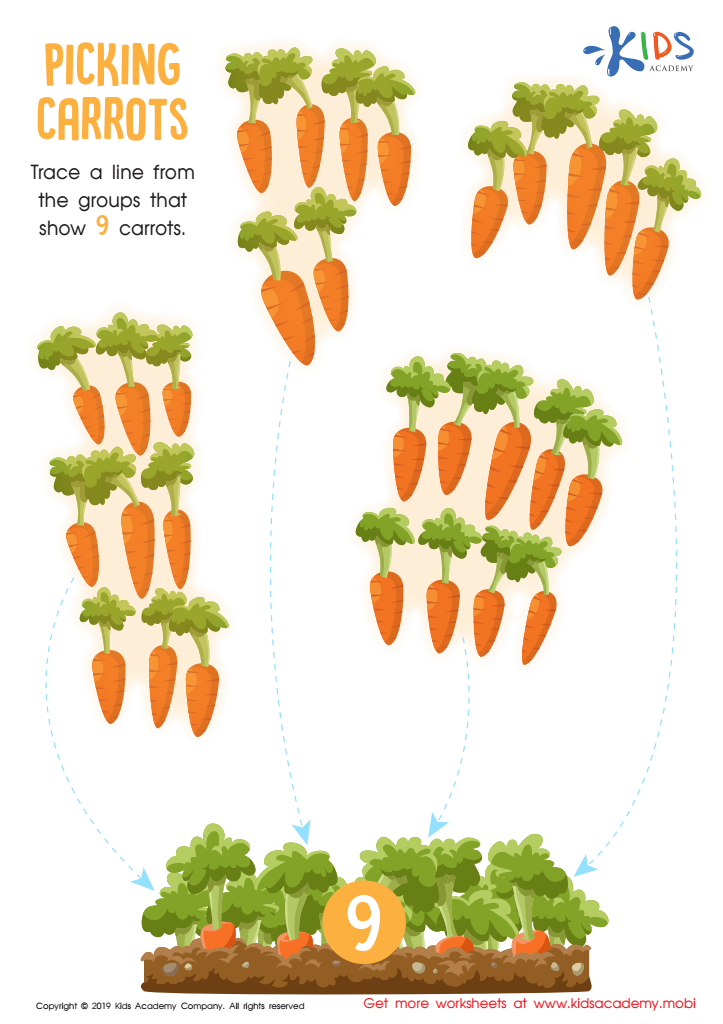
Picking Carrots Worksheet
Do your kids know what carrots are? They're nutritious veggies we should eat. Look at the worksheet with them; can they spot the carrots? It's an exercise to practice counting. Show them how to count all the carrots in the groups and trace the line to the groups with 9 carrots.
Picking Carrots Worksheet
Worksheet
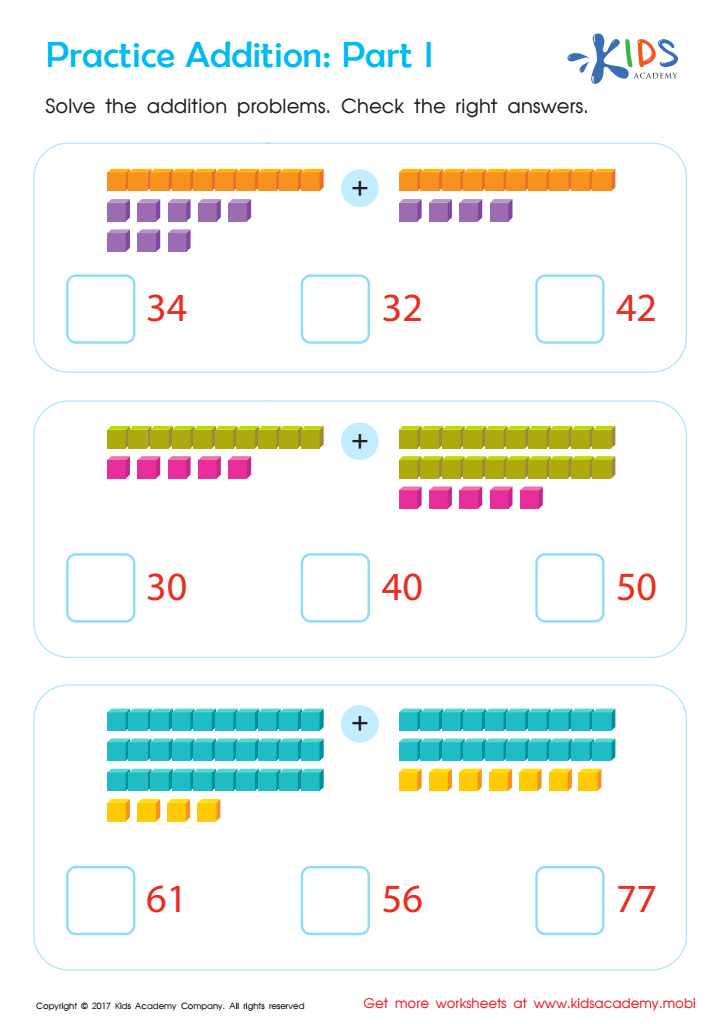
Practice Addition: Part 1 Worksheet
Having trouble teaching your 1st grader numbers and addition? Download this free worksheet! With colorful building blocks, it helps kids visualise and understand simple equations. For extra guidance, multiple choice answers are included to boost their confidence when practising.
Practice Addition: Part 1 Worksheet
Worksheet
Join Kids Academy for Free
Who is primarily going to use this learning content?







Basic arithmetic forms the foundation of a child's mathematics understanding and is crucial for overall cognitive development, making it vital for parents and teachers to prioritize it for 6-year-olds. During this formative age, children are equipped with the ability to comprehend numbers, patterns, and operations like addition and subtraction. Introducing these concepts early fosters problem-solving and critical thinking skills, which are essential for their academic journey and daily life.
Moreover, mastering basic arithmetic enhances a child's confidence in their mathematical abilities, promoting a positive attitude towards learning. This can lead to increased motivation in school and a curiosity to explore more advanced math concepts later on. Engaging in fun, playful activities involving numbers can also strengthen the parent-child or teacher-student bond, making learning a collaborative and enjoyable experience.
Additionally, basic arithmetic skills are applicable in everyday situations, such as shopping or cooking, helping children develop practical life skills that they will use throughout their lives. With a solid understanding of basic arithmetic, children are better prepared to tackle more complex mathematical challenges in the future. Thus, prioritizing early math education lays the groundwork for lifelong learning and personal growth.








