Chess strategy understanding Easy Worksheets for 6-Year-Olds
3 filtered results
-
From - To
Introducing Chess Strategy Understanding Easy Worksheets designed specifically for 6-year-olds! These engaging and fun worksheets are perfect for young minds to slowly grasp the basics of chess while enhancing their critical thinking and problem-solving abilities. With simple instructions and playful visuals, kids can explore fundamental chess strategies step-by-step, suitable for their age. These resources aim to build an early foundation in strategic thinking, providing a head start in learning this classic game. Whether for classroom use or at-home practice, our worksheets make learning chess enjoyable and accessible for every child. Begin the journey of chess mastery today!
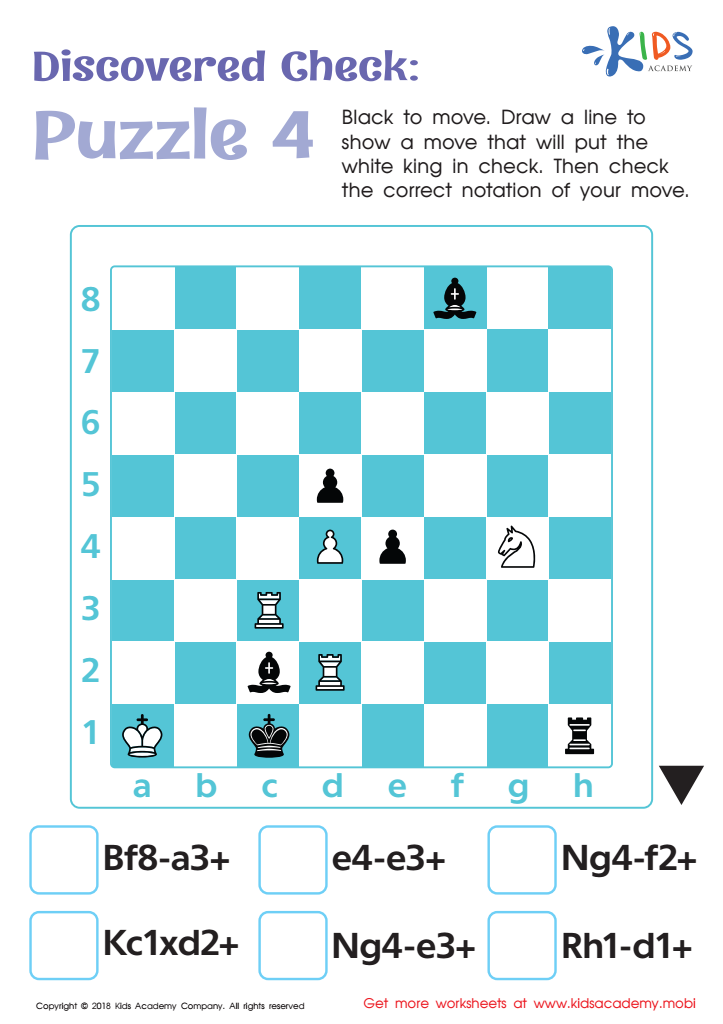
Discovered Check: Puzzle 4 Worksheet

Discovered Check: Puzzle 2 Worksheet
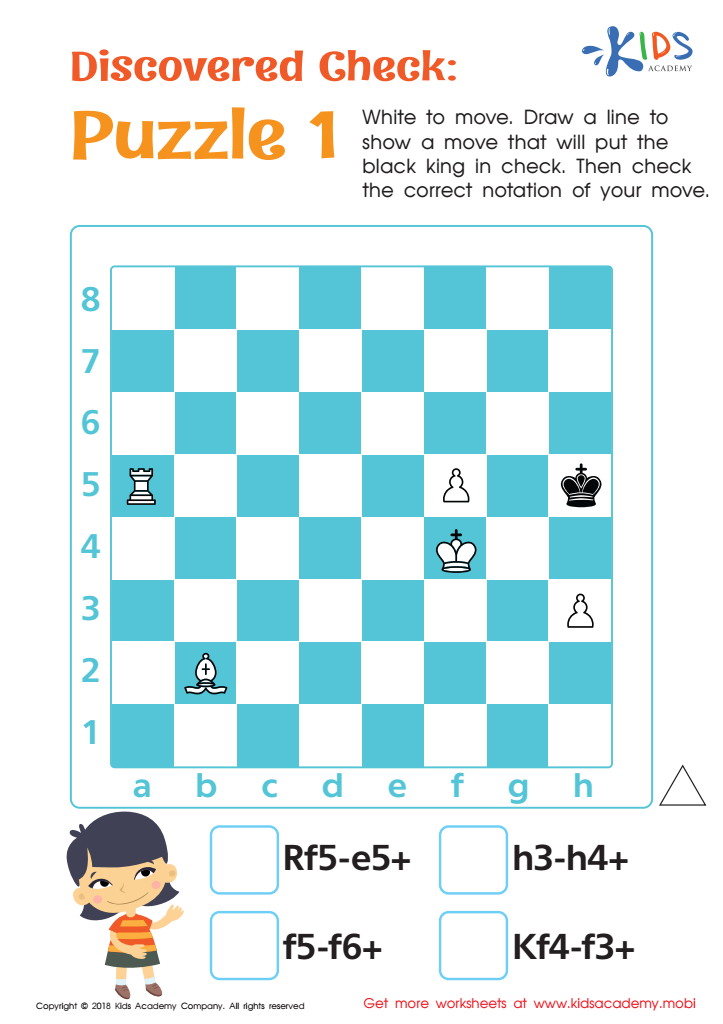
Discovered Check: Puzzle 1 Worksheet







Introducing children to chess at a young age can have a profoundly positive impact on their cognitive and social development. For parents and teachers, understanding how to teach basic chess strategies to 6-year-olds is beneficial in several ways.
Firstly, chess encourages critical thinking and problem-solving skills. When children learn the game, they must focus, plan ahead, and consider various outcomes—skills that extend beyond the chessboard to academic subjects like math and science.
Secondly, teaching chess fosters patience and discipline. The game requires children to wait their turn and think thoroughly about their moves, promoting self-regulation, persistence, and resilience in face of challenges.
Moreover, playing chess can enhance memory and concentration. Remembering the positions and strategic elements helps develop a child’s short and long-term memory. Chess also prompts kids to pay close attention to details, an essential skill for both learning and daily life tasks.
Socially, chess brings children together regardless of language or cultural barriers, fostering camaraderie and shared experiences. It also teaches sportsmanship, as children learn to handle wins and losses gracefully.
Given these benefits, parents and teachers are ensuring holistic development in children by encouraging early exploration of chess strategy—preparing them for greater academic and interpersonal success.








