Subtraction practice Easy Worksheets for 6-Year-Olds - Page 2
27 filtered results
-
From - To
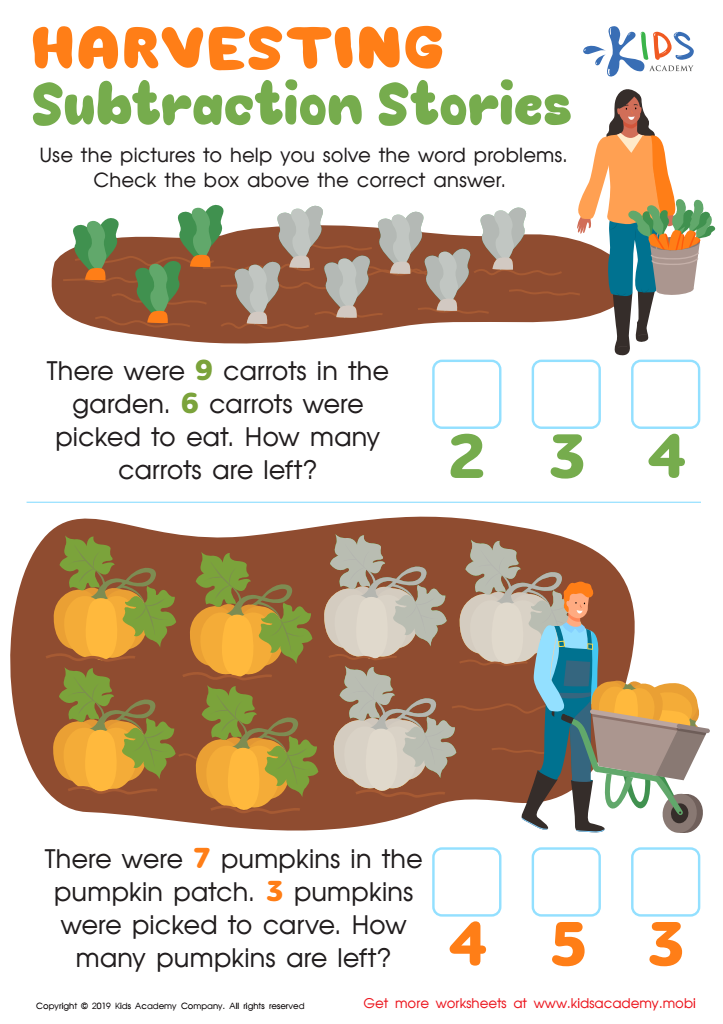
Harvesting Subtraction Stories Worksheet
 Assign to My Students
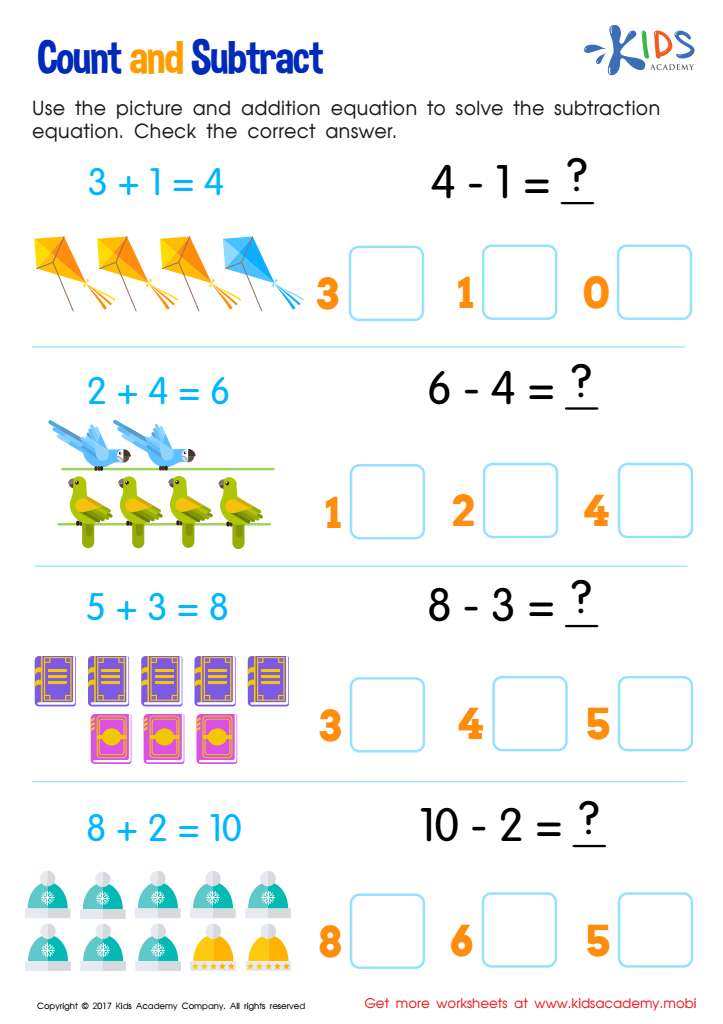
Count and Subtract Worksheet
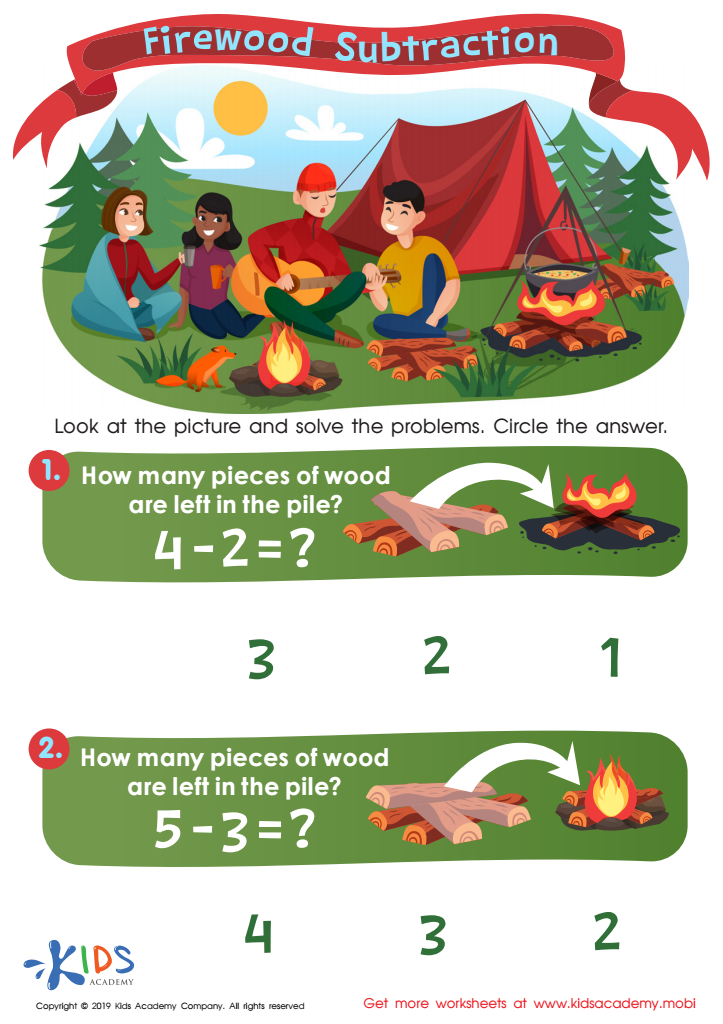
Firewood Subtraction Worksheet







Ensuring that 6-year-olds practice easy subtraction is crucial for their early mathematical development. At this age, children are laying the foundation for lifelong numeracy skills. Understanding basic subtraction not only boosts their arithmetic confidence but also enhances their problem-solving abilities. These are essential skills not just for math, but for everyday life.
Subtraction practice helps young children comprehend the concept of taking away, discovering how numbers relate to each other. Research consistently shows that early proficiency in fundamental math concepts, including subtraction, predicts future academic success. For parents and teachers, fostering these skills early on can prevent future struggles in more complex mathematics and instill a positive attitude towards learning.
Moreover, subtraction encourages logical thinking, attention to detail, and patience. When children tackle simple subtraction problems, they learn to approach tasks methodically and persist even when challenged – key traits for academic and personal growth.
Incorporating playful activities like using physical objects or engaging educational games makes subtraction enjoyable and less daunting. By providing consistent support and encouragement, parents and teachers help build a strong mathematical foundation, ensuring that children are equipped with the necessary skills to thrive in their education and beyond. Prioritizing these early learning experiences establishes a positive trajectory for continued success.








