Visual Learning Easy Addition and Subtraction Word Problems Worksheets for 6-Year-Olds
3 filtered results
-
From - To
Discover our engaging "Visual Learning Easy Addition and Subtraction Word Problems Worksheets" designed specifically for 6-year-olds! These worksheets utilize colorful visuals and relatable scenarios to make mathematics fun and accessible for young learners. By integrating visual aids, kids will develop a solid understanding of basic addition and subtraction concepts through hands-on problem-solving. Each worksheet encourages critical thinking and reinforces essential math skills, ensuring that children build confidence as they learn. Ideal for at-home practice or classroom activities, these worksheets provide a delightful way for children to master early math concepts while enjoying the process of learning. Explore our resources today!
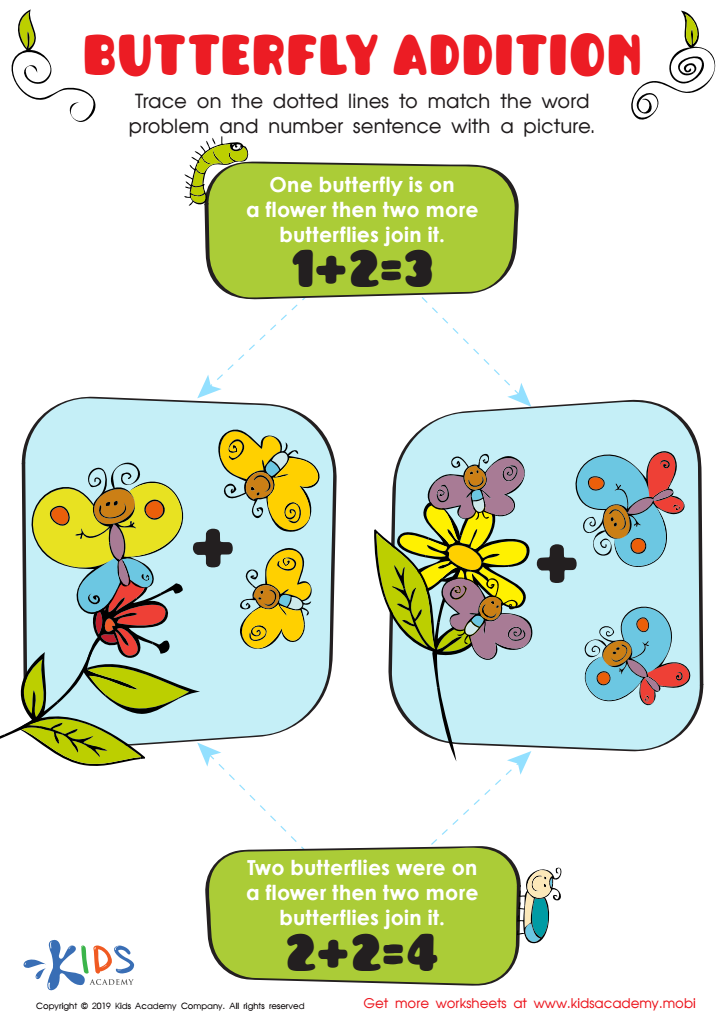
Butterfly Addition Worksheet
 Assign to My Students
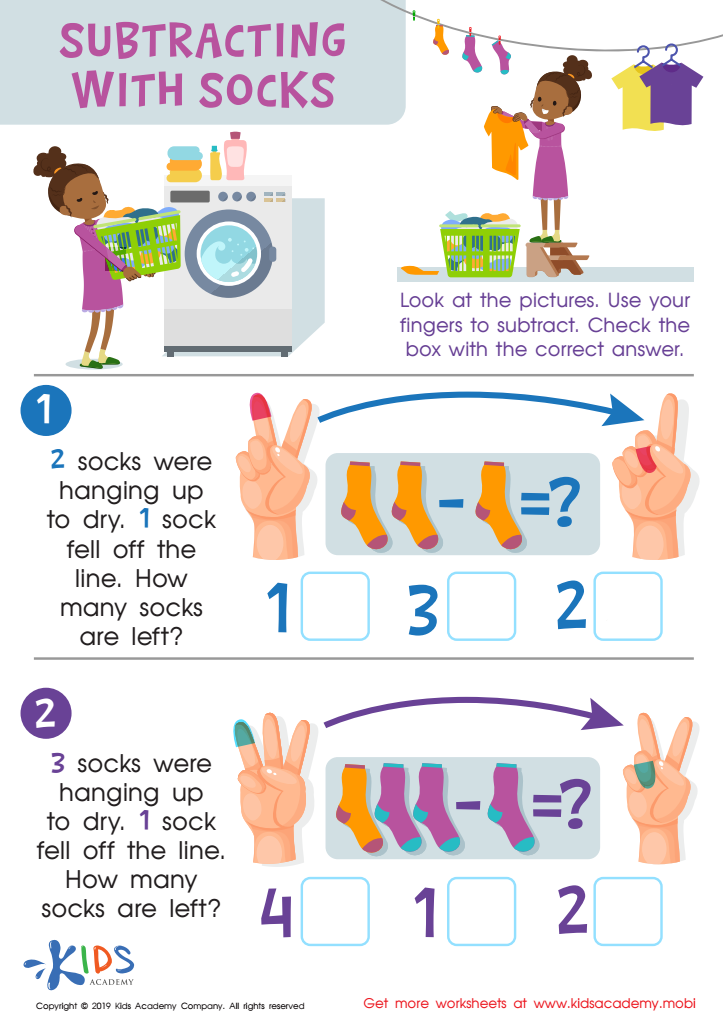
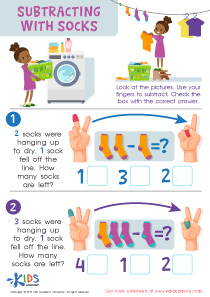
Subtracting Socks Worksheet
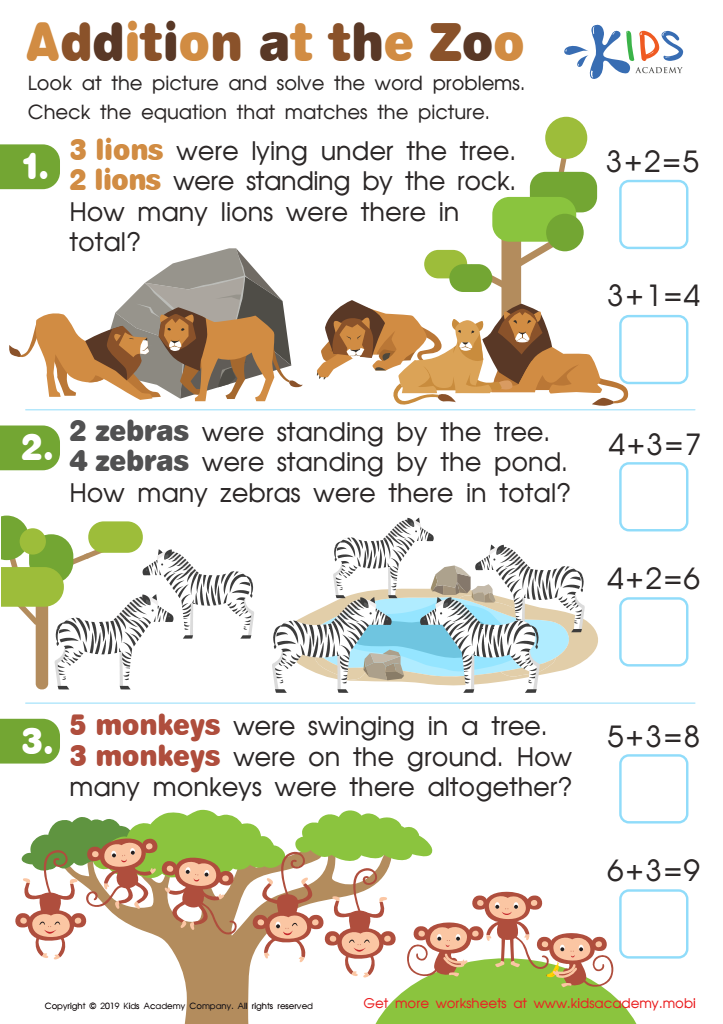
Addition at the Zoo Worksheet








Parents and teachers should prioritize visual learning for teaching addition and subtraction word problems to 6-year-olds due to several impactful reasons. First, visual learning caters to young children's natural inclination for interactive and engaging methods. By employing visual aids, such as images, diagrams, and manipulatives, educators can simplify complex concepts, making them more accessible. This approach not only fosters comprehension but also helps in retaining information.
Moreover, visual representation helps children to concretely understand abstract mathematical concepts. For instance, by visualizing word problems, learners can better grasp the scenario being presented, aiding in the translation of the words into numerical expressions. Additionally, this method enhances critical thinking and problem-solving skills as children visualize various solutions and outcomes.
Furthermore, early exposure to visual learning accelerates mathematical fluency, laying a strong foundation for future learning. It also promotes a positive attitude toward math by reducing anxiety and building confidence in tackling numerical challenges.
Encouraging parents and teachers to integrate visual learning in early mathematics not only enhances academic performance but also cultivates a lifelong interest in the subject, ultimately leading to richer educational experiences for young learners. In essence, it is an essential building block in a child’s cognitive development.