Addition skills Easy Addition & Subtraction Worksheets for 6-Year-Olds
6 filtered results
-
From - To
Welcome to our "Easy Addition & Subtraction Worksheets for 6-Year-Olds" page! Here you'll find an engaging collection of vibrant and interactive worksheets designed to help young learners master essential addition skills. Perfect for early grade teachers and parents, these resources encourage hands-on practice in a fun way. Your child will build confidence and proficiency in addition through simple exercises featuring colorful illustrations and relatable scenarios. Our worksheets are tailored to suit the developmental needs of 6-year-olds, ensuring they grasp fundamental concepts while having a great time. Start the journey to math fluency today with our easy-to-use, printable worksheets!
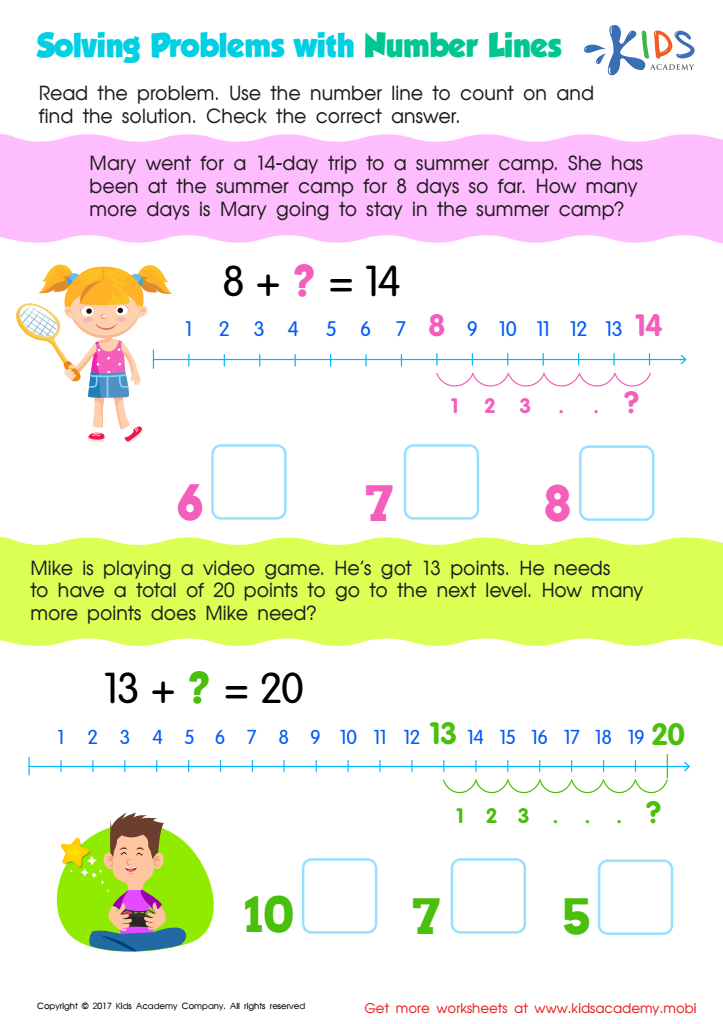
Solving Problems: Number Lines Worksheet
 Assign to My Students
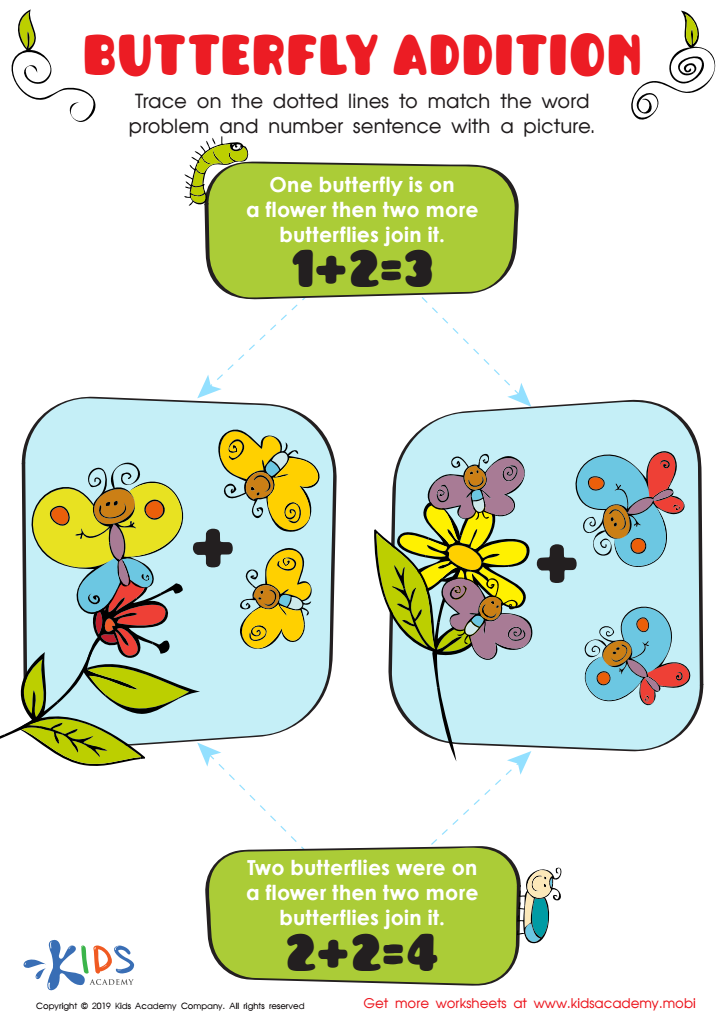
Butterfly Addition Worksheet
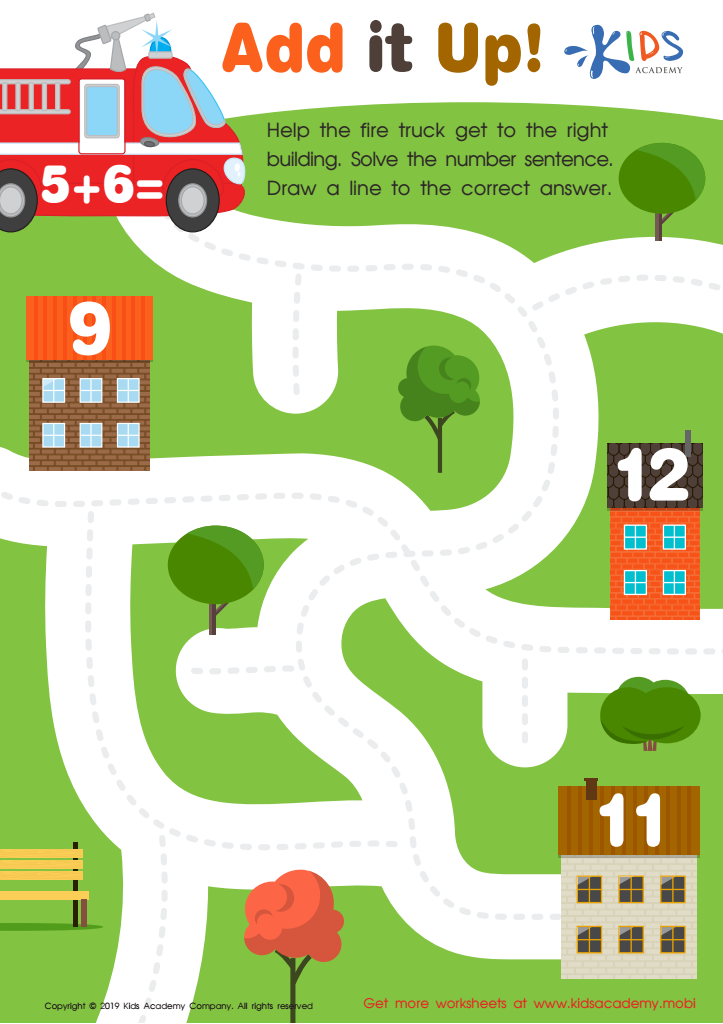
Add it Up Worksheet
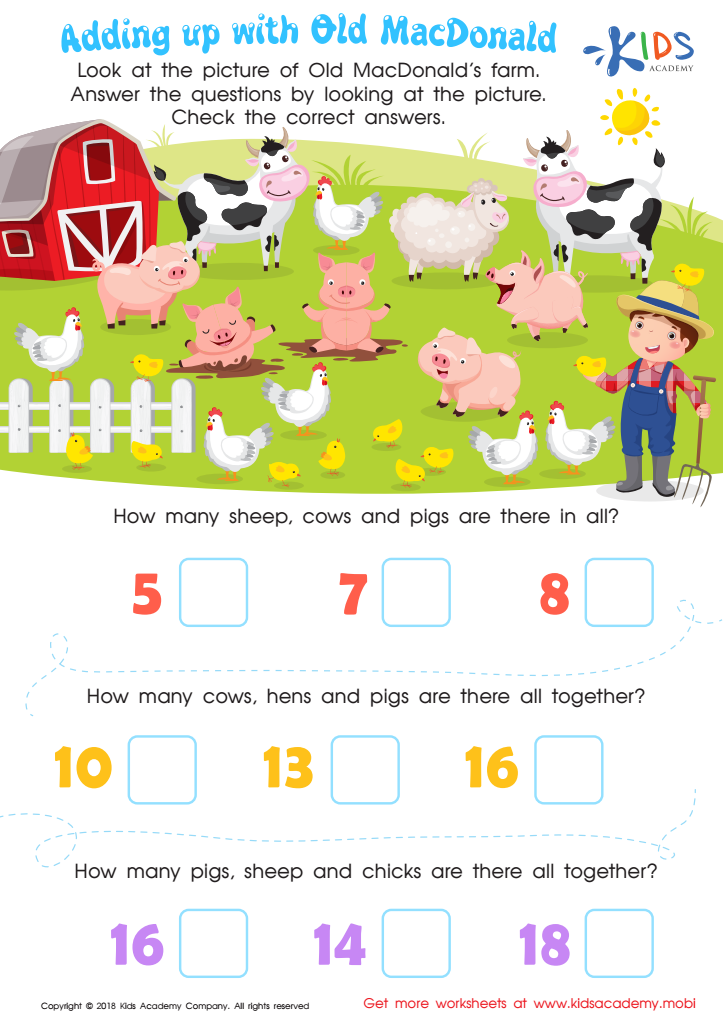
Adding Up with Old MacDonald Worksheet
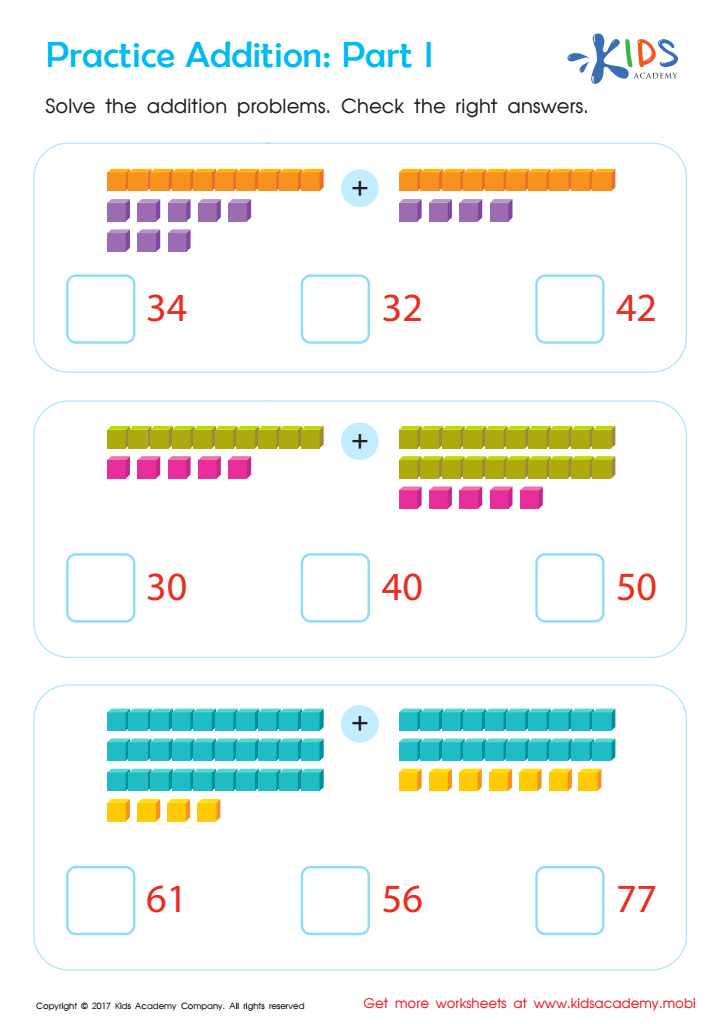
Practice Addition: Part 1 Worksheet
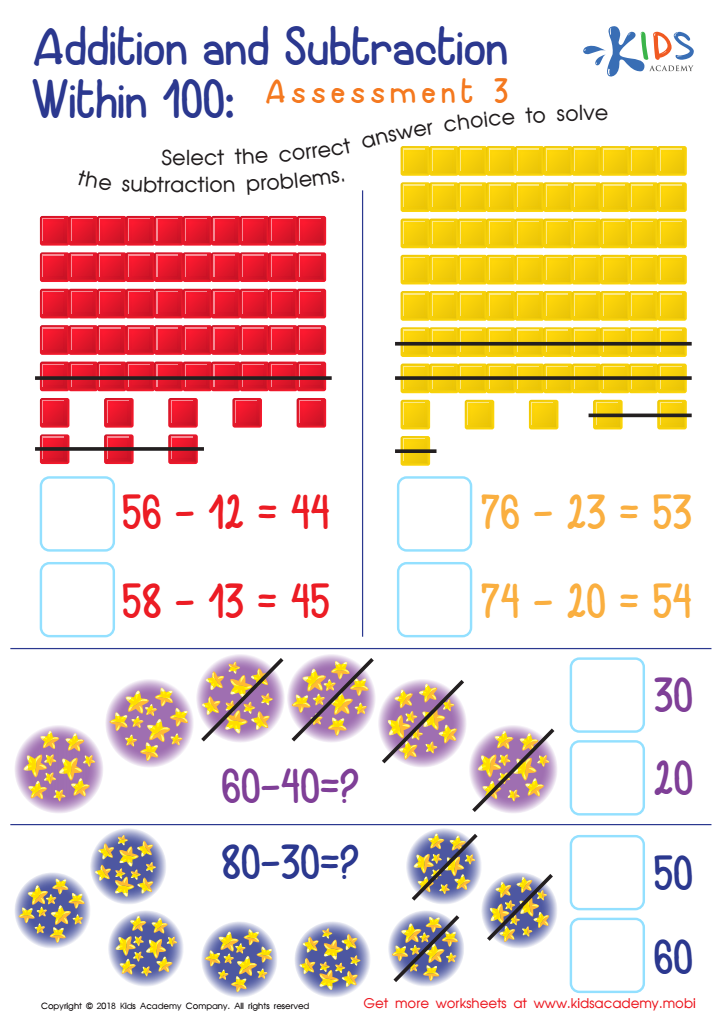
Addition and Subtraction Within 1: Assessment 3 Worksheet








Parents and teachers should be deeply invested in developing addition and subtraction skills in 6-year-olds, as these foundational math abilities are crucial for a child’s overall academic success and cognitive development. Mastery of easy addition and subtraction not only strengthens numeracy skills but also enhances problem-solving abilities and logical thinking.
At this stage, children are transitioning from a concrete understanding of numbers to more abstract concepts. Proficiency in these basic operations fosters confidence and encourages a positive attitude towards math as they advance in their education. Additionally, these skills are integral for everyday activities, such as budgeting, measuring, and time management, setting the groundwork for future life skills.
Moreover, preschool and early elementary years are critical for cultivating children's curiosity and eagerness to learn. Engaging them in fun and interactive activities related to addition and subtraction can make learning enjoyable and relatable. When parents and teachers work collaboratively to emphasize these skills, they reinforce the idea that math is not just an academic requirement but a valuable and practical tool for life. Ultimately, empowering children with solid addition and subtraction skills helps build their self-esteem and prepares them for more complex mathematical concepts in the years to come.








