Number comprehension Easy Addition & Subtraction Worksheets for 6-Year-Olds
5 filtered results
-
From - To
Discover our "Number Comprehension: Easy Addition & Subtraction Worksheets for 6-Year-Olds" — perfect for early learners to develop essential math skills! These engaging, age-appropriate printable worksheets introduce young children to basic addition and subtraction in a fun and interactive way. Carefully designed with bright, appealing visuals and simple problems, these sheets help improve number comprehension, enhance problem-solving abilities, and build confidence in math. Ideal for classroom use or at-home practice, our worksheets ensure foundational math concepts are grasped with ease, paving the way for future academic success. Start your child’s math journey with these effective and delightful exercises!
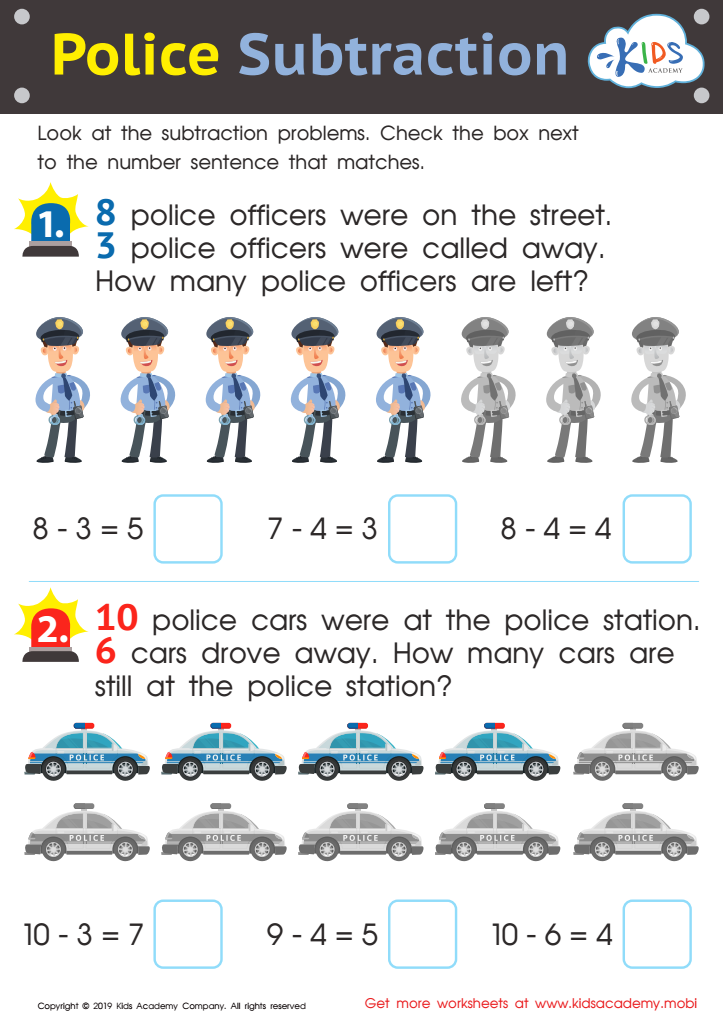
Police Subtraction Worksheet
 Assign to My Students
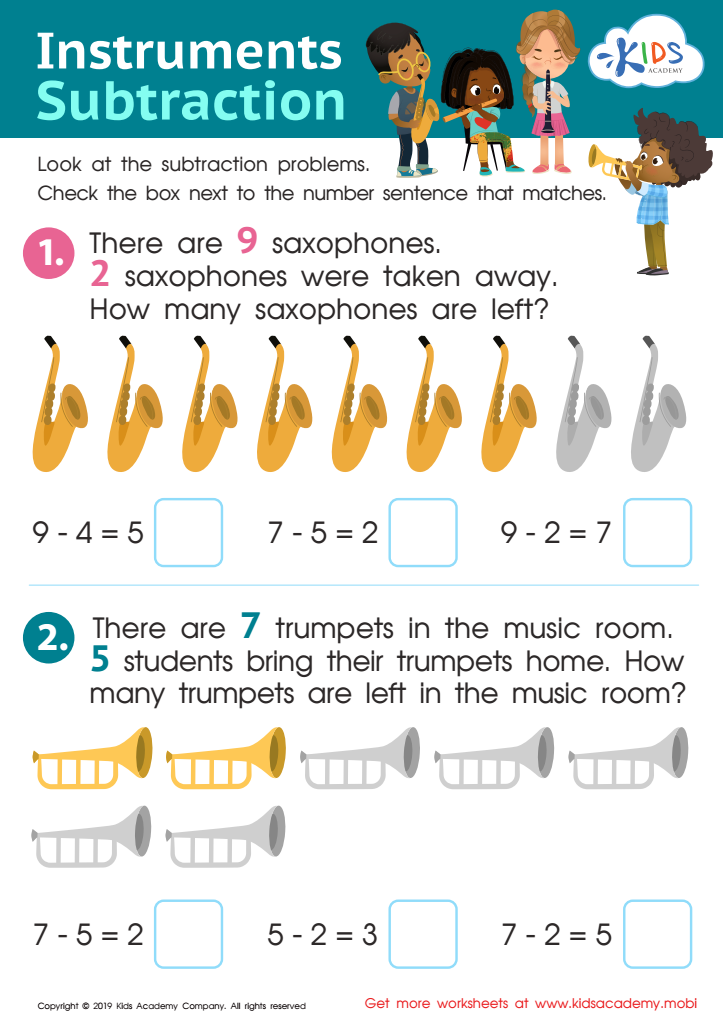
Instrument Subtraction Worksheet
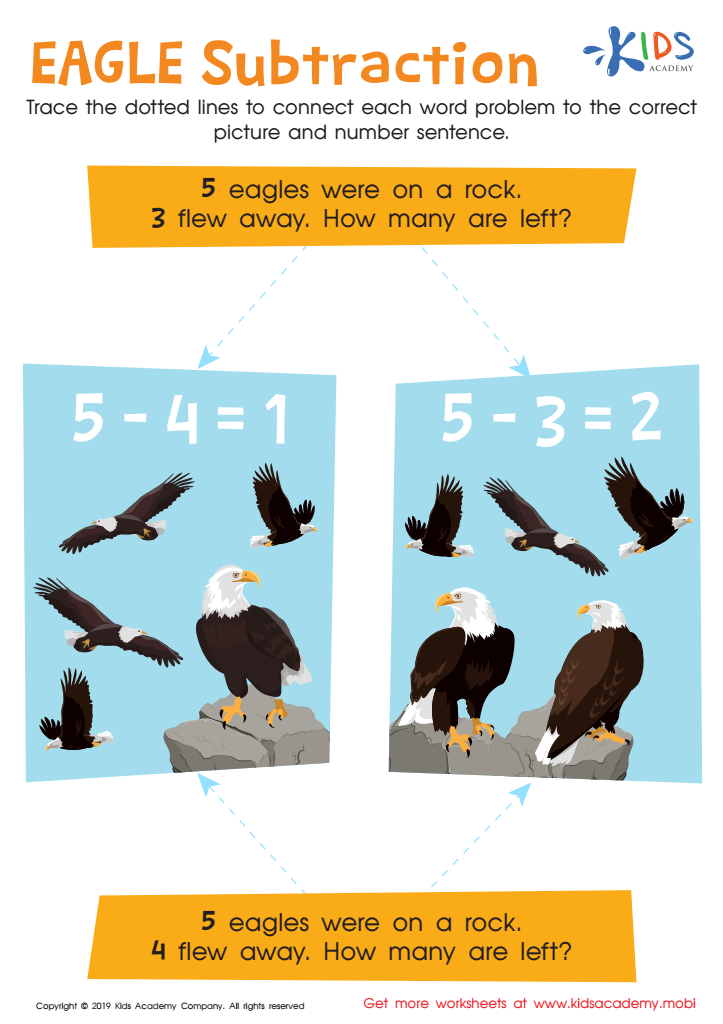
Eagle Subtraction Worksheet
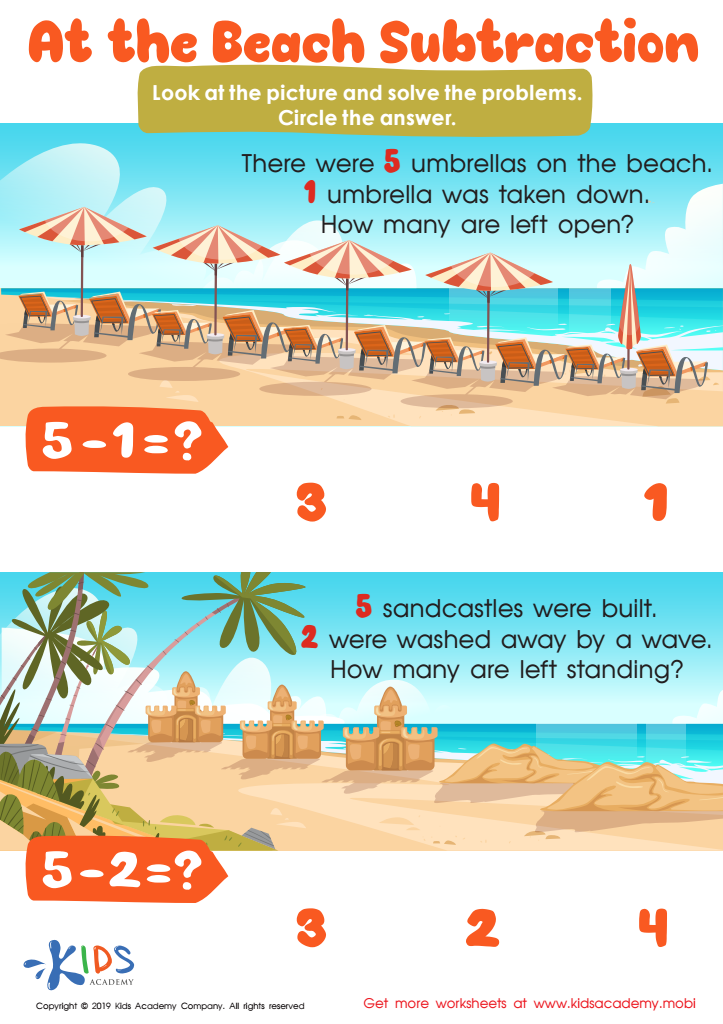
At the Beach Subtraction Worksheet
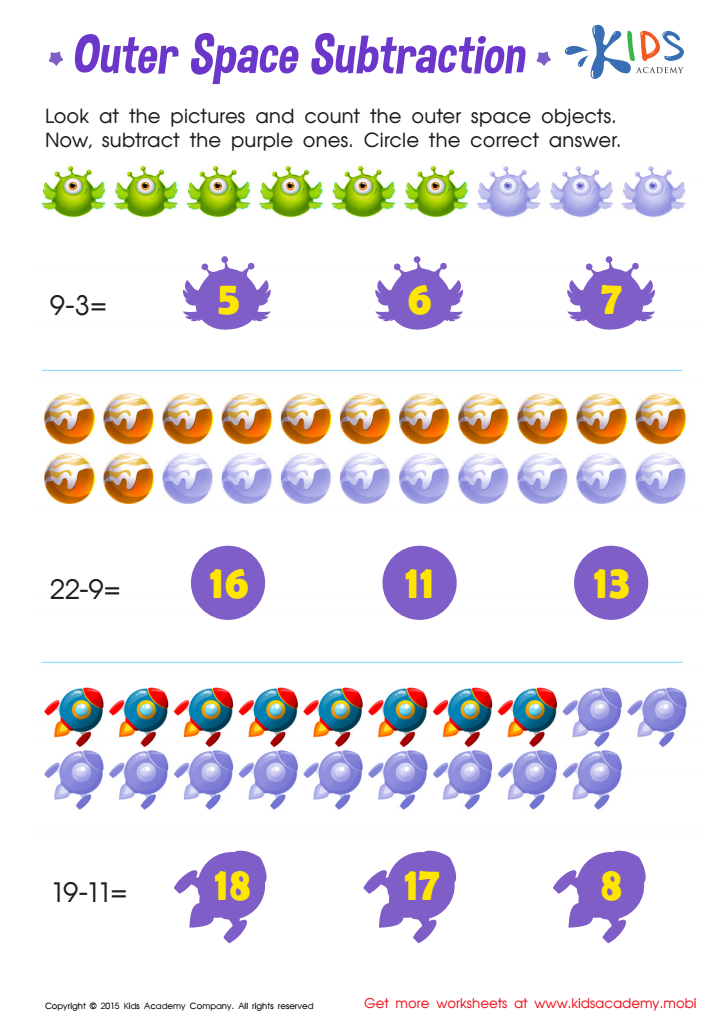
Outer Space Substraction Worksheet








Number comprehension and the ability to perform easy addition and subtraction are foundational skills for 6-year-olds that play a critical role in their overall cognitive development and future academic success. For parents and teachers, nurturing these abilities should be a priority because early math skills are strong indicators of later academic achievement. Proficiency in basic math not only enhances logical thinking and problem-solving skills but also builds a child's confidence and interest in learning.
Having a solid grasp of addition and subtraction by age six helps children understand more complex mathematical concepts in higher grades. These basic operations aid in developing numerical fluency, which is necessary for everyday activities such as counting money, measuring ingredients in recipes, and even understanding time. Furthermore, success in math can boost a child's self-esteem and foster a positive attitude towards learning other subjects such as science, technology, and engineering.
Engaging children in fun and interactive math activities also provides them with crucial opportunities for social interaction and collaborative learning. Whether through games, storytelling, or hands-on activities, making math relatable and enjoyable encourages an early love for the subject. Both parents and teachers should aim to create a supportive environment where children feel comfortable exploring numbers, asking questions, and making mistakes, building a strong foundation for lifelong learning.








