Understanding sequencing Easy Numbers Worksheets for 6-Year-Olds
3 filtered results
-
From - To
Welcome to our "Understanding Sequencing Easy Numbers Worksheets for 6-Year-Olds!" This page offers engaging and interactive worksheets designed to help young learners grasp the concept of sequencing numbers. Perfect for kids aged six, our resources introduce essential math skills through fun activities that promote critical thinking and logical reasoning. Children will enjoy a variety of exercises, including number ordering, fill-in-the-blank sequences, and color-coded tasks that enhance their understanding of numerical relationships. Our worksheets not only support foundational math skills but also build confidence in young learners. Explore our printable resources and watch your child excel in sequencing with ease!

One More Jumps In Worksheet
 Assign to My Students
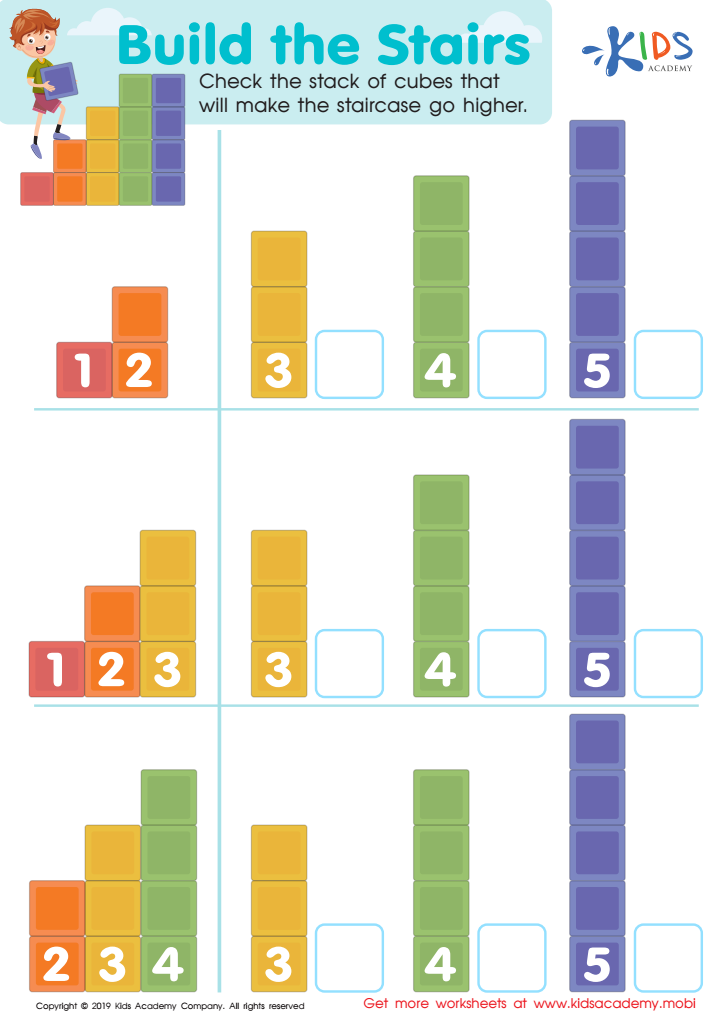
Build the Stairs Worksheet
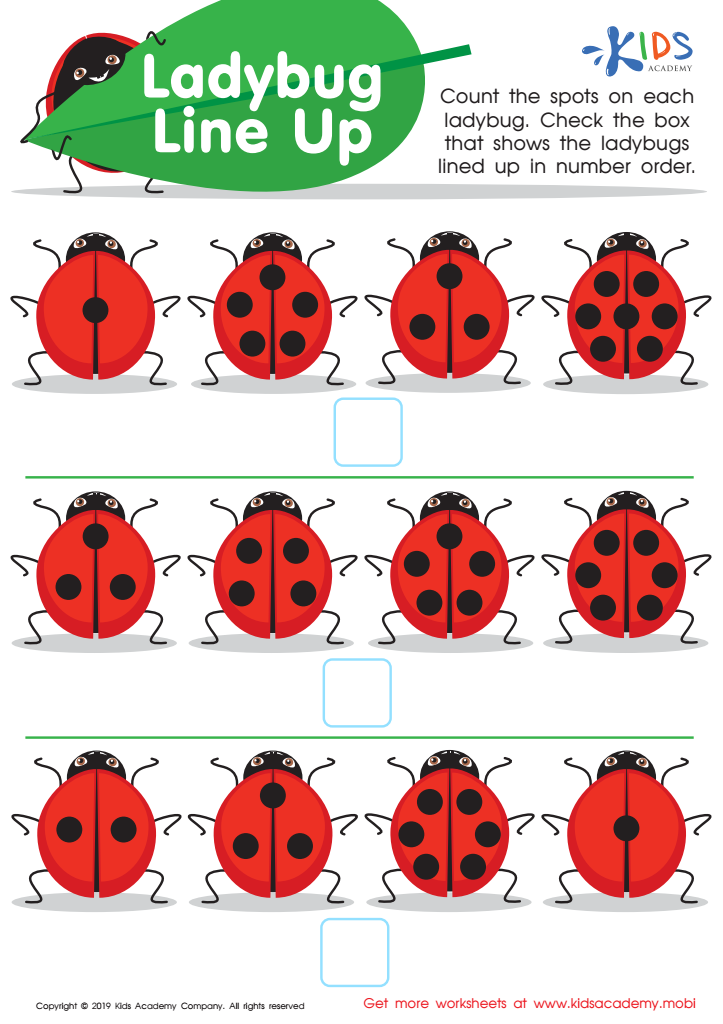
Ladybug Line Up Worksheet








Understanding sequencing in easy numbers is fundamental for a child's cognitive development and mathematical understanding, especially for 6-year-olds. Firstly, sequencing helps children grasp the concept of order, an essential skill not only in math but in daily life tasks—like following a recipe or understanding a timeline. When children learn to recognize and arrange numbers in a sequence, they develop a solid foundation for more complex mathematical operations like addition, subtraction, and even basic problem-solving.
Moreover, sequencing encourages critical thinking and enhances memory skills. As children practice arranging and recognizing patterns in numbers, they improve their ability to remember and recall information, which is crucial for overall academic success. Additionally, mastering sequencing promotes confidence, allowing children to tackle challenges in more advanced math concepts as they progress through their education.
For parents and teachers, prioritizing sequencing in early math education means giving children the tools they need to thrive not just in mathematics, but in logical reasoning across all subjects. This foundational skill encourages a positive attitude towards learning, setting the stage for lifelong intellectual curiosity and resilience. Ultimately, investing time in understanding sequencing can have lasting benefits for children’s future academic performance and self-esteem.








