Comparing numbers Easy Measurement Worksheets for 6-Year-Olds
3 filtered results
-
From - To
Discover engaging Comparing Numbers Easy Measurement Worksheets designed specifically for 6-year-olds! These worksheets introduce the fundamental concept of comparing numbers, helping young learners develop crucial mathematical skills. With visually appealing designs and age-appropriate activities, children will have fun identifying greater and lesser values, while also honing their counting abilities. Our interactive worksheets feature real-world examples to spark curiosity and connect math to everyday life. Parents and teachers can effortlessly support early math learning with these valuable resources. Empower your child's confidence in numbers today and lay a strong foundation for future success in math with our enjoyable, hands-on worksheets!
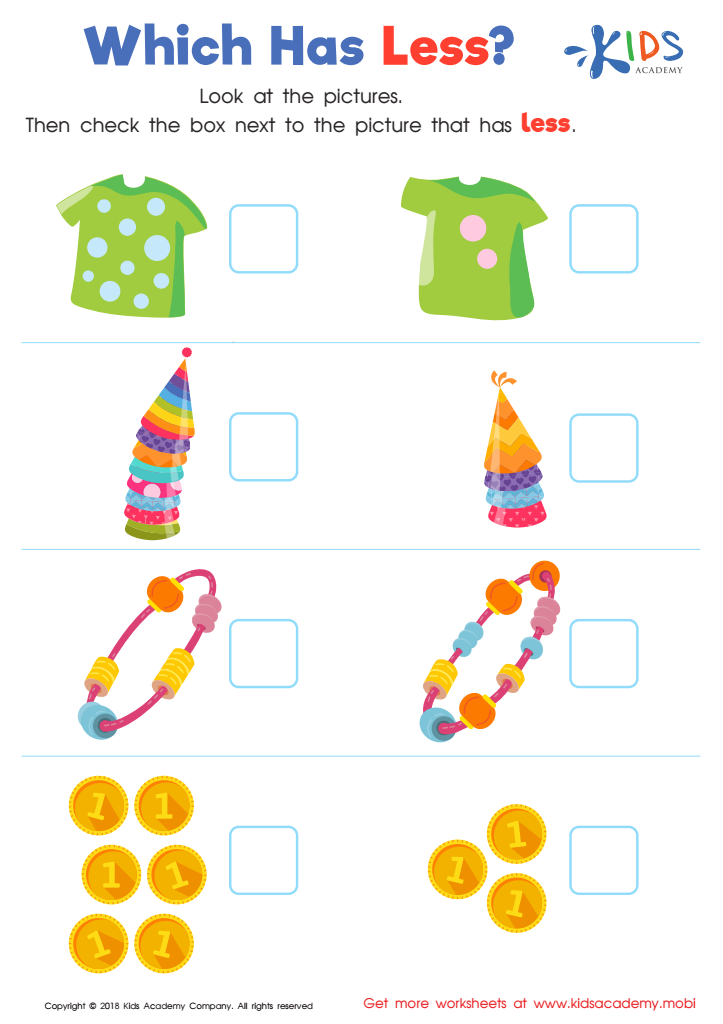
Which Has Less? Worksheet
 Assign to My Students
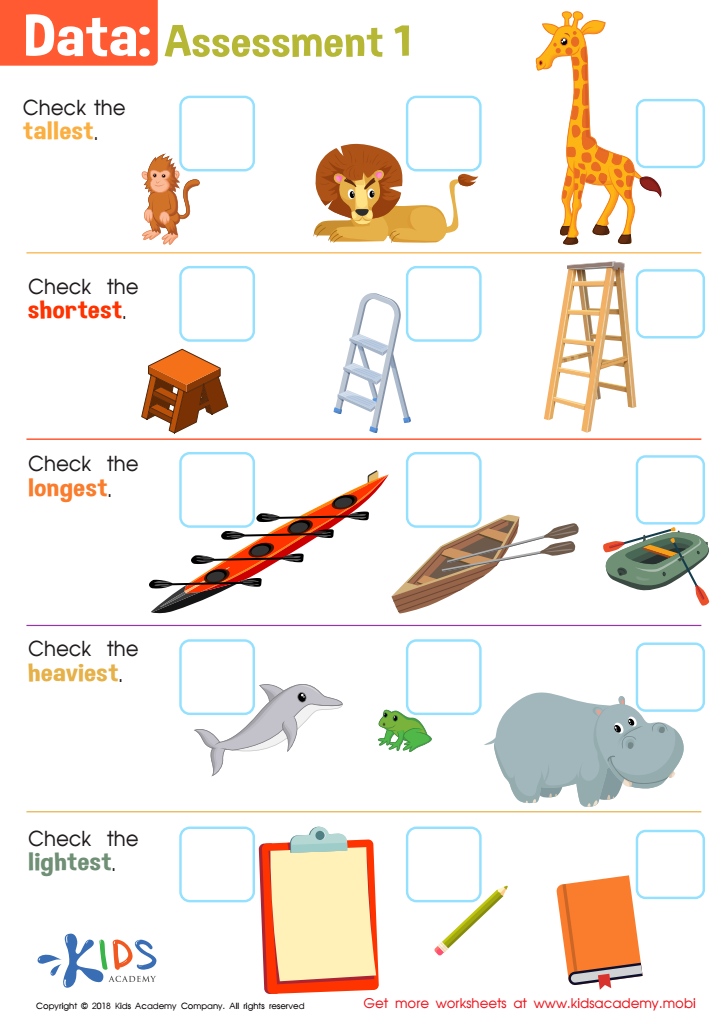
Data: Assessment 1 Worksheet
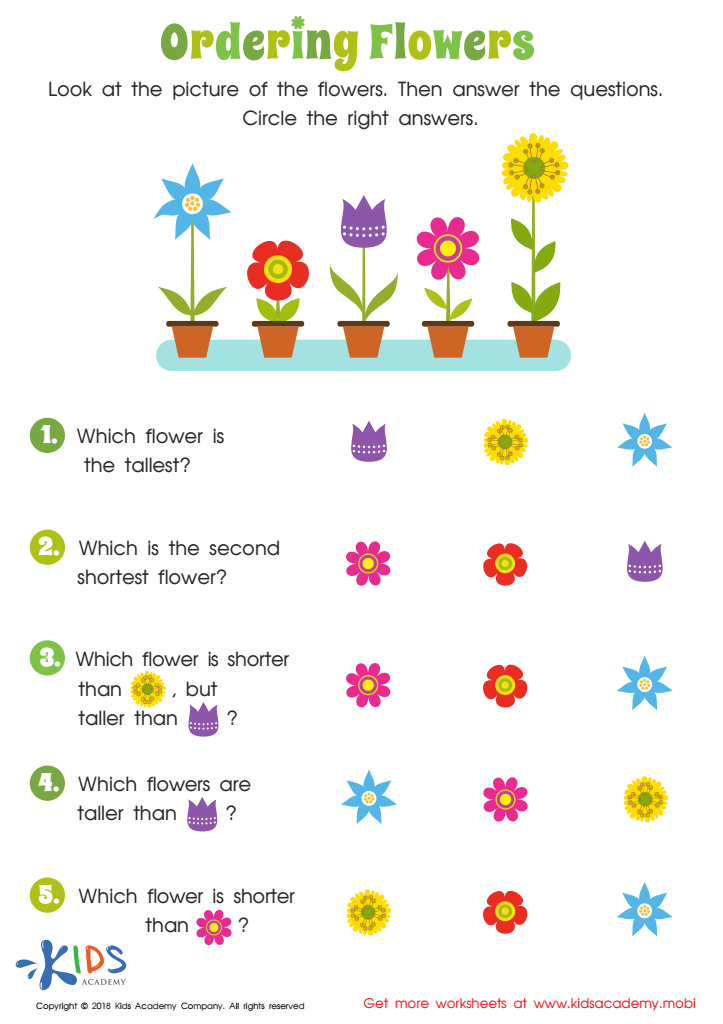
Ordering Flowers Worksheet








Parents and teachers play a crucial role in a child's early mathematical development, making it essential for them to care about teaching concepts like comparing numbers and understanding measurement, even at a basic level. For 6-year-olds, these skills are foundational in building a strong mathematical understanding. When children learn to compare numbers, they develop critical thinking and decision-making skills, which are necessary for more complex mathematical concepts later on.
Understanding measurement enhances their perception of the world around them, as they begin to associate numbers with real-life quantities. Whether it's identifying which object is longer or determining how much more one item weighs than another, these activities encourage observational skills and reasoning abilities.
Additionally, mastering these skills early fosters confidence in math, reduces anxiety about subjects commonly perceived as challenging, and promotes a positive attitude toward learning. Engaging in number comparison and measurement activities also encourages collaboration and communication among peers, as children share their thoughts and strategies, enhancing social skills. Ultimately, parents and teachers should prioritize these lessons to ensure that children build a comprehensive, interconnected foundation for future learning in mathematics and beyond.








