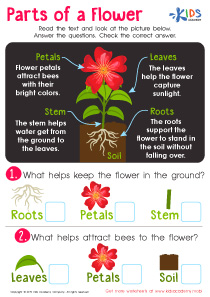
Cognitive Development Easy Reading Fiction Worksheets for 6-Year-Olds
2 filtered results
-
From - To
Enhance your child's reading skills with our Cognitive Development Easy Reading Fiction Worksheets, specially crafted for 6-year-olds. These engaging worksheets blend fun stories with stimulating exercises, designed to promote critical thinking, comprehension, and cognitive skills. Each worksheet encourages young readers to explore characters, settings, and plots through interactive activities. Perfect for developing early literacy and independent reading, our expertly designed resources offer a solid foundation in reading fiction while fostering a love for storytelling. Empower your child to excel academically with these essential tools for cognitive growth and literacy development. Explore our collection and watch their skills soar!
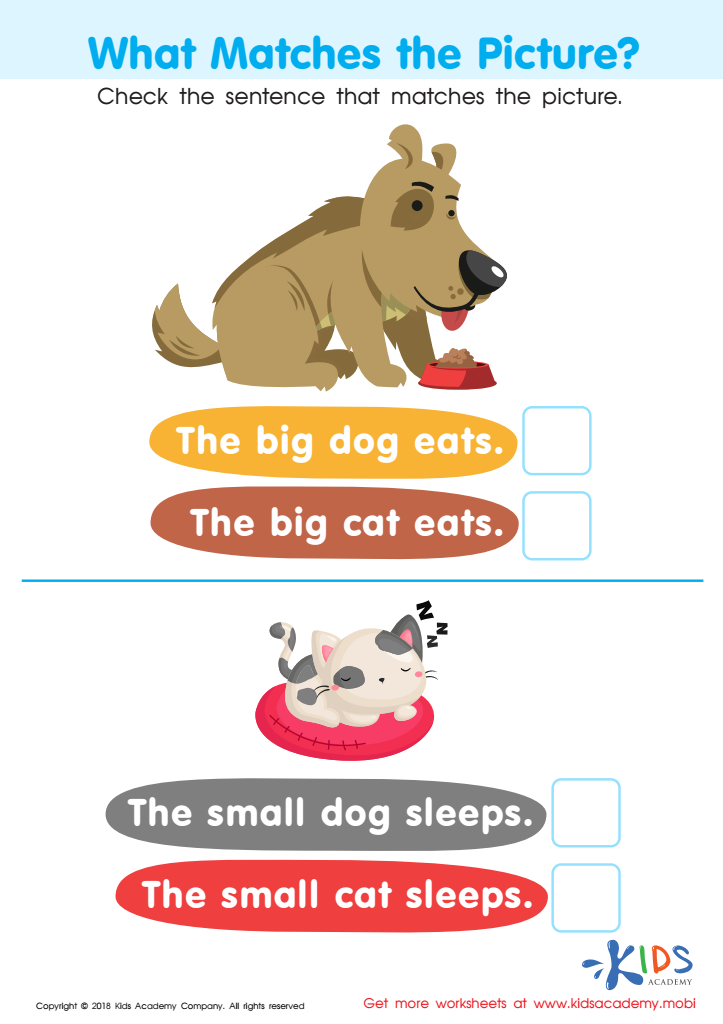
What Matches the Picture? Worksheet
 Assign to My Students
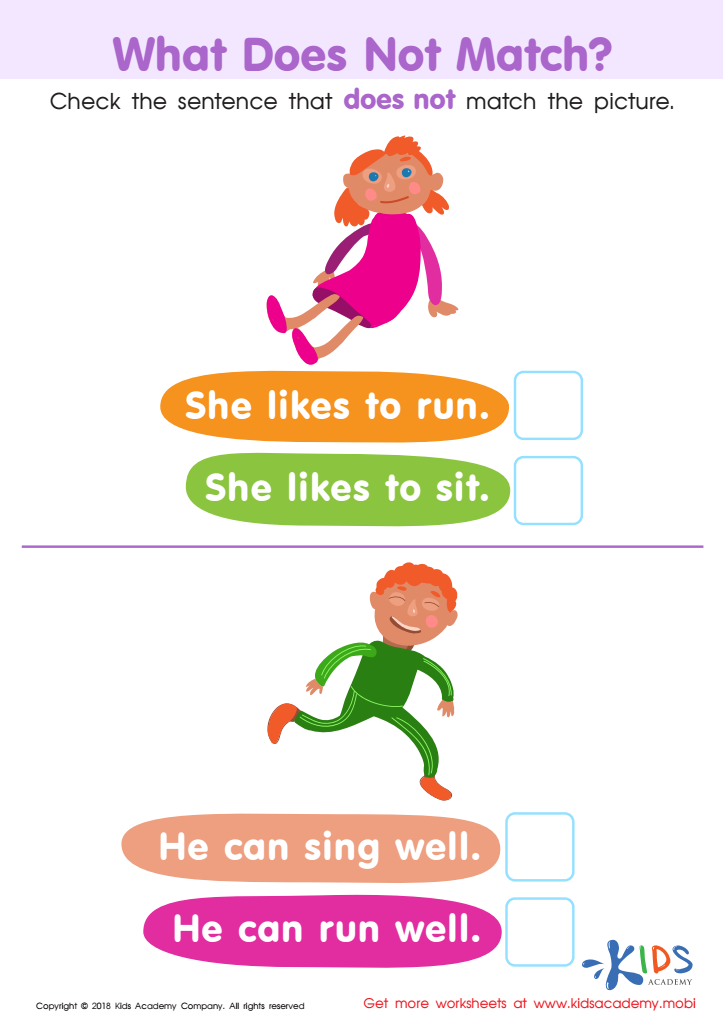
What Does Not Match? Worksheet








Parents and teachers should prioritize cognitive development through easy reading fiction for 6-year-olds due to its significant impact on a child's overall growth. First, reading fiction enhances language acquisition by introducing new vocabulary, sentence structures, and storytelling elements, crucial for effective communication. At this age, children are in the preoperational stage of cognitive development, as per Piaget's theory, where they begin to develop memory and imagination while learning the concept of time and fundamental understanding of the world.
Furthermore, easy reading fiction stimulates cognitive processes such as critical thinking and comprehension skills. When children follow a story, they learn to predict outcomes, understand cause-and-effect relationships, and recognize characters' emotions and moral lessons. These experiences contribute to improved concentration and listening skills.
Additionally, fiction fosters creativity and empathy. Imaginary worlds and diverse characters allow children to explore different perspectives and think empathetically, laying the groundwork for emotional intelligence. Cognitive development through these stories builds a solid foundation for academic success, enhances problem-solving skills, and encourages a lifelong love of learning. Thus, integrating easy reading fiction into daily routines is vital for nurturing well-rounded, cognitively adept young minds.