Vocabulary expansion Easy Grammar Worksheets for 6-Year-Olds
6 filtered results
-
From - To
Enhance your child's language skills with our engaging Vocabulary Expansion Easy Grammar Worksheets, designed specifically for 6-year-olds! These interactive worksheets provide fun activities that not only introduce new words but also help young learners practice usage, spelling, and comprehension. Each activity is crafted to promote curiosity and creativity, ensuring that kids enjoy learning while building a rich vocabulary. Ideal for parents and teachers, these printable resources support essential grammar concepts in a playful and approachable way. Foster a love for language and set the foundation for successful communication skills with our expertly created worksheets today!
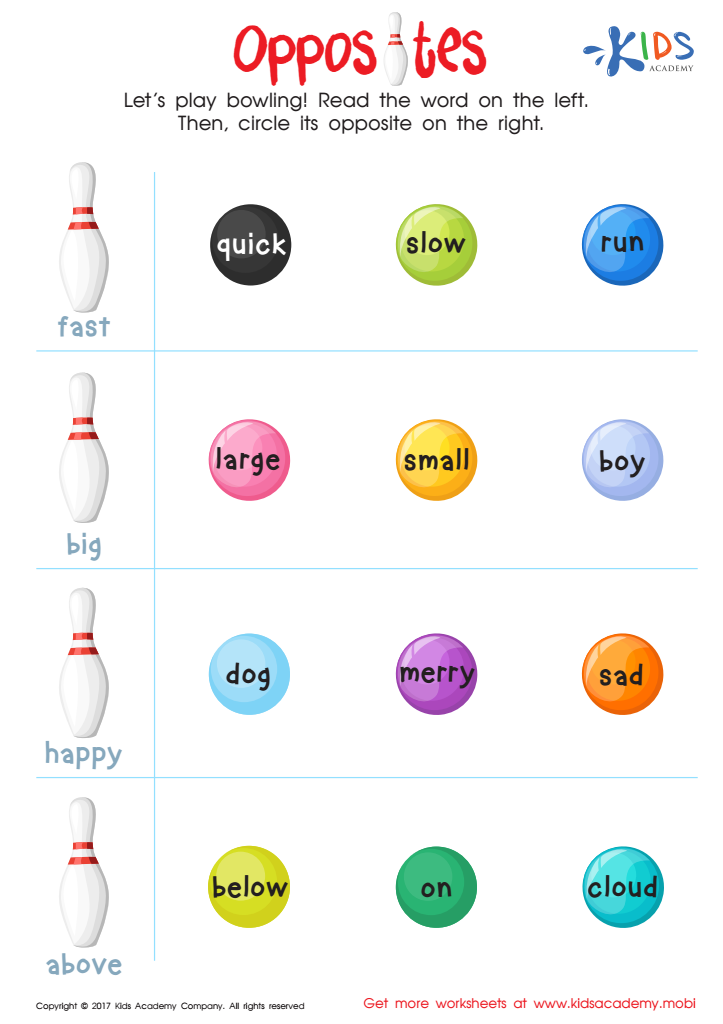
Opposites Worksheet
 Assign to My Students
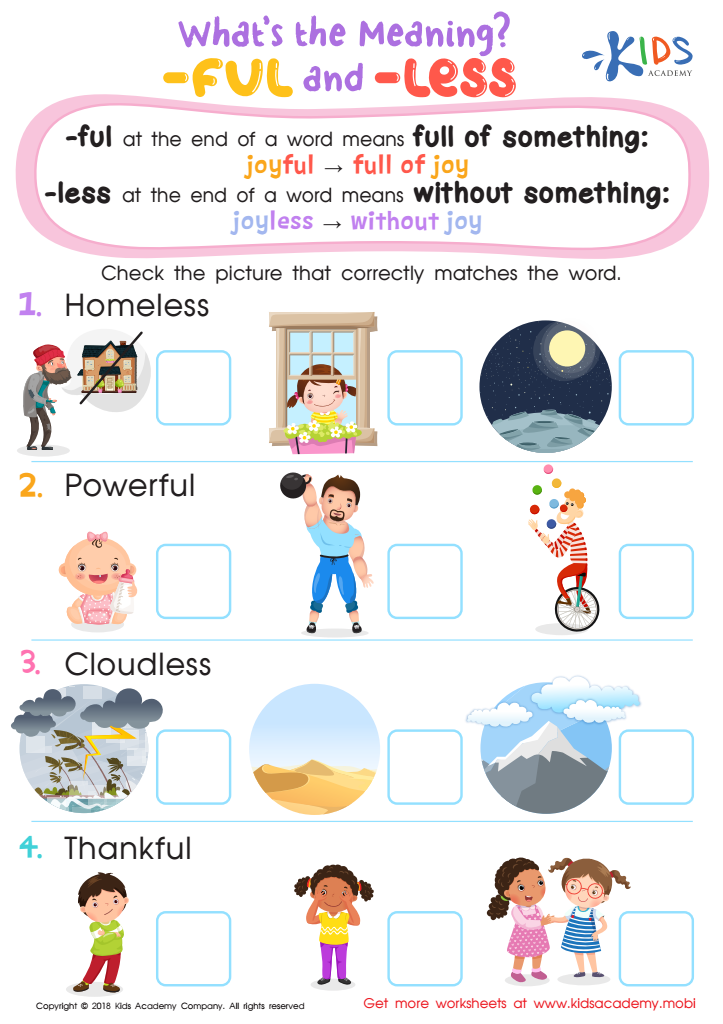
What's the Meaning? Worksheet
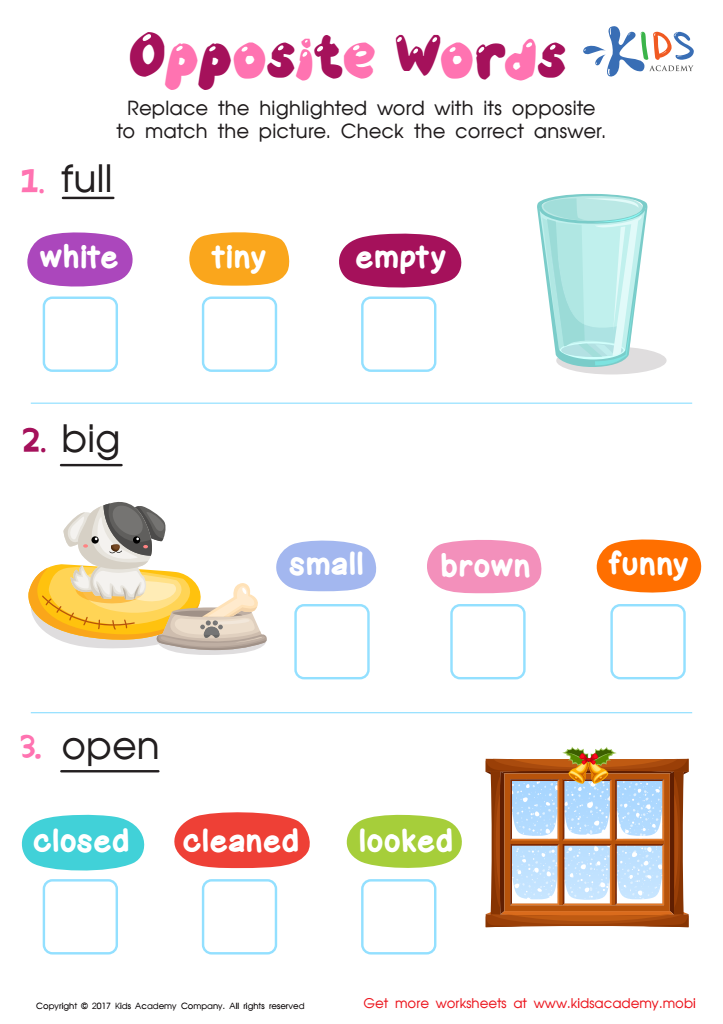
Opposite Words Worksheet
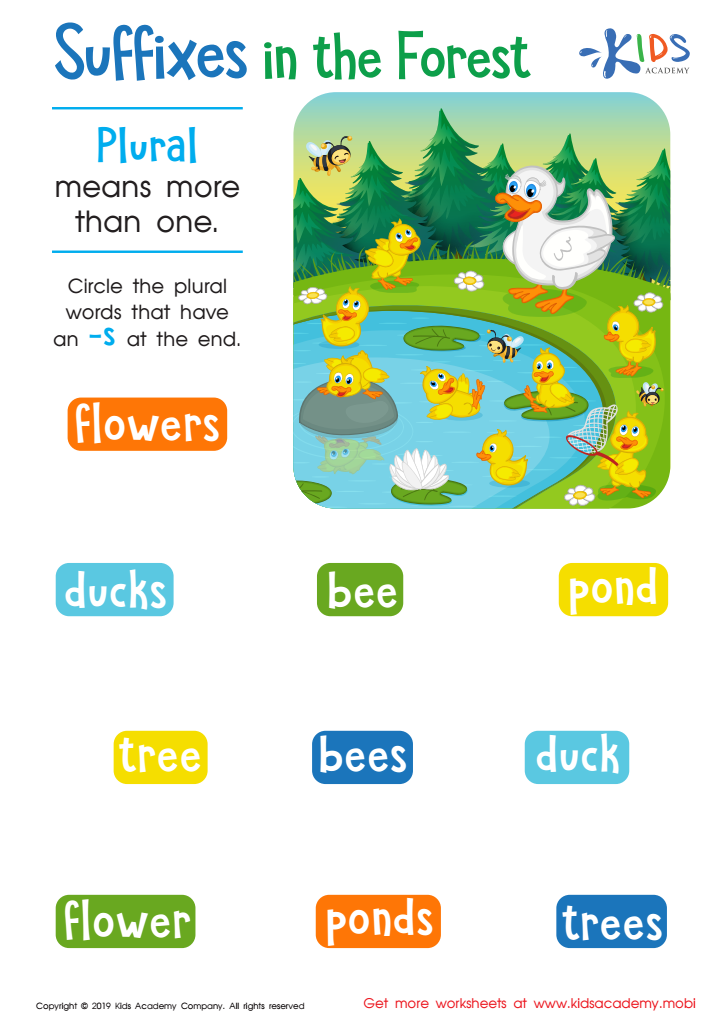
Suffixes in the Forest Worksheet
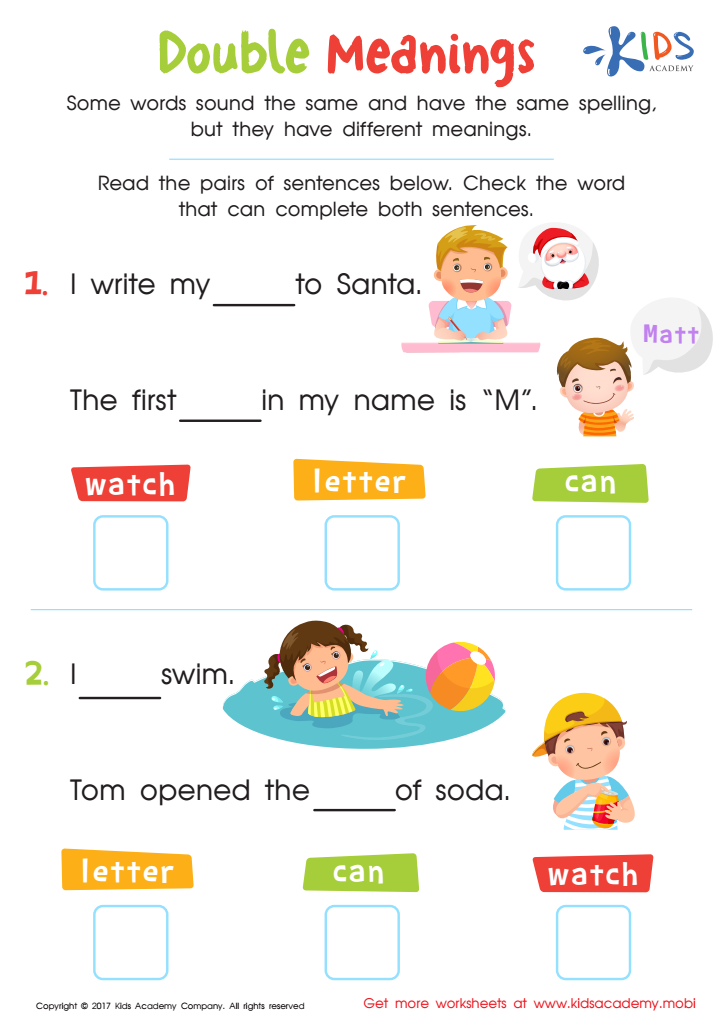
Double Meanings Worksheet
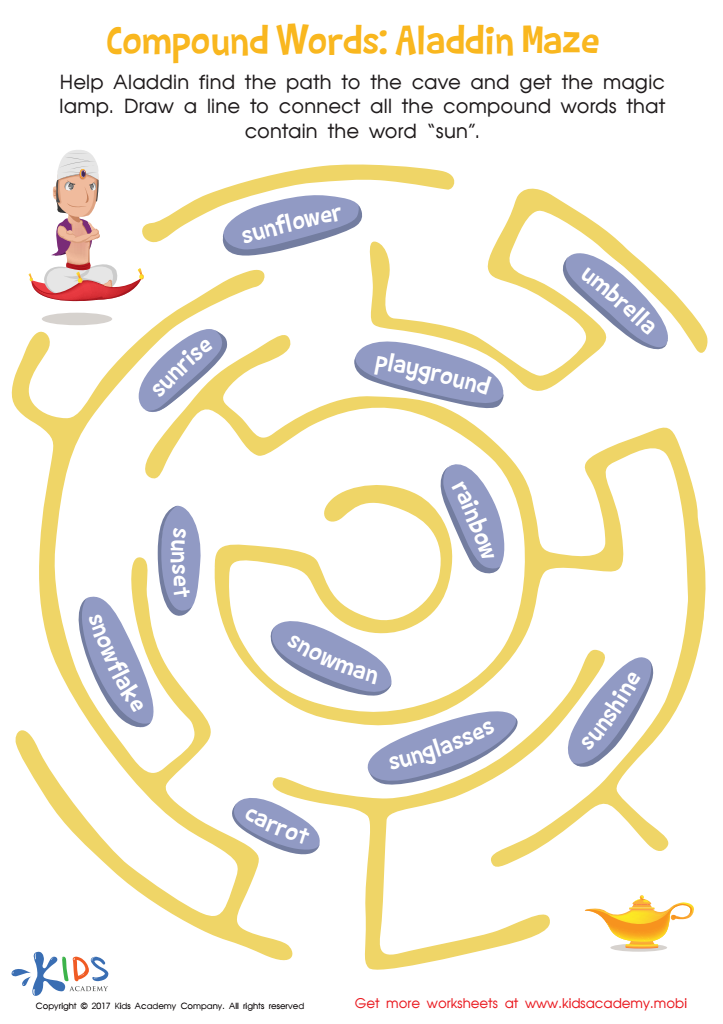
Compound Aladdin Maze Word Structure Worksheet


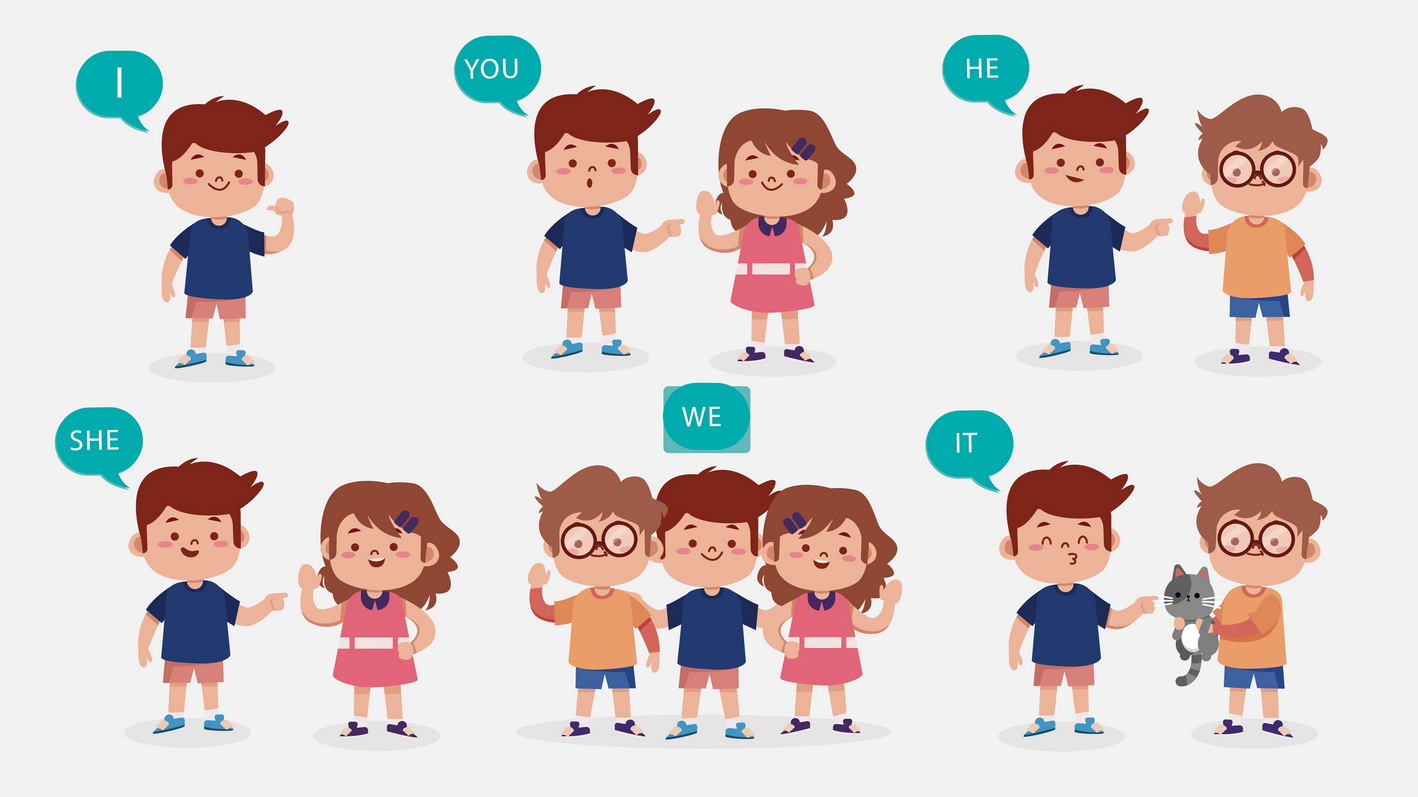





Vocabulary expansion at the age of six is crucial for children’s overall development and academic success. At this early stage, children are like sponges, eagerly soaking up new words and concepts. Learning new vocabulary helps enhance their communication skills, allowing them to express their thoughts, emotions, and needs more effectively. This, in turn, boosts their confidence in social interactions and classroom participation.
Moreover, having a strong vocabulary lays a solid foundation for reading and writing abilities. Children who engage with diverse words often develop better comprehension skills when it comes to reading texts, as they can understand and process information more easily. This is especially important as they transition from learning to read, to reading to learn in higher grades.
Using tools like Easy Grammar allows parents and teachers to introduce new words in a structured and engaging manner. It provides the framework for children to not only recognize but also integrate vocabulary into their everyday conversations. Ultimately, fostering vocabulary expansion in six-year-olds isn't just about boosting language skills; it’s about equipping them with vital tools for educational resilience and lifelong learning. Supporting this process ensures that children feel empowered in their abilities, setting a strong trajectory for future success.