
Animal recognition Easy Worksheets for Ages 7-8
5 filtered results
Difficulty Level
Grade
Age
-
From - To
Subject
Activity
Standards
Discover our engaging "Animal Recognition Easy Worksheets" tailored specifically for children aged 7-8! These worksheets are designed to enhance observational skills and boost animal knowledge through fun activities. With vibrant illustrations and age-appropriate exercises, kids will enjoy identifying various animals, matching them with their habitats, and learning interesting facts. Ideal for classroom use or at-home learning, our worksheets encourage independent thinking and foster a love for wildlife. Perfect for developing critical early learning skills, these resources ensure that children have an enjoyable learning experience while expanding their understanding of the animal kingdom. Get ready for an adventure in learning!
Favorites
With answer key
Interactive
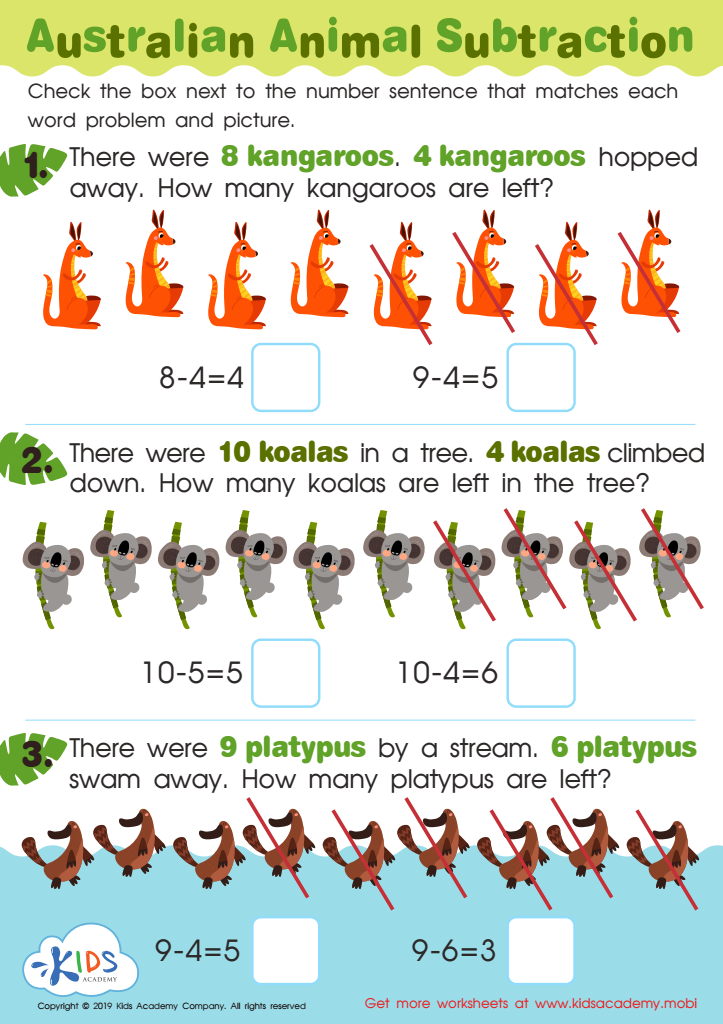
Australian Animal Subtraction Worksheet
Test your child's wildlife knowledge. Ask them to name animals indigenous to Australia or other countries. Show them the animals in this worksheet and have them match each word problem and picture with the correct number sentence.
 Assign to My Students
Australian Animal Subtraction Worksheet
Worksheet
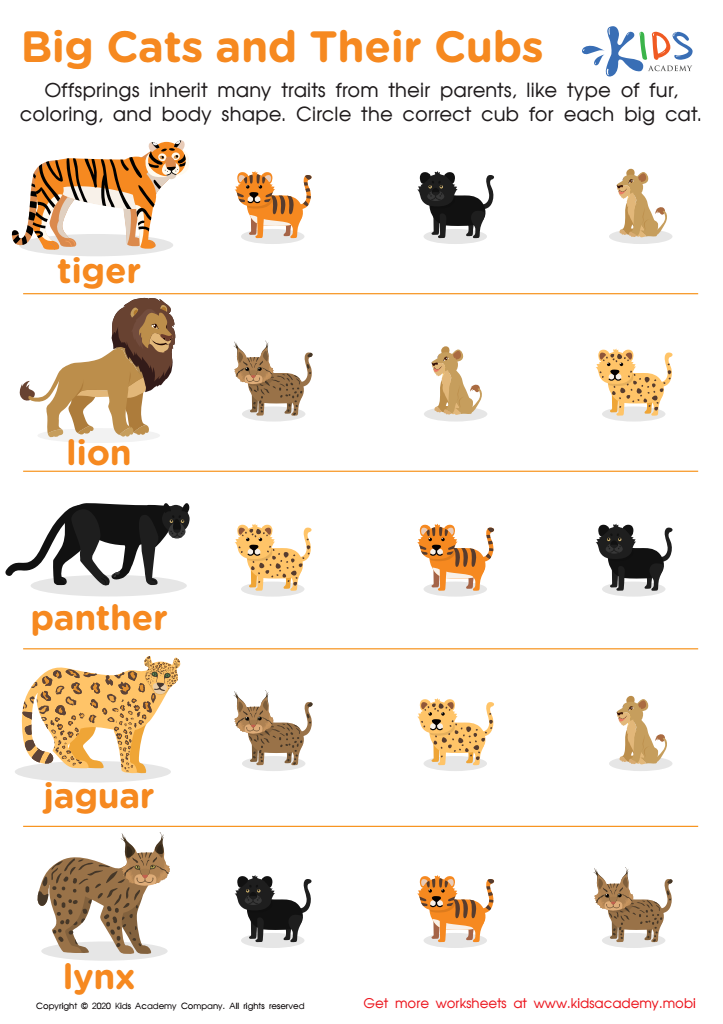
Big Cats and Their Cubs Worksheet
Kids are often like their parents, and the same is true for big cats and their cubs. Introduce your young scientists to genetics with this fun printable worksheet from Kids Academy! Observe the big cats and their cubs, then circle the right cub to complete! It's a great way to teach an early lesson in genetics.
Big Cats and Their Cubs Worksheet
Worksheet
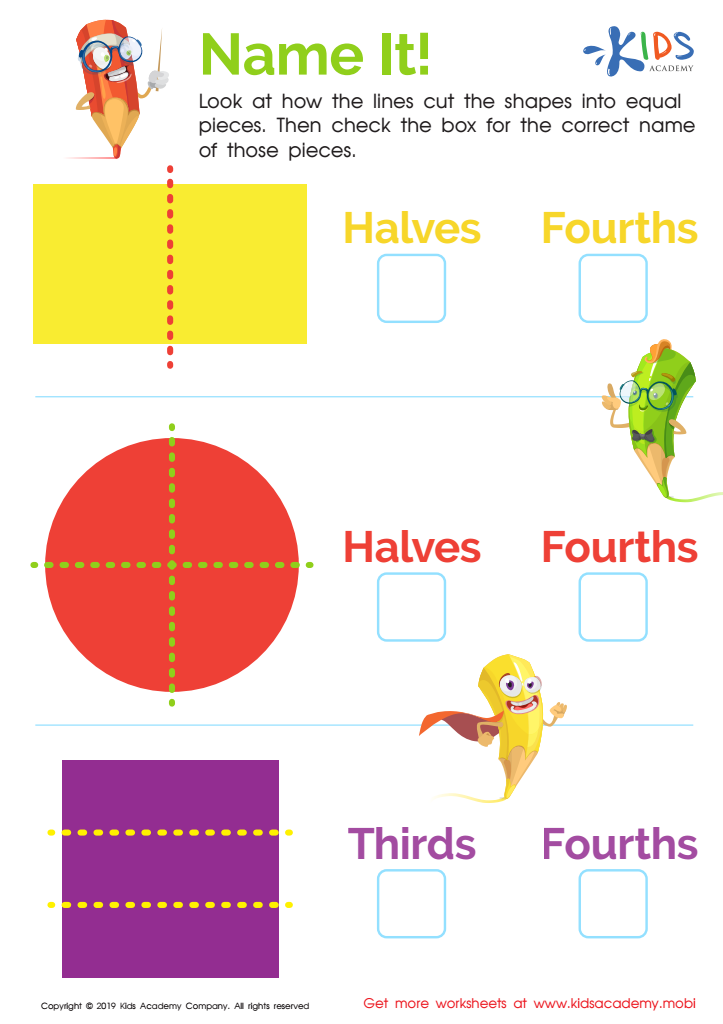
Name It! Worksheet
When teaching fractions, help children understand that they are groups divided into equal pieces. Introduce denominators and numerators with pictures to illustrate. Use this free fraction worksheet with colourful shapes divided into halves, thirds, and fourths to help them identify the fractions.
Name It! Worksheet
Worksheet
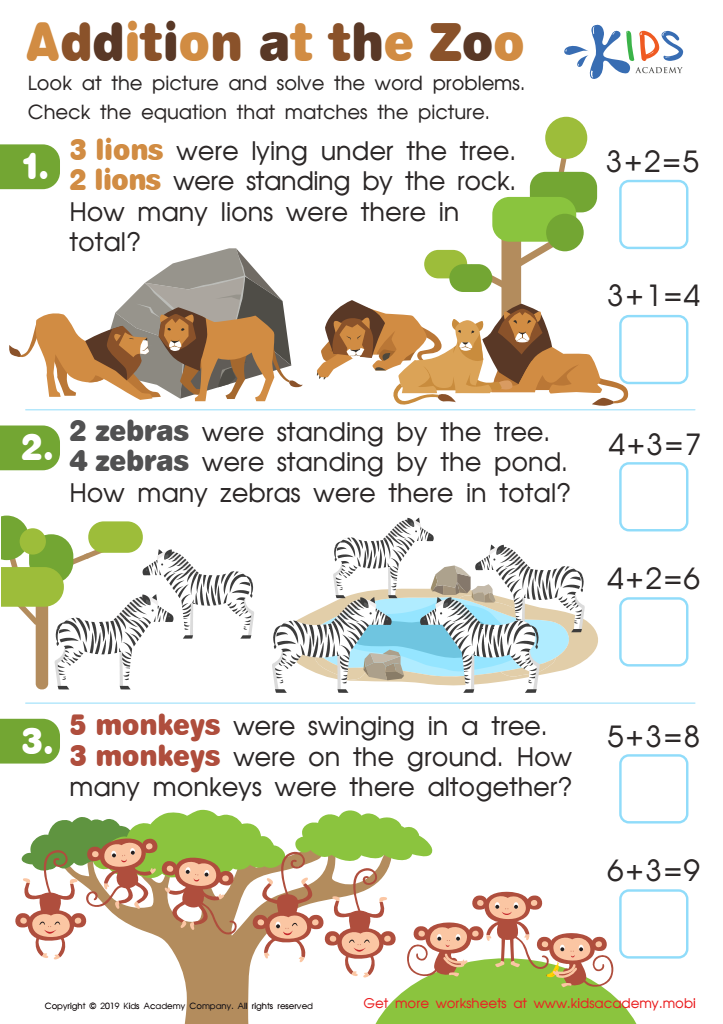
Addition at the Zoo Worksheet
Visit the zoo with your kids and point out all the different animals. Ask them to name their favorites and identify animals on a worksheet. Challenge them to solve word problems related to the pictures. Ask them for the equation that fits the picture and check the answer.
Addition at the Zoo Worksheet
Worksheet
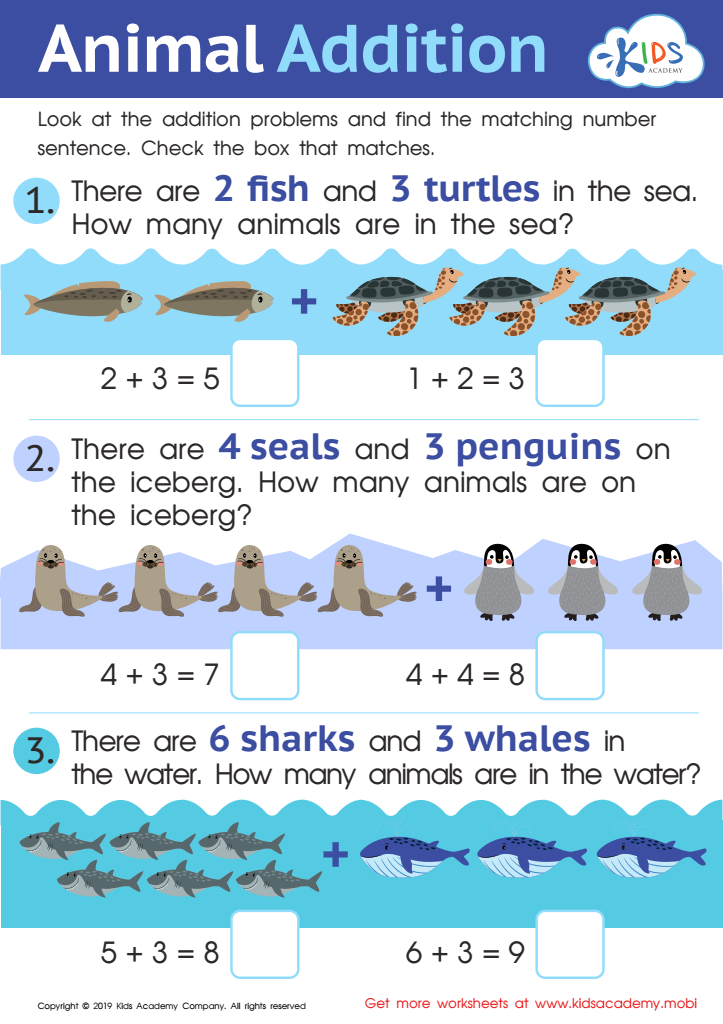
Animal Addition Worksheet
Get your kids learning addition and subtraction with this fun worksheet! Show them that solving equations can be enjoyable and help them match number sentences to the correct boxes. By doing this together, you'll create a positive learning experience that your kids won't forget.
Animal Addition Worksheet
Worksheet
Join Kids Academy for Free
Who is primarily going to use this learning content?







Animal recognition is a vital skill for children aged 7-8, and both parents and teachers should prioritize it. Understanding different animals contributes to a child’s overall development, fostering curiosity about the natural world. By recognizing animals, kids learn to appreciate biodiversity, which is crucial in promoting respect for living creatures and the environment.
Moreover, animal recognition can enhance various learning areas. In science, children grasp basic biological concepts, such as habitats and food chains, while also making connections about conservation and the importance of protecting endangered species. It encourages critical thinking as children ask questions about animal behaviors and characteristics.
Additionally, identifying animals can enhance language skills. Kids learn new vocabulary related to animals, their environments, and behaviors, enhancing their communication abilities. Storytelling and creative arts can be inspired by animals, promoting creativity and literacy.
Also, animal recognition fosters empathy, teaching children to care for other living beings. They learn about responsibility, which can translate into real-world actions, like properly caring for pets.
Overall, prioritizing animal recognition lays the foundation for connected, informed, and compassionate future citizens who respect and safeguard our planet’s diverse wildlife.








