
Interpreting data Easy Worksheets for Ages 7-8
3 filtered results
Difficulty Level
Grade
Age
-
From - To
Subject
Activity
Standards
Unlock your child’s potential with our “Interpreting Data Easy Worksheets” designed specifically for ages 7-8. These engaging and interactive resources make learning fun, helping young learners build essential skills in reading and interpreting various data formats, such as charts, graphs, and tables. Each worksheet includes colorful visuals, practical examples, and clear instructions to enhance comprehension and retention. Perfect for supplementing classroom learning or as part of home education, our worksheets encourage critical thinking and foster a love for data exploration. Join us in cultivating confident, capable learners who can analyze and make sense of information with ease!
Favorites
With answer key
Interactive
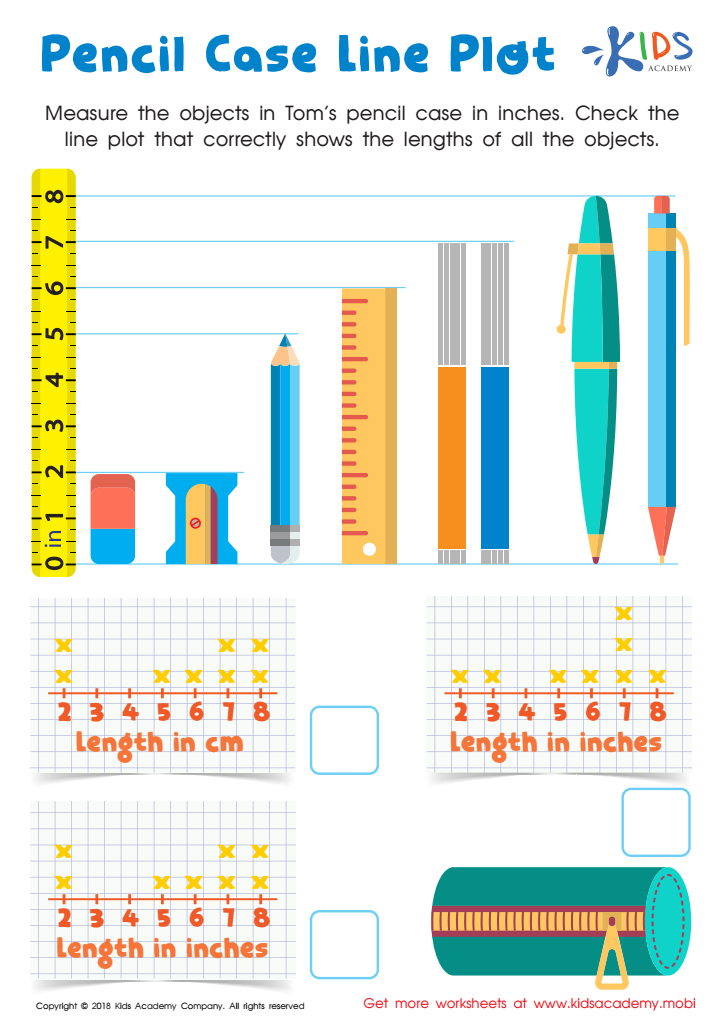
Pencil Case Line Plot Worksheet
Explain to your child that a line plot is a way to organize information. For example, if they need to arrange objects, they should draw a line plot. Now, have them help Tom measure the objects in his pencil case in inches. Then, have them check the line plot that accurately shows the length.
 Assign to My Students
Pencil Case Line Plot Worksheet
Worksheet
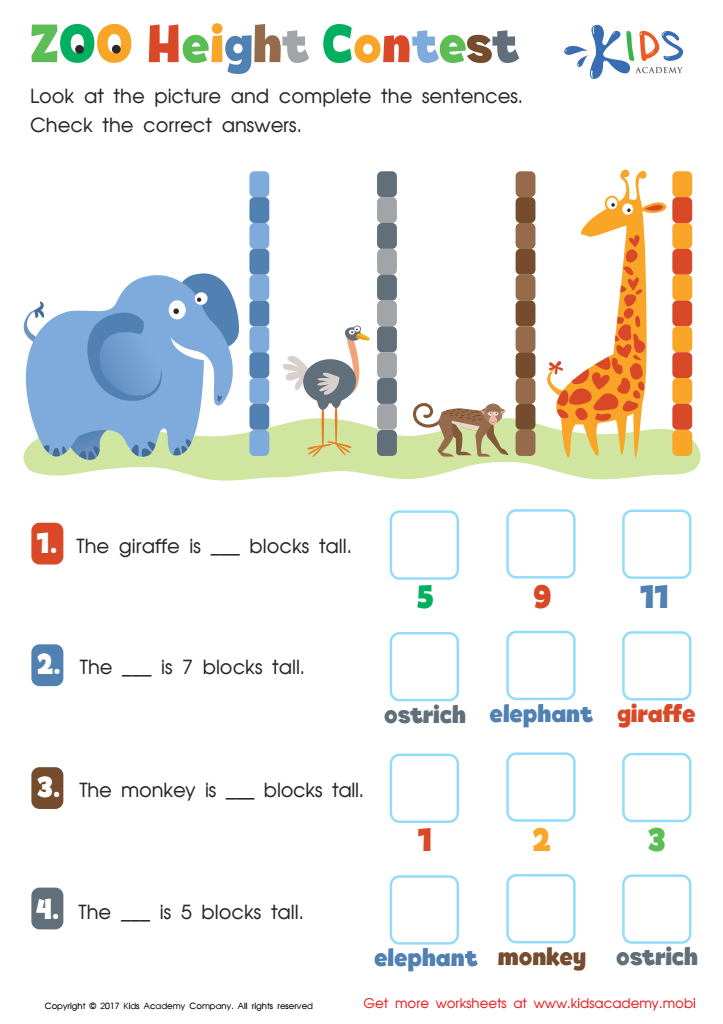
Zoo Height Contest Worksheet
Let's head to the zoo and use colorful blocks to measure your child's favorite animals! With this Kids Academy worksheet, help them practice and prepare for learning measurement. Guide them in looking at the zoo animals and counting blocks to find the height. Then, read the questions and check the box next to the correct answer.
Zoo Height Contest Worksheet
Worksheet
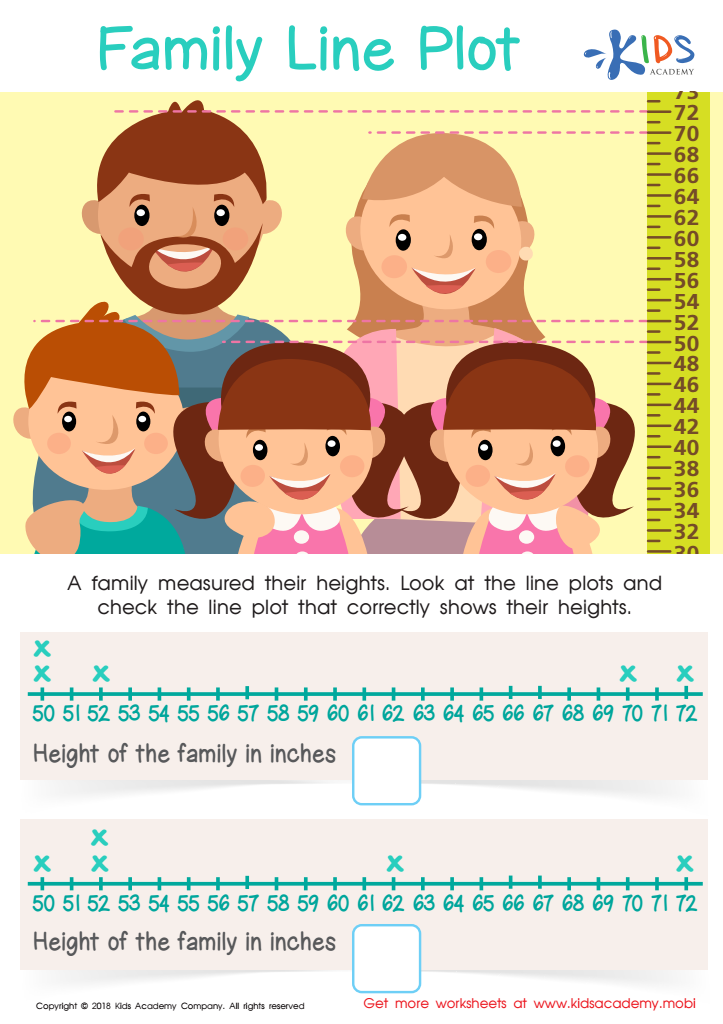
Family Line Plot Worksheet
Have you and your kids ever done a family height measurement? How did it go? If they're familiar with it, this worksheet may be simpler. The picture shows a family with their heights recorded. Get your kid to look at the line plots and choose the one that shows the family's heights accurately.
Family Line Plot Worksheet
Worksheet
Join Kids Academy for Free
Who is primarily going to use this learning content?








Interpreting data is important for parents and teachers, especially for kids aged 7-8, because it helps them understand and make sense of the world around them! At this age, children are beginning to notice patterns and information, and learning to read data sets, like simple charts or graphs, boosts their critical thinking skills.
When teachers help students interpret data, they encourage curiosity and engagement with subjects like math and science. For instance, if children see a graph showing their favorite fruits, they can discuss which fruit is most popular. This not only makes learning fun but also teaches them how to analyze information.
Parents should care because knowing how to interpret data prepares kids for their future. It helps them in school assignments and makes them better thinkers. Understanding data helps kids make better decisions, whether it’s about sharing toys or choosing a game to play.
Finally, when parents and teachers model data interpretation, they show kids that it's valuable. This way, children learn to look for information in real-life situations, like newspapers or the internet, making them informed citizens as they grow. Data interpretation supports learning, critical thinking, and everyday problem-solving!








