Understanding subtraction Easy Addition & Subtraction Worksheets for Ages 7-8
3 filtered results
-
From - To
Discover engaging and easy-to-understand subtraction practice with our worksheets tailored for ages 7-8. Perfect for young learners, these printable activities focus on building a solid foundation in subtraction while reinforcing addition skills. Each worksheet is carefully designed to boost your child's confidence and fluency in basic math. Our colorful and interactive exercises make learning subtraction fun and exciting, ensuring your child grasps essential concepts in a way that feels like play. Visit our page to download and start mastering subtraction today! Let’s make math enjoyable and accessible for your young mathematicians!
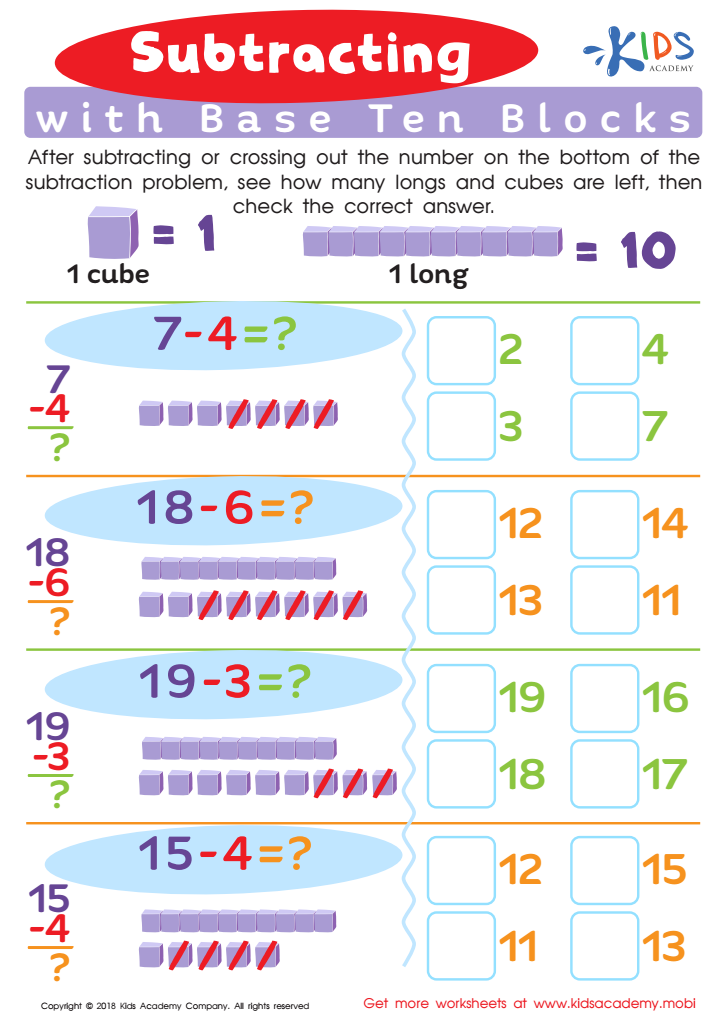
Subtracting With Base 10 Blocks Worksheet
 Assign to My Students
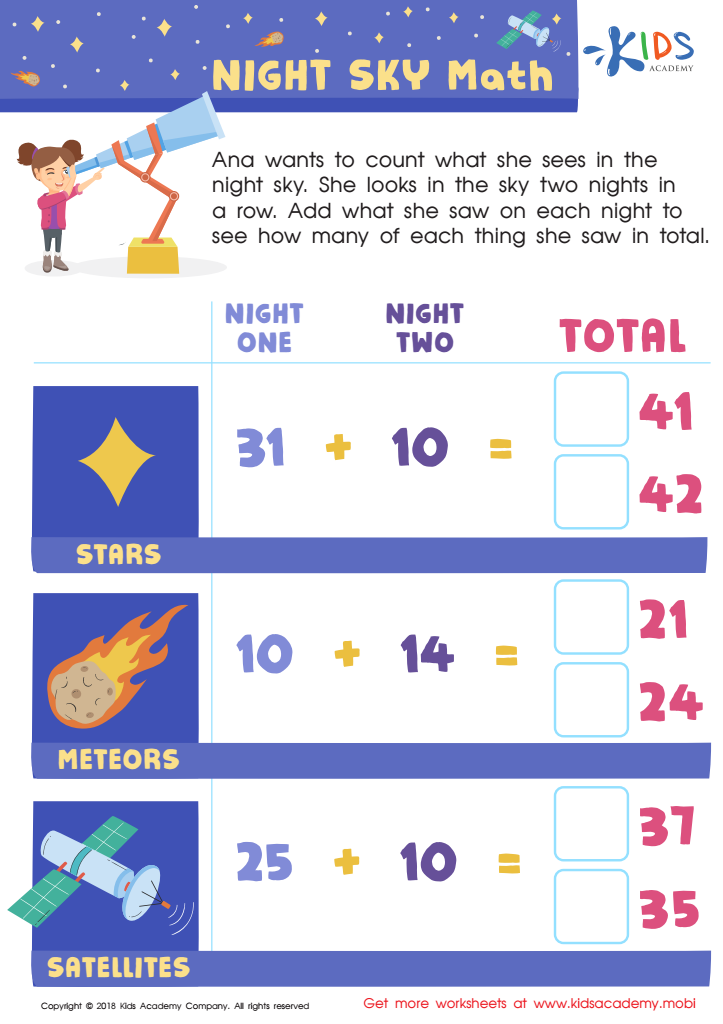
Night Sky Math Worksheet
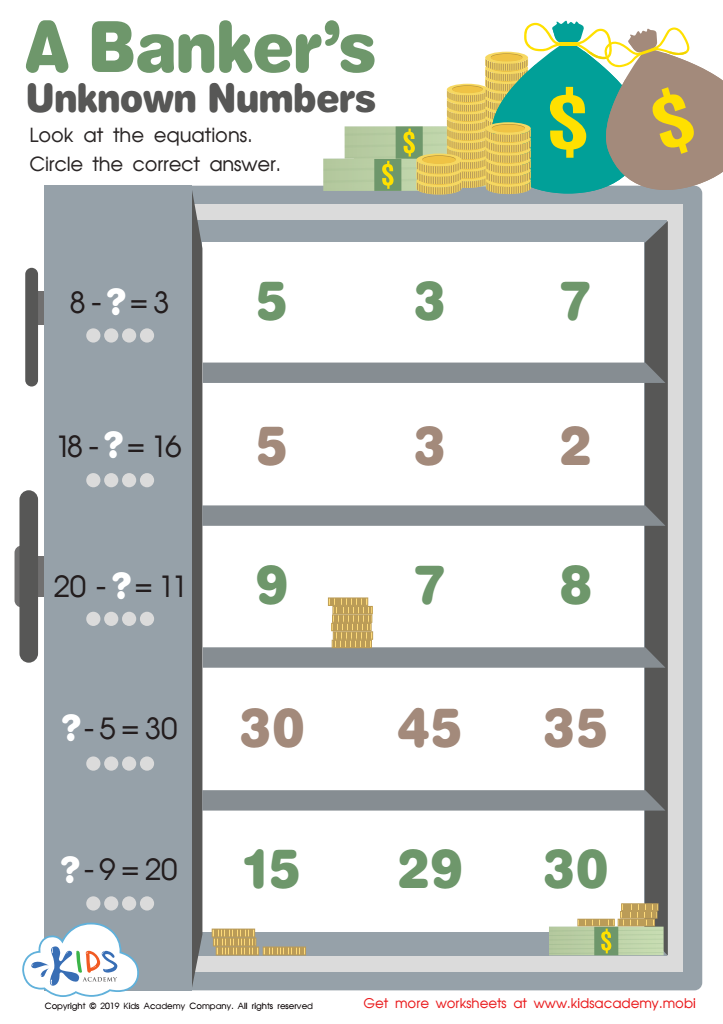
A Banker's Unknown Numbers Worksheet








Understanding subtraction, along with addition, is crucial for ages 7-8 because these foundational arithmetic skills are the building blocks for more advanced math concepts. Parents and teachers should prioritize these skills as they directly influence a child's overall cognitive development, problem-solving abilities, and academic confidence.
Firstly, subtraction and addition form the basis for learning other math operations such as multiplication and division, as well as for understanding fractions and percentages. By grasping these concepts early on, children can more easily transition to more complicated math problems later in their education. This early proficiency sets a strong groundwork for their continued mathematical learning journey.
Secondly, developing basic arithmetic skills fosters logical thinking and analytical reasoning. It enhances a child's ability to tackle everyday problems, promoting critical thinking. For instance, knowing how to correctly subtract helps in everyday tasks such as calculating change or measuring ingredients, offering practical life skills.
Moreover, mastering these basic operations can build a child’s mathematical confidence. When children know they can reliably solve addition and subtraction problems, they are more likely to approach math with a positive mindset, reducing math anxiety. This confidence can significantly affect their attitude towards future learning experiences.
In a nutshell, ensuring young children understand subtraction and addition equips them with basic skills necessary for academic success, practical daily living, and cognitive development.








