Understanding patterns Easy Basic Times Tables up to 12 Worksheets for Ages 7-8
3 filtered results
-
From - To
Discover the power of pattern recognition with our "Understanding Patterns in Easy Basic Times Tables Up to 12 Worksheets" for ages 7-8. Tailored to cultivate mathematical skills and reinforce times table knowledge, these engaging worksheets provide a fun and interactive way for kids to grasp fundamental concepts. Each exercise is designed to enhance cognitive development and build confidence in young learners. Perfect for both classroom settings and at-home practice, our worksheets ensure that mastering times tables becomes an enjoyable and rewarding experience. Help your child unlock their full potential in math with these easy-to-understand resources.
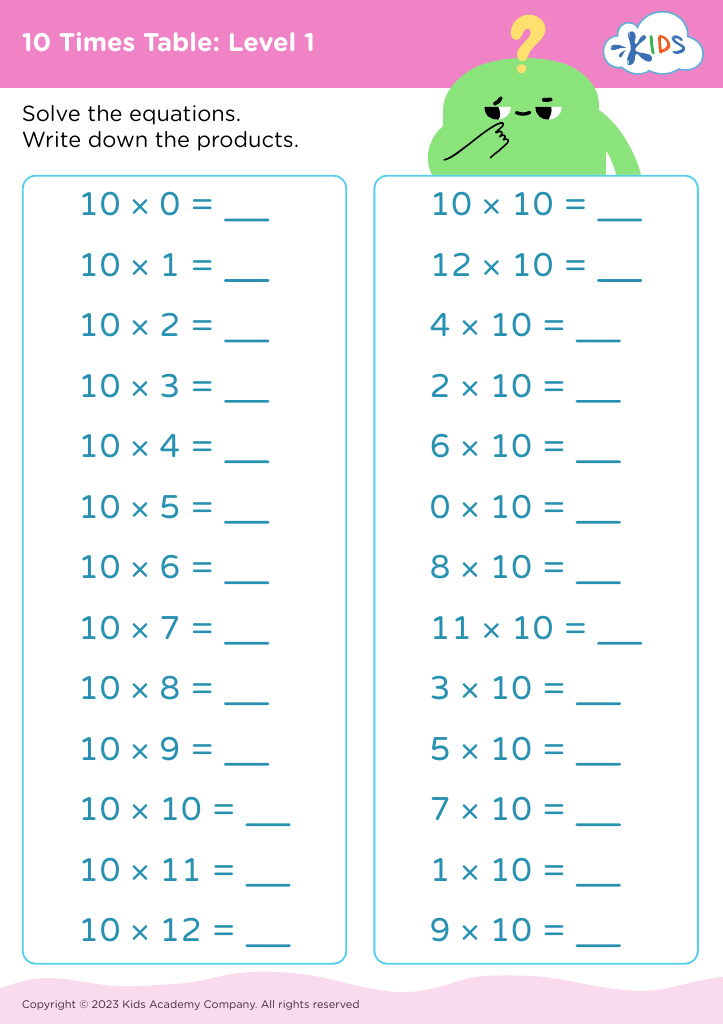
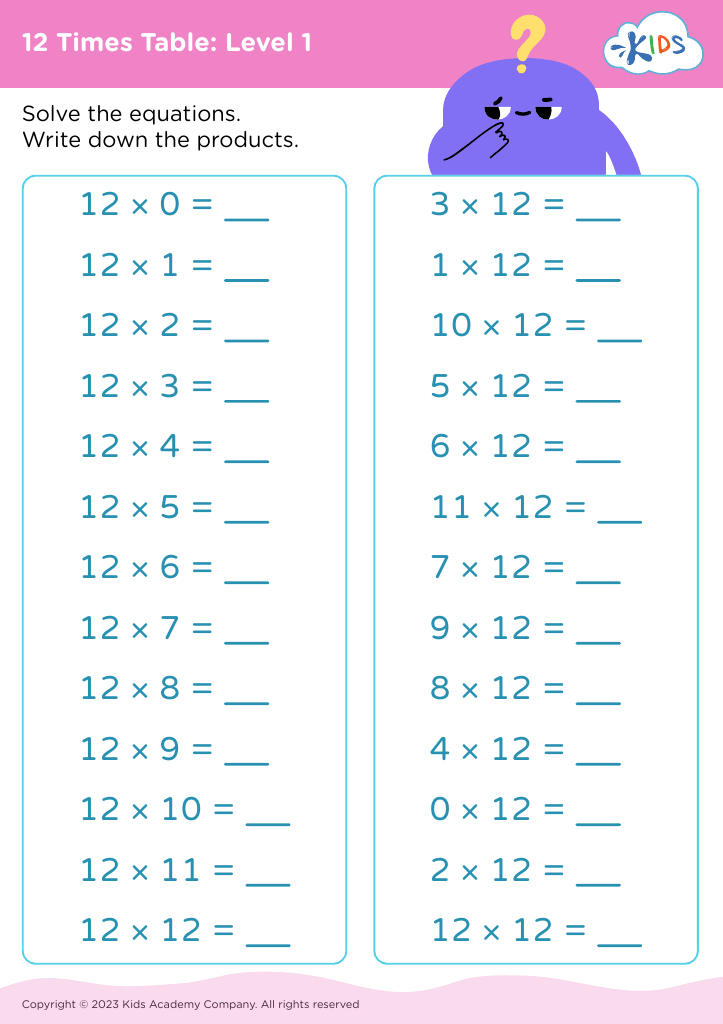
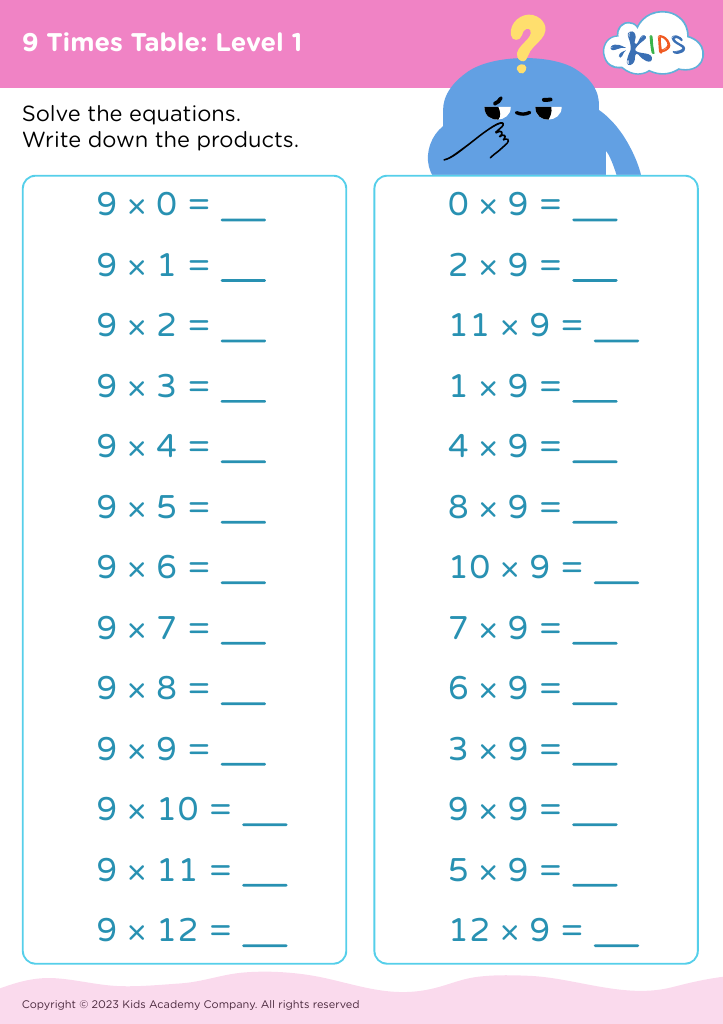


Understanding basic times tables up to 12 is crucial for children aged 7-8 as it forms the foundation for higher-level math skills. Grasping these basic multiplication concepts early on builds critical thinking and problem-solving abilities.
First, times tables are the building blocks for numerous math operations like division, fractions, and algebra that students will encounter in later grades. For example, knowing 6 x 4 = 24 helps a child understand division, such as realizing that 24 divided by 6 equals 4.
Second, mastering times tables boosts a child's confidence in math, making learning less intimidating and more enjoyable. This positive attitude influences their overall academic performance. Confidence gained from knowing times tables often spills over into other subjects, as the child is likely to feel more competent and willing to tackle challenges.
Lastly, understanding patterns within times tables helps children develop cognitive abilities such as memory, concentration, and observation. Recognizing that the products of 5’s tables always end in 0 or 5, or that doubling numbers (4’s tables is double 2’s tables) aids them in grasping how patterns work, fostering analytical thinking.
In sum, solidifying these math fundamentals early prepares children for a smoother, more confident journey through their educational development. Parents and teachers play a key role in nurturing these essential skills.








