Shape Recognition Easy Fractions of Shapes Worksheets for Ages 7-8
5 filtered results
-
From - To
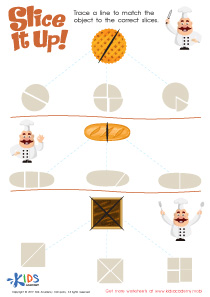
Enhance your child's math skills effortlessly with our "Shape Recognition Easy Fractions of Shapes Worksheets” designed for ages 7-8. These engaging printables help young learners identify, divide, and understand fractions through fun, hands-on activities featuring various shapes. Each worksheet fosters an intuitive grasp of geometry and fractions, vital for developing foundational math skills. Crafted to boost both confidence and competence, our worksheets make learning an enjoyable journey. Perfect for classroom reinforcement or home practice, this resource is a great tool for parents and teachers seeking to aid students in mastering shape recognition and basic fractions effortlessly. Download now to start learning!
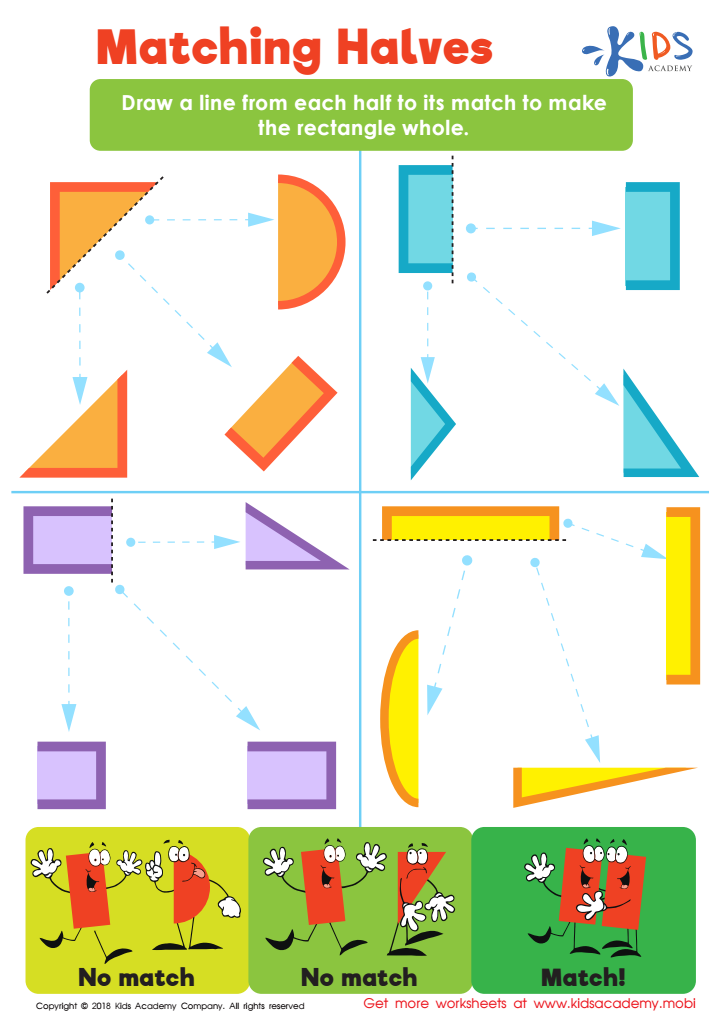
Matching Halves Worksheet
 Assign to My Students
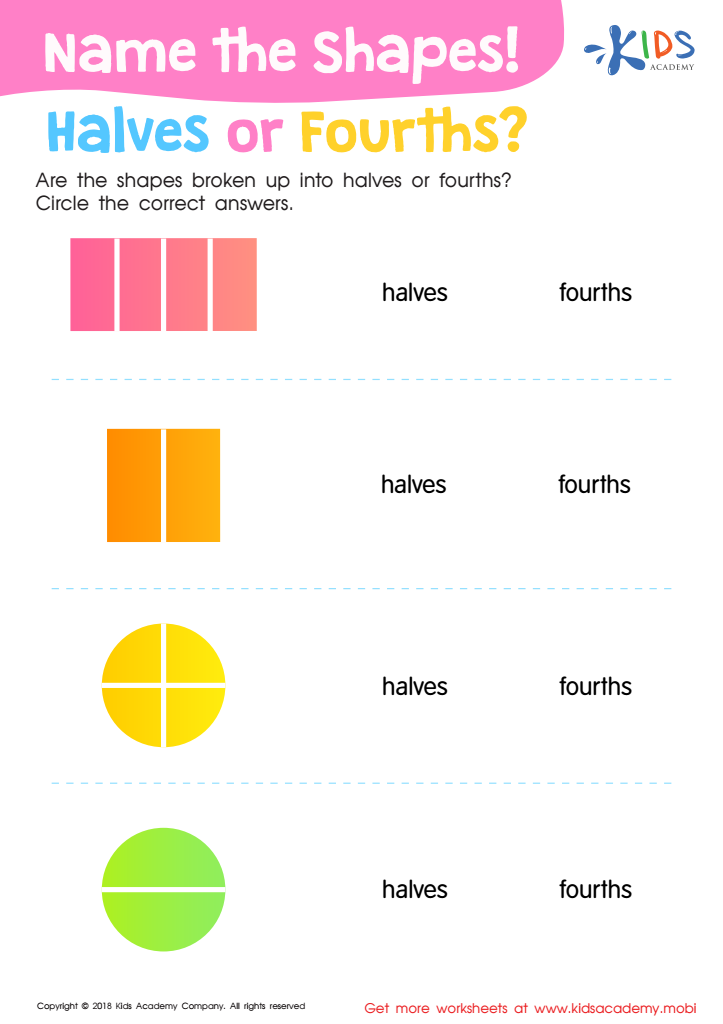
Name the Shapes Halves or Fourths? Worksheet
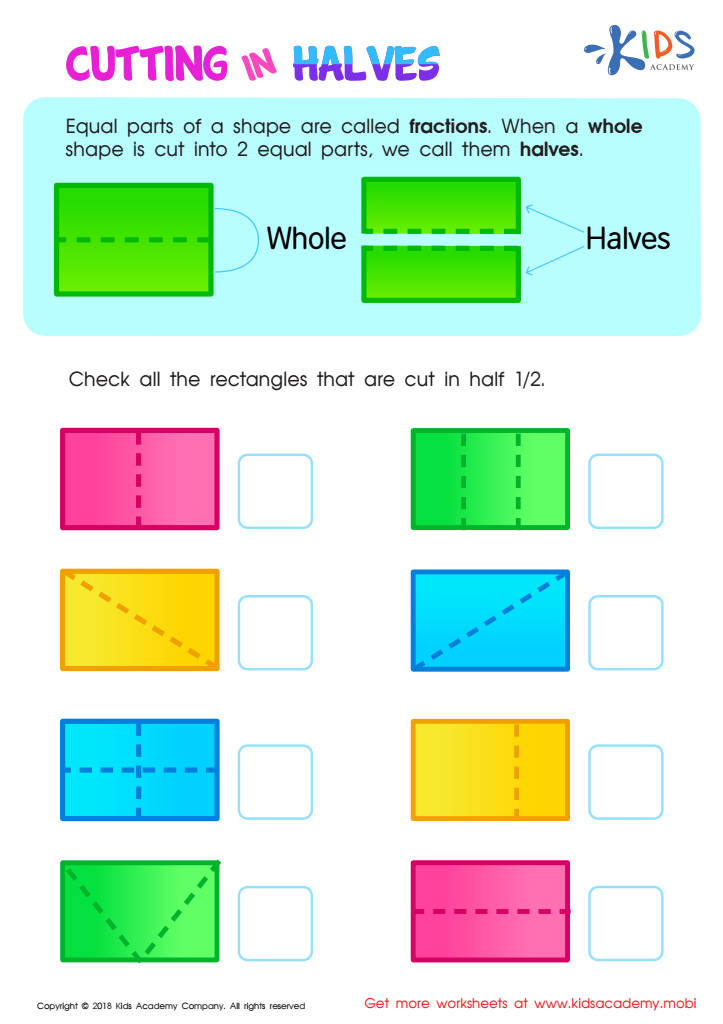
Cutting in Halves Worksheet
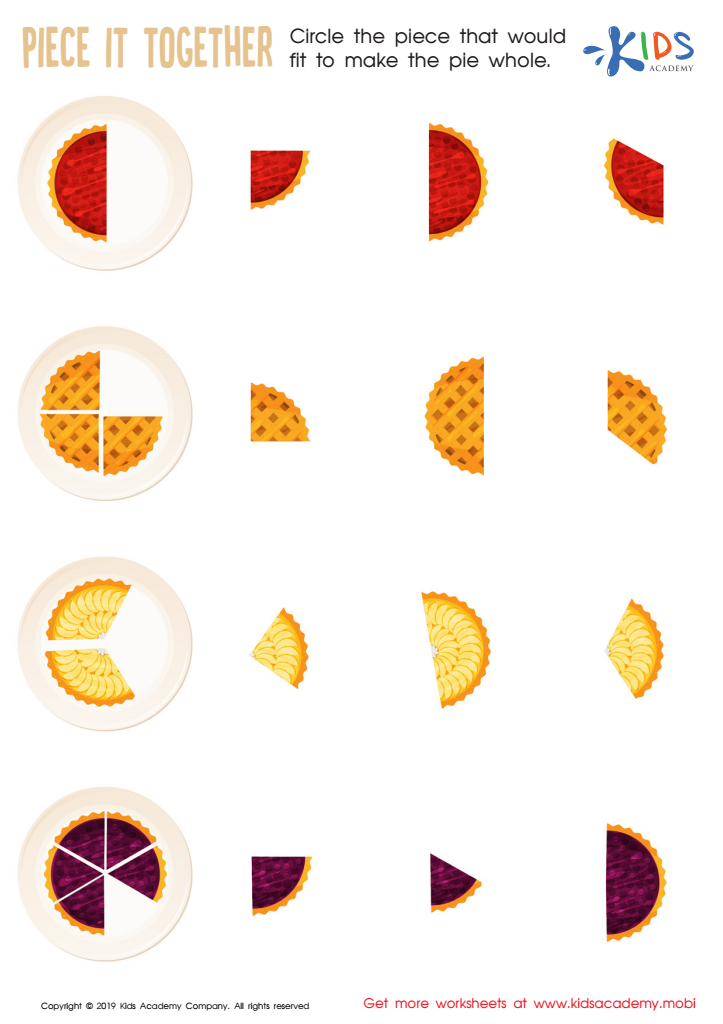
Piece it together Worksheet
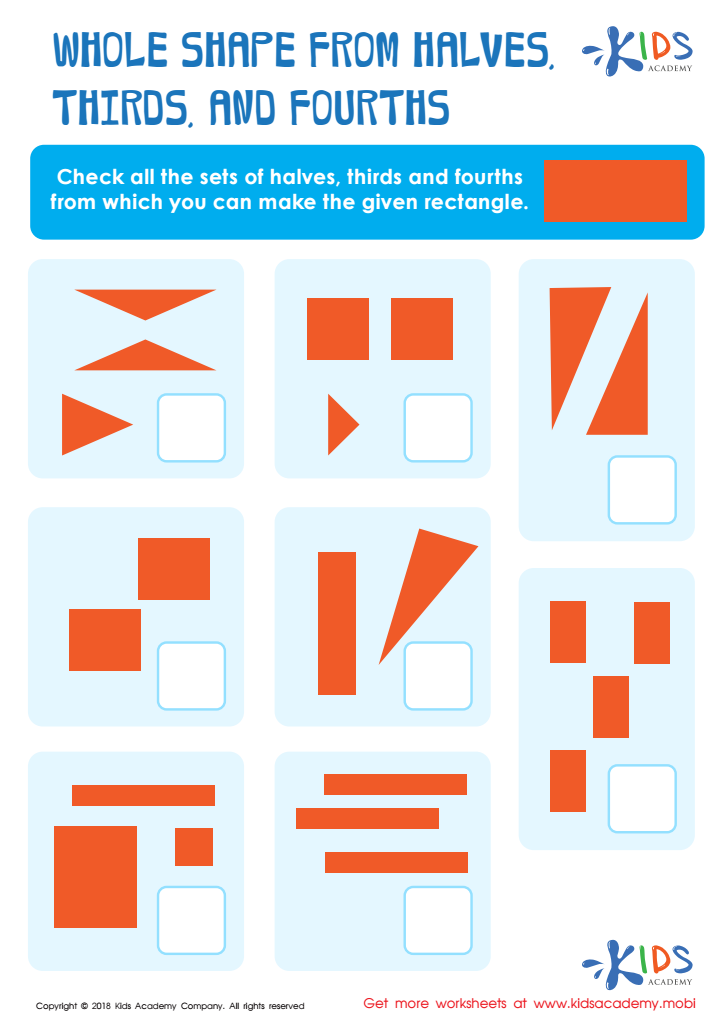
Whole Shape from Halves, Thirds and Fourths Worksheet








Parents and teachers should care about Shape Recognition and Easy Fractions of Shapes for children ages 7-8 because these skills form the foundation for important mathematical concepts. Shape recognition helps children understand geometry, an essential branch of math. By recognizing and naming shapes such as triangles, squares, and circles, kids learn to observe and decipher the physical world around them, enhancing their spatial awareness and visual perception.
When it comes to fractions, understanding halves, thirds, and quarters through shapes makes abstract mathematics concrete and tangible. For instance, if a child sees a pizza divided into equal parts, they can relate it to a fraction of a whole. This tangible understanding fosters a grasp of proportionality, equivalence, and symmetry, which are crucial for advanced math topics such as ratios, percentages, and algebra.
Integrating shape recognition with easy fractions further sharpens critical thinking and problem-solving skills. Children learn to compare, contrast, and predict outcomes. Introducing these concepts early on sets the stage for future academic success, creating a more seamless transition into complex math. Moreover, early mastery builds confidence and engagement, reducing math anxiety. Hence, focusing on these foundational skills is essential for well-rounded cognitive development.